



























The
law that is never enforced
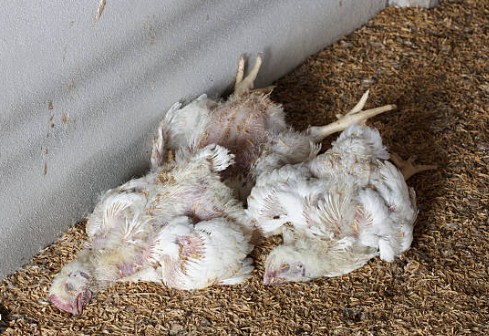
There is a law prohibiting slaughter of pregnant cows, buffaloes and
calves. This was revoked sometime ago by a parliamentarian, whose
strident voice drowned all others, when taking the five precepts in
public. The animal lovers, who stormed his office in protest, were
firmly and rudely shown the door.
After renewed efforts by protestors, the rule was reinstated by the
present regime. But only on paper, it seems! The other day somebody
called an ‘abattoir’ had asked whether it was possible to buy a pregnant
cow and buffalo and was assured that they could be made available
immediately, and was it only one pair that was needed?
Slaughter brings so much profit to the slaughterers, that they easily
pay their way not only in cash but with flesh hampers distributed to the
objectors from lorries coming from far off places carryings the live
cargo – already half dead, to the slaughter house for mostly skinning
alive.
A government, worthy of its name, should be able to impose this rules,
whether they apply to the two-legged, the four legged or those endowed
with feathers and fins. We hear of fertilizer farms where cattle past
their prime are welcome. Surely the Mahinda Chinthana can make room for
such profit-making ventures, so that the creatures that sustain our
children’s lives with their precious milk and the battered bulls
supporting the carter’s livelihood can end their lives in peaceful
retirement without having their throats slit by the butcher’s knife?
The Buddha did stand to attention after his enlightenment to gaze at the
Bodhi tree that sheltered him, to show his disciples what gratitude was
all about.
After all, one of the first bits of advice (now much in vogue) preferred
by the Arahant Prince Mahinda to the King was, “You, Sire, are not the
owner, but only the protector.” And, as we are here referring to those
who simply cannot protect themselves, should not the government be
strong enough to enforce the laws made by it on behalf of those who are
defenseless?
Prema Ranawaka – Das
Moratuwa
***
Country before self
Islamic Solidarity Front of North America condemns the brutal
massacre of 11 irrigation workers by the LTTE. We all know that the LTTE
is allegedly behind the killings of these innocent civilians who had
gone to repair the irrigation sluice gate at Raddala in Pottuvil on
September 18, 2006.
It is clearly understood that the LTTE kills innocent civilians in
execution style. If certain political parties point their fingers at the
STF they should inform the government to have an inquiry before blaming
the STF. There may be certain communal extremist in the forces who are
been helped by certain communal political groups to discredit the
President and his government.
President Mahinda Rajapaksa is a leader elected to office with the
blessings of the Almighty and the people and he will definitely
investigate the massacre of the innocent Muslims by appointing a
committee. Who ever is involved in these killings should be given the
Capital Punishment. When senior Muslim MPs are in a coma, the leadership
of the UNP has allowed people like Myown Mustapha to speak on these
issues.
Where are the Muslim stalwarts of the UNP? - And why are the rookies in
the forefront? Even the UNP knows who are behind the alleged killings of
these innocent civilians. I call upon the UNP leadership to join hands
with the President and solve the ethnic crisis. The UNP should take
responsibility for the present ethnic crisis which started in 1983.
There is no Eelam Tamil there is only Sri Lankan Tamil in Sri Lanka. So
let us all support our forces, salute them and help them make our
country a united Mother Lanka where only the Sri Lankan flag will fly
high with all religions intact.
Reyyaz Salley
Islamic Solidarity Front,
North America
***
A matter for clarification
A recent Rupavahini news item indicated that it was Mrs. Indira
Gandhi who had donated the Kachchativu Island. It was in fact Mrs.
Sirimavo Bandaranaike who in order to rid a festering beggar’s wound of
Tamil Nadu who donated 154 square miles west of Kachchativu in the
Territorial Waters belonging to Sri Lanka, according to the UN Law of
the Sea.
To get the record straight, the Island of Kachchativu was a smugglers’
and illicit immigrants’ paradise. In the 1960’s even the Bishop of
Jaffna did not send a priest there for the Church feast due to these
nefarious activities. The Task Force for Illicit Immigration (TAFII) was
given the task of dealing with this problem of illicit immigration and
smuggling from South India. Having dealt with this problem in
Kachchativu they wanted to be assured of preventing illicit immigration
in the North-Western coast from Mannar to Kalpitiya by having a road
from Pomparippu to Marichchakade so that the TAFII could patrol that
area on the ground.
As I was in charge of Road Tracing in the Survey Department using new
Air Survey Methods, I was commissioned to do so having prepared a
tentative road trace using Air Survey Methods. I was provided the Bell
Helicopter under the command of Captain Situnayaka to verify this on the
ground. During this survey I took the opportunity of visiting
archaeological sites at Pomparippu and Kudiramalai and landing on top of
Kudiramalai I discovered an ancient light house in ruins there.
Subsequent investigations indicated that there were also the ruins of a
35-foot tall enormous horse and that was the reason for this mountain to
be given the name ‘Kudira’ Malai. This was a main land mark for sea
farers in ancient times. This site in all probability had a Persian
connection due to the presence of the horse be that as it may.
In addition to these archaeological investigations, I provided the Road
Trace from Pomparippu to Marichchakade, but warned TAFII not to build
this road as it would only aggravate the illicit immigration problem as
these illicit immigrants are awfully afraid of wild animals like bears,
leopards and elephants and that it would be prudent not to build this
road, as it would only help the smugglers to make a quick exit.
But the main point of this article is to debunk the claim that it was
Mrs. Indira Gandhi, the then Prime Minister of India who donated
Kachchativu is absolutely a false statement. The truth of the matter is
the fact that Mrs. Sirimavo Bandaranaike, then Prime Minister of Sri
Lanka donated 154 square miles of sea belonging to Sri Lanka, to rid the
festering beggar’s wound, according to the Law of the Sea, to placate
South India.
One should read that wonderful book on ‘Kachchativu and the Maritime
Boundary of Sri Lanka’ by W.T. Jayasinghe, the former Secretary of the
Ministry of Defence and External Affairs, which contains all the
relevant documents.
This treatise should be in every embassy abroad and every ministry in
Sri Lanka as a model for those dealing with foreign negotiations to be
briefed on. Those were the ‘Good Old Days’ when there were persons who
were ‘subject matter’ specialists who dealt with such matters and not
like the incompetent ones we have now.
A. Denis N. Fernando
Colombo 8
***
Remove fixed charge and VAT
In terms of the new electricity rates I have now been called upon to
pay:
For the current month – August/September (737 units) Rs. 15,682.04.
For the previous month – July/August (865 units) Rs. 14,072.00.
Even though I have used 128 units less, I still pay Rs. 1,609.95 more.
I agree that I am a fairly heavy user of electricity in my household and
I must pay according to consumption, but the increase I am called upon
to pay is too high, unwarranted and unjust. For the previous month the
amount paid was Rs. 14,072/- ÷ 865 units = 16.27 per unit, the new rate
I am now called upon to pay is Rs. 15,682.04 ÷ 737 units or Rs. 21.28
per unit or a nett increase of Rs. 5/- for each unit of electricity I
consume. If a consumer consumes more he will also pay certainly more
than the average of Rs. 5/- per unit.
In the new rates those who consume the first 30 units remains the same
at Rs. 3/- per unit + a fixed charge per month of Rs. 60/- or a total of
Rs. 150/- All the other rates go up. Those consuming 31 to 60 units will
pay an additional Rs. 1/- per unit. Those in the bracket of 61 to 90
also pay Rs. 1/- per unit over the existing rates. From 91 to 180 units
the rates go up by an additional Rs. 1.50 per unit (that is from 10.60
to Rs. 12.10 per unit and then from 180 units the rates go up by another
Rs. 1.50 per unit (from Rs. 15.80 to 17.30 per unit). It must be
understood that this is the second increase for 2006 – the first one was
from February 2006.
On what basis has this increase been arrived at? How can a department
that has bungled the supply of electricity, and even brought its house
to a sorry mess, be now allowed to levy another criminal increase in
rates, from a people who have been burdened enough.
When Ranil Wickremesinghe’s UNF government in 2002 increased the rate by
a staggering 70%, I urged that a Company of Chartered Accountants
undertook the task of looking into the workings of the CEB and formulate
a reasonable plan for the future. I would once again urge that a Company
of these Accountants take over this job as one of national importance
and bring out a plan for the better working of the Ceylon Electricity
Board.
In the meantime the President should look into this unconscionable
increase in the rates of electricity. He should forthwith request those
concerned to re-examine the soaring rates they have now set. From the
billions that will surely come the way of the CEB some relief can easily
be given to consumers at various levels, beginning from those who
consume very little electricity - those in the bracket of 31 to 60 units
and from 61 to 90 units particularly.
With the huge increase this Fixed Charge should be dropped, as it will
offer some relief particularly to those who consume little electricity.
In addition there is also the imposition of the deadly VAT of 15%. It is
time the people stood up and demanded from the government that VAT
should be removed from the charges of electricity as it is a national
necessity.
Maurice Lord
Colombo
***
Turnover Tax - Provincial Council
At present importers pay Value Added Tax (VAT) to the Department of
Inland Revenue and Turnover Tax to the Provincial Council, on their
turnover. Regrettably, to the Provincial Council, we pay on the total
turnover which includes VAT recovery. It could be noted that the entire
VAT is remitted to the Department of Inland Revenue in full i.e. the
customer is acting as a ‘Collection Agent’ for the Department of Inland
Revenue, with no commission but also should pay 1% to the Provincial
Council.
This is a very unfortunate state which came into practice when GST was
introduced, effective April 1, 1998. Despite protest made by us, no
corrective action has been taken. The Department of Inland Revenue has
no control over Provincial Councils, therefore, we are not aware to whom
we are to make representations for a relief. This additional burden on
1% of VAT results in the taxpayer’s dissatisfaction. It should be noted
for a successful tax collection, the taxpayer’s satisfaction is very
important.
Therefore, I appeal to the President, Mahinda Rajapaksa, to consider the
plight of the taxpayers and grant exemption for Turnover Tax payments on
VAT recovery which is remitted to the Inland Revenue Department in full.
I consider it necessary to mention here in April 2005, when Turnover Tax
rates were increased by the Provincial Councils, taking into
consideration the taxpayers plight, the then President Chandrika
Kumaranatunga had over ruled the decision of increasing Turnover Tax
rates and granted us relief. I hope the present President will follow
this practice.
S.R. Balachandran
National Chamber of Commerce
***
Exploitation by security companies
There was a newspaper report recently to the effect that government
authorities are going to check the activities of security companies.
This in fact is a very good thing as most security companies take big
sums on behalf of the security officers and these poor guys do not get
even half of this amount. I came to know of this after I met a certain
officer employed in a bank. According to him, he gets only Rs.12,000 a
month as salary while the company gets Rs.25,000 on behalf of him.
These are common happenings in security firms in Sri Lanka and therefore
it is essential that the government look in to these things.
M. G. Asoka Karunadasa
Colombo |