

















@


NEWS  
NEWS FEATURES  
INTERVIEWS  
POLITICAL COLUMN  
EDITORIAL  
OPINION  
SPORTS  
CARTOON  
BUSINESS  
EYE - FEATURES  
LETTERS  
EVENTS  
SOUL - YOUTH MAG  
ENTERTAINMENT  


Politics


Finding the right head to manage the foreign frontier

By H. L. D. Mahindapala
The task of a consummate diplomat is to balance the fiery passion for his country with a quiet professional cool. H. M. G. S. Palihakkara combined both qualities in serving his country abroad and at home. When at the peak of his career he was appointed as head of the Foreign Ministry he brought in exceptional skills of handling complex issues, international relations and inter-personal sensitivities – all which he had guided with the soft and sure touch of a seasoned and unflappable diplomat.
He is now on leave prior to retirement. And it is at this last stage that he has created a problem. The boots he is leaving behind are too big for any run-of-the-mill career diplomat who had come up the ladder through seniority. At this critical juncture the nation needs a dynamic professional to succeed him as the head of the Foreign Ministry.
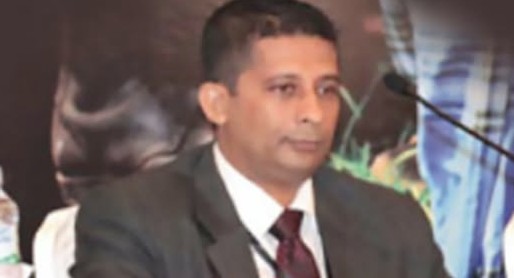
There are, of course, several nominees tipped to take over from Palihakkara. Of these Dr. Palitha Kohona, a Sri Lankan diplomat who came up through the foreign corridors power in Australia and the UN, heads the list. The tradition in the foreign service has been to pick one who has come through its ranks. But the opportunity of recruiting someone who has come through the foreign office of another First World country has never arisen before.
This alone makes Dr. Kohona (58) a unique candidate for the job. He brings in a wide range of perspectives, experiences and strategies in dealing with the international community – the power house that can shape the destiny of Sri Lanka’s future. It is also the second front opened up by the Tamil separatists. Whoever heads the Foreign Ministry is going to be the commander of the forces leading the battle in this second front. Winning the battles at the global frontiers is as vital as winning the battles on the ground in Sri Lanka.
Clearly, the Foreign Ministry needs a battle-hardened veteran to lead it at a time when the clashes abroad are intensifying as it is on the ground. It must be emphasized that the other aspirants to the job too have valuable experiences in this field. The Foreign Ministry has come a long way from the time Prime Minister S. W. R. D. Bandaranaike had to show the fledgling diplomats where Lebanon – a flash point at the time -- was on the map. Since then it has produced some distinguished and competent diplomats. They have made outstanding contributions in mapping out the contours of the new frontiers ranging from the sea bed (Shirely Amerasinghe) to handling sensitive and complex issues of nuclear energy (Jayantha Dhanapala).
But at no time in the past has the burden fallen on the shoulders of our Foreign Office to defending the national interests threatened by local and foreign enemies of the state. Krishna Menon was spot on in defining foreign policy s “an extension of domestic policy.” He said: “There is nothing foreign about foreign policy. It is merely an extension of domestic policy.” Unlike in facing other crises, the major task of our foreign service is to wage subtle battles in unknown terrain without any guidebooks or any previous experience to feel their way around.
One of the major successes of Palihakkara was in battling the Tamil separatists that had penetrated the defences of the government through the NGOs. He faced them all at the UN Sub-Commission on Human Rights in Geneva. The deceptive tactic of the Tamil lobby was to finance the foreign NGOs headed by white faces to speak on their behalf. It was an uphill task but Palihakkara steered his way through not only against a wily enemy but even those within his own camp.
Though this battle is raging in the periphery events are moving to a new level where the international interventionists are creeping into the centre more like the camel into the Arab’s tent which may in the end in the camel taking over the tent. The Foreign Ministry so far has been fending off the intruders successfully. President Mahinda Rajapakse has not caved in like Chandrika Kumaratunga or Ranil Wickremesinghe.
The head of the Foreign Ministry has to be a professional leader with a clear vision, to be the compass to those riding the waves in uncharted and choppy seas. Besides, the peace process has now entered a phase where the period of appeasement is over. Political analysts are agreed that neither Chandrika Kumaratunga nor Ranil Wickremesinghe got anywhere with their politics of appeasement.
The new directions of President Mahinda Rajapakse need a competent guide with a wide-ranging experience in handling international relations at the highest level. Filling the gap left behind by Jayantha Dhanapala and Palihakkara is not easy. When the head hunting began it was found sitting in the prestigious seat of the Head of the Treaty Section in the United Nations’ Office of Legal Affairs. After almost 25 years in international diplomacy, Dr. Kohona was catapulted from his sedate seat in the UN to stormy centre of the peace process in Sri Lanka.
It was not his familiar territory, no doubt, but it didn’t take long for him to master the subject and to get on top of it. While some of his predecessors subscribed naively to the policies of appeasement, blurring the lines of control without any gains for peace, Dr. Kohona had his feet planted firmly on the ground drawing lines that cannot be crossed. Of course, this makes his job very risky. His deputy, Loganathan Ketheeswaram, was shot dead by the Tigers, who were facing the brunt of he new policy shift in the peace process.
Dr. Kohona was not deterred by such threats to his life. He has steered his path through the mines laid by the Tamil Tigers with confidence and success. He confronts them with facts, figures and arguments that are as deadly as the bullets. In his quiet way, speaking almost in undertones, he delivers the message effectively to achieve results.
He brings to his job his vast experience in dealing with sensitive and tricky issues in explosive centers. For instance, Kohona was selected to lead UN delegation to North Korea in 2005 when it was veering off course. He was selected in 1997 to attend the prestigious French academy Ecole Nationale D’ Administrative – the centre which produced French leaders like Chirac and Mitterand. His knowledge of French helped him to manage the bilingual office at the UN. He was invited to address the Joint committee of the Australian Parliament on treaties in 2005.
The Foreign Ministry is at a critical juncture facing the task of grabbing the initiative from the interventionists who are dithering, not knowing which way to turn. Erik Solheim is at sea. India is sitting a like a cat on the doorstep wondering whether to jump in or jump out. The LTTE is trapped in its own senseless violence and the more it resorts to violence, the more they will have to face a backlash from the international community and their own community. The new head of the Foreign Ministry is now placed in an ideal position to step in boldly and make a difference -- a difference that could parallel that of the illustrious Lakshman Kadirgamar.
After the visit of President Rajapaksa to No: 10 downing Street where he met Tony Blair, the Foreign Ministry is showing signs of exploring new paths. Dr. Kohona has been a path finder in this new process. Also as a participant in the negotiations with the Tamil Tigers he has had a good grounding in the peace process. From his seat in the Peace Secretariat he has had a ring side view of the moving events. His sound training in international law has now been strengthened by the newly acquired knowledge of the intricacies of national politics.
He was also Secretary-General’s representative at countless treaty ceremonies which brought him into contact with most world leaders. He pushed through managerial changes in his New York office in UN which won him the UN 21 Medal. He also transformed the Treaty Office into a cutting edge unit of the UN in computerisation. When he took over as head of the Treaty he inherited a 11- year backlog. When he left it had been reduced to a manageable 10 months. All this info is available on the WEB.
The annual treaty event, held during the GA, was one of his high profile innovations. Having concentrated on environment, terrorism and organised crime related treaties, he was a regular invitee to seminars/workshops etc as a resource person around the world.
Claire Miller, writing in The Age, one of Australia’s leading newspapers, summed up the essence of Dr. Kohona’s approach to handling crises. She said: “Kohona also tends to take the long-term view, no matter how stormy the politics of the moment. He points out that for every treaty generating controversy, there are hundreds more that the same recalcitrant actively support. It is also not uncommon for countries to change position before, during and after negotiations as domestic circumstances and governments change.
History, he suggests, tends to show that the common global good ultimately prevails.
“Over time, things even out. Countries change their policies, especially in democracies. It is not uncommon to see a country take a diametrically opposite approach to what it took a few years earlier. So, politics change, so do governments. The international community takes the approach that instead of going along with a rejectionist view, you try and encourage, and cajole and coax the slow-comers to join the group.”
“It is a sanguine view borne of long experience. Through the Department of Foreign Affairs and Trade, and the UN, Kohona has played a leading role in negotiations, setting operational frameworks for treaties ranging from the Montreal Protocol on ozone-depleting substances, to the Uruguay round of the General Agreement on Tariffs and Trade,” she wrote. (The Age, 26 February, 2002).
Whoever gets the new job will find himself/herself spinning in the eye of a raging storm. Sitting in the center to get a grip on the forces swirling round in a dizzying spin is going to be the unenviable task of the successor to H. M. G. S. Palihakkara.