








|
An
investor friendly BoI
Level playing field for both local and foreign investors
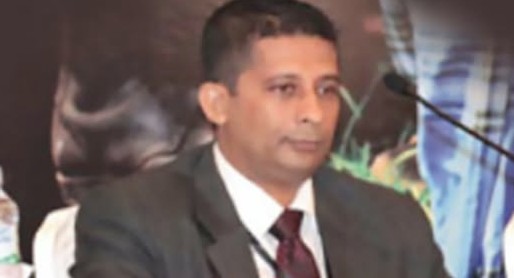
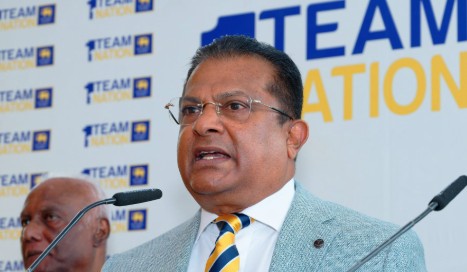
Young business tycoon Dhammika Perera assumed
duties as Chairman and Director General of the Board of Investment (BoI) on
Tuesday. However, he is not new to the BoI, as he had served on its Board for
more than a year, by the time he was elevated to its chairmanship.
The general public, as well as most Sri Lanakan investors, do not have a
positive impression of the investment promotion body. It was not very long ago,
a certain politician declared in public, that, if there was no institution
called BoI, we could have flourished as a nation. Can Dhammika Perera,
successful as one of Sri Lanka’s leading businessmen, redeem the much maligned
BoI?
The Nation Economist met Mr. Perera to find out his ideas to convert this
institution into a more business friendly organization, to deliver the expected
results.
Excerpts of the
interview:
By Indika Sakalasooriya
Q. What is your first priority at the BoI?
A. Well, to put it in a nutshell, I’m very keen on changing some of the
rigid BoI policies and systems that have been practiced in the last decade. This
would be my first priority.
Q. BoI or, what was then known as GCEC, was created during President J.R.
Jayewardene’s time, to get away from government bureaucracy. However, now, the
BoI has become another bureaucracy by itself. Don’t you think it needs a
complete overhaul?
A. Since I assumed duties only yesterday, I am not in a position to give a
proper response. Once I am more familiar with the subject, I would be in a
better position to tell you something important later. However, for the moment,
I don’t think that the BoI needs a complete overhaul. I’m confident that I can
make things run smoothly again.
Q. As an investor, what were your experiences with the BoI?
A. Well, I have to confess that my experiences with the BoI were not very
pleasant. I can remember obtaining BoI approval for my Rocell Bath Ware factory.
I had to wait for almost six months. I think, that was a very good example of
the inflexible and lethargic bureaucratic system the BoI had been practising.
Another incident was when I wanted to build a factory last year. The BoI said
that I couldn’t do that, because there were other factories. From that I
understood that the BoI was there, not only to promote investment but also, to
discourage investment. I should also mention that, although the BoI has nine
receptionists, each for all the nine floors they occupy at the World Trade
Centre, an investor always has to come through the back door, to get anything
done. As an investor, I experienced this and it is my duty, to put an end to
these malpractices.
Q. So, do you think that those experiences will help you to improve the
system?
A. Definitely, they will. The first thing I did, after assuming duties, was
reduce the 12-page application form investors had to fill, to get BoI approval
for any project, to a single page. I know how tiresome that process is. The
investor cannot fill that form by himself, because it is highly unlikely that
the BoI would accept it. Therefore, the investor has to go to a consultant and
spend about Rs.150,000, to get it filled. Thus, I can tell you, that my
experiences with the BoI, as an investor, will compel me to create more investor
friendly policies.
Q. How many are on the BoI staff at the moment? Will you be recruiting new
personnel to make it efficient?
A. At the moment, there are 1,100 personnel working in the BoI. Yes, I’m
thinking of recruiting about 100 graduates, because the cadre at the BoI is
insufficient.
Q. After assuming duties as Chairman, you said that local investors will be
afforded the same incentives granted to foreign investors. Will it affect the
much needed foreign investment at the moment?
A. No, it will not. This institution is called the Board of Investment.
People are under the notion that the BoI is only to promote Foreign Direct
Investment (FDI). It is not true. It is true that FDIs bring foreign currency
into the country. However, again they take their money back to their countries,
on various pretexts such as buying machinery. Hence, there is nothing in it for
us. What we should pay attention to is how these FDIs help the economy, nothing
else. If we encourage local investment, especially, export oriented businesses,
through the BoI, by granting them equal opportunities and incentives as the
foreign investors, the volume of investment will definitely increase. As a
result, the country gains.
Q. What are the main sectors where incentives will be granted to local
investors?
A. Services sector has very good potential. At the same time, education,
apparel and the agro chemical sectors are also very important areas that local
investors should pay attention to.
Q. What are the main countries we can target for investment?
A. I can’t tell you that at the moment, because my attention is focused very
much on restructuring BoI policies. That identification will take some time.
Q. In your view, what is the best way to promote investment? Is it by having
seminars, road shows etc. or, arranging individual meetings?
A. Whatever it is, the most important factor is that they should be targeted
in specific ways. Unlike in the past, we are not going to market what we have in
our country or, what we are going to give the investors. First, we select
several countries and identify their economic and investment strengths. After
identifying them, we create an attractive package for them and market it to the
relevant country, through trade shows, seminars etc. Without customised
targeting, promotional campaigns are a waste of money. It is good that the BoI
hasn’t expended much on promotional campaigns earlier. It would have been a
sheer waste of resources.
Q. You have said that by offering the same incentives, we would be able to
stop local investors from investing overseas. What would be the annual volume of
such investments?
A. No. I didn’t say that we should stop them. In the same way that foreign
investors come to Sri Lanka, our people too, should have businesses in other
countries. What I meant was that, we should afford local investors equal
opportunities, so that, if the return is high, it is possible that they would
not opt to invest in businesses abroad. My understanding of the problem is that
local investors do not have a proper understanding of what the BoI is about. The
opportunities and incentives they are eligible to, from the BoI, are not
effectively communicated. Therefore, to bridge that gap, within the next
fortnight, we intend launching a small publication called “Investment
Opportunity”, which would contain all the facts and figures pertaining to
investment opportunities in Sri Lanka.
Q. The targeted FDI for this year is US$ 4 billion, when last year it was
only US$ 604 million. As you can see, there is a big gap. Don’t you think this
target is too ambitious?
A. No. I don’t think it is too ambitious or unachievable. A new oil refinery
worth US$ 2.5 billion is due in Hambantota. That alone is in excess of half the
target. However, you can’t expect the funds to come into the country
immediately, because the realization process will take time. Also, there are
several power projects such as the Trincomalee Power Project with an investment
of Rs.500 million, that will contribute to the rest of the target. In fact, Dr.
Amunugama has decided on that target for the BoI, only after careful analysis of
the situation..
Q. There is a serious charge against the BoI that it is not monitoring
factories set up with BoI concessions, to ensure that the facilities guaranteed
are not withheld when they come into the country?
A. Yes, I accept that there are problems in monitoring. However, I am
confident that, as a team, we can find remedies for that. In fact, as for
everything else, monitoring too, needs transparent and clear policies. First,
we’ll attempt to rectify the shortsighted policies and uplift the standards of
the institution. Failing which, the only option would well be to restructure the
institution.
Q. How could the BoI help in developing the provinces as proposed in the
government’s 10-year development plan?
A. The book that I mentioned earlier “Investment Opportunity”, has all the
investment projects mentioned in it, including the projects in remote areas.
Meanwhile, we are planning to have three new Free Trade Zones, one each in
Trincomalee, Puttalam and Matara, in addition to small regional ones.
Q. In your view, what are the main impediments to developing the BoI into an
effective institution?
A. As a matter of fact, I don’t see much problems. Definitely not big enough
that we cannot find solutions to them. The problem is only one of mismanagement.
For example, there is a 180-acre zone in Seethawaka. It has only 28 factories
with 15,000 employees. There is still enough land and space in that zone that
could be utilized to profit from but, what has happened is that some of the land
has been blocked. Hence, nobody can use them. This is what I meant by
mismanagement. As I said, there are no problems that we cannot solve. However,
if we fail to do so, within a reasonable period of time, then, I am to be
blamed.
****
Dialog TV takes Sri Lanka by storm
By
Marianne David
Based on cutting edge technology, Dialog TV took Sri Lanka by storm with its
state-of-the-art satellite digital video broadcasting, DVD quality picture,
stereo quality sounds, and its line-up of top channels.
Turning around the trend of television viewing in Sri Lanka, DialogTV, with its
tag line of ‘Wake Up To The Next Generation Of Satellite TV,’ boasts a wide
range of international content, including CNN, BBC, HBO, Cinemax, AXN, ESPN,
Discovery Channel, MTV (Music Television) and Cartoon Network, amongst many
others.
Dialog TV is operated by Asset Media, a subsidiary of Dialog Telekom Limited.
Heading the Dialog TV team is Dialog Telekom General Manager (Sales and
Marketing) Nushad Perera.
In an interview with The Nation, Perera said that Dialog Telekom has now become
a quadruple player. The company is the first in South Asia, to enter the
quadruple player field – boasting of a mobile operation, a fixed line operation,
a broadband operation, and a media operation.
Speaking of the challenges faced by DialogTV, Perera said that challenges
included reinstating confidence in customers, after the suspension, re-awakening
the whole organization, because it had been in limbo, and taking the product to
the hands of the consumer.
Elaborating on the challenge of taking the product to the consumer, Perera said,
“Traditionally, viewers don’t pay to watch TV. We are coming in with a game
plan, saying ‘here is a television media where you have to pay, to watch TV.’
Then, we have to build massive value, to attract the consumer.”
In order to do this, Dialog TV structured the product into three categories –
Super 500 with 16 channels, Great 900 with 25 channels and Value 1400 with 29
channels, plus the local channels.
“We recently got the ICC World Cup, which was the main puller. We spent a lot of
money on that. There was no return on investment, because we paid a massive
amount, to get the rights. However, we chose to do so as a confidence building
mechanism. It was also a way of telling the consumers that we are here
permanently,” added Perera.
Dialog TV is now moving into adding more and more channels into the network.
“There is space in the satellite. We had two transponders and both of them are
full, so, we have now bought two more transponders. Therefore, we can add more
channels and improve the quality even further,” explained Perera.
When Dialog TV took over CBN Sat, there were 10,000 subscribers. Dialog TV has
managed to increase the number of subscribers to 22,000 within three months. The
company is currently adding 4,000 customers a month.
Explaining the rationale behind the ‘buy one, get one free’ spot promotion,
Perera said, “That was a loss to us, because we are giving the equipment free.
However, we wanted to test certain price points. We found the results
overwhelming, which meant that consumers were willing to pay about Rs. 9,000 for
the connection.”
Dialog TV has also taken the step of investing in distribution and installation.
Distribution is vis-à-vis all Dialog centres, of which, there are around 300
across Sri Lanka.
Dialog TV also formed 50 fully trained and skilled installation crews operated
by Dialog TV to carry out installations for customers. A team comprises of two
people plus a vehicle. Once a customer’s payment is realised, Dialog TV provides
the connection within three days.
Dialog TV has also been successful in getting large enterprises in Sri Lanka,
including 95% of Sri Lanka’s star class hotels, connected to DialogTV. This
includes John Keells Resorts, Aitken Spence Group, Confifi, Trans Asia, Cinnamon
Grand, Hilton, etc.
“We have also connected most of the apartment complexes. We have a dedicated
enterprise solution, where we run a single cable and connect all the
apartments,” added Perera.
As for signal quality, Perera said, “What we must emphasise is that, with
satellite TV, rain degrades the signal quality to a certain extent. When there
is heavy rain, signals do not penetrate. This is a worldwide phenomenon beyond
the control of Dialog TV. In Sri Lanka, by and large, this is limited to 10 to
20-minute spells.”
Another challenge faced by Dialog TV was to motivate the staff. “We put the cart
before the horse, where we showed the staff the potential of the product and we
infused some of Dialog GSM’s key players into the organisation. Key people were
brought into the organisation from many divisions and we infused the Dialog
energy into the defused CBN Sat,” asserted Perera.
As for the challenge of instilling confidence in the people, while the Dialog
name itself created a lot of confidence in the product, people were skeptical
whether Dialog could carry it through, after the events that led to the closure,
said Perera.
Therefore, the Dialog technical team did a complete study of the system and
Dialog TV partnered only its very reliable business partners.
“We made it a point to ensure that it was absolutely ethical and honest, in all
the dealings we carried out. We were transparent with any organisation. We also
obtained all the clearances and catered to all the legal requirements,” Perera
emphasised.
So, what’s next from DialogTV? “More channels coming in. You could expect us to
bring in the digital experience into television. Right now, people are not
accustomed to seeing good quality, high definition TV. We are on a pilot project
now, results of which we could announce within four weeks. Then, we can bring in
a high definition digital experience into television,” Perera pledges.
Dialog TV also plans to increase the number of channels to about 50, by the end
of the year and provide value for money.
“We will continue to provide value for money. That has been Dialog’s framework.
It’s in our blood. We can promise that, if we offer a discount for any of our
new packages, it will be extended across the board to all existing subscribers,”
he concluded.
**** |