














It is the economy that matters
The country’s major opposition party, the United
National Party (UNP) also appears to have realised that it is after all
the economy that matters. They should know: many believe the short-lived
United National Front (UNF) regime collapsed in 2004 partly because its
economic benefits were designed to give only long term yields and there
was no short term redress for the masses.
When
a then little known man named Bill Clinton launched his campaign against
the incumbent President of the United States, George Bush (Snr.), his
campaign strategist James Carville hung a sign in Clinton’s office in
Little Rock, Arkansas to constantly remind his candidate what the
campaign was all about. That sign simply said, “It’s the economy, you
stupid!”
That Clinton trounced Bush at the election that followed notwithstanding
the latter’s success in the Gulf War, is now history. But, if there are
any strategists left in President Mahinda Rajapakse’s team of advisors
at this point in time, they might as well take serious note of
Carville’s advice.
In fact, after a long and self imposed slumber, the country’s major
opposition party, the United National Party (UNP) also appears to have
realised that it is after all the economy that matters. They should
know: many believe the short-lived United National Front (UNF) regime
collapsed in 2004 partly because its economic benefits were designed to
give only long term yields and there was no short term redress for the
masses.
Traditionally since independence, UNP governments have been better
managers of the economy than Sri Lanka Freedom Party (SLFP) led
coalitions. Thus, while the government of Sirima Bandaranaike in the
early seventies is best remembered for the economic hardships it imposed
on the country, the J.R. Jayewardene regime that followed is credited
with liberalising the economy and paving the way for sustainable reform.
Chandrika Kumaratunge who followed seventeen years of UNP rule was
ideologically more of a socialist than a capitalist. But realising that
offering to discard the popular open economic policies would be
political suicide, she ran with the slogan ‘An open economy with a human
face’, a reference to tackling the corruption that had set in with
liberalisation.
The Kumaratunge era failed to do much either in the economic sphere or
in terms of the other major issue it was confronted with-the North East
crisis of terrorism. But its failures now seem to pale into
insignificance, considering the downward spiral the economy is
experiencing right now.
A glance at the week’s headlines paint a dismal picture. The price of
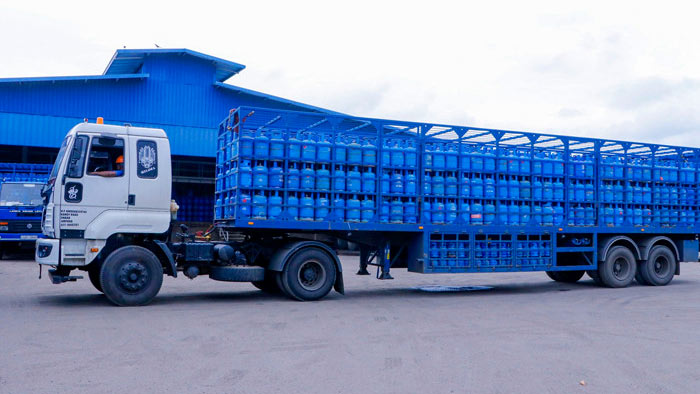
milk food increased, gas prices also rising, the government imposing a
series of stealth taxes amidst much controversy in Parliament, and the
Leader of the Opposition threatening to cancel the banking license of a
global bank if it proceeds to offer succour to the government by way of
a five hundred million dollar bond issue.
Inflation is rampant and interest rates are soaring. In a climate of
uncertainty, investors are hesitant to pump their dollars into the
country, especially when the noises the government makes vis-a-vis the
ethnic conflict are designed to provoke rather than placate.
Problems
The problems President Mahinda Rajapakse is faced with appear to be
two-pronged: on the one hand, being elected on a populist platform where
he attempted to offer everything to everyone, his government lacks a
cohesive policy and vision with regard to the economy. On the other
hand, Rajapakse has to appease his many political partners which create
a picture of immense wastage especially when the cabinet itself numbers
over a hundred.
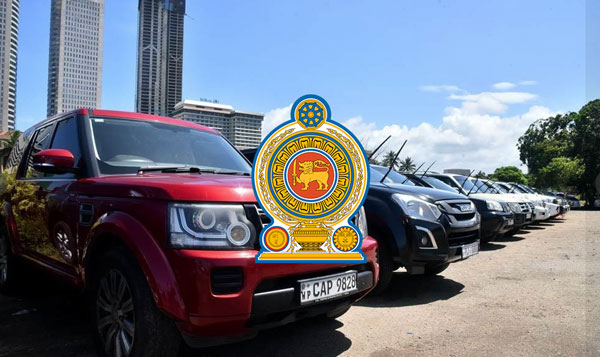
Then there is more than a whiff of scandal. The recent hullabaloo over
the Benz vehicle imported by a monk turned Member of Parliament erupted
into one big controversy. Purchases for the war including those of the
MiG aircraft are equally contentious and the report of the Committee on
Public Enterprise (COPE) headed by government parliamentarian Wijedasa
Rajapakse stinks to high heaven.
The resultant picture is that of a banana republic like state where the
powerful have everything, and the poor, nothing. To add to the
President’s woes, the Janatha Vimukthi Peramuna (JVP), his ally during
the election which won him many a proletariat vote, has now taken up
cudgels against him. This week saw the JVP casting the first stone
against Rajapakse, voting against the government in Parliament in the
five controversial finance bills.
Most of these critics would be silenced if the government is able to
find some tangible solutions to the rising, or rocketing, cost of
living. But this is precisely what the powers that be seem unable to do.
In this respect, there is no spectacle worse than Minister Bandula
Gunawardena, who seemed to have the answers to all the country’s
economic woes while he was in the UNP, only to develop some spectacular
amnesia since he crossed over to the government ranks!
Economic strategy
If there is indeed an economic strategy in the Rajapakse regime, it does
not seem to be working. What seems to be there instead are excuses for
wasting colossal amounts of money, the Weerawila airport and Mihin Air
being two classic examples.
No one would deny that the country would benefit with a second national
carrier or another international airport, but the pertinent question is,
for a cash-strapped government, should these money guzzling enterprises
be priorities? What justification would they provide to be top of the
list choices, except for reasons of personal aggrandisement?
What is certain now is that the government’s popularity is waning, and
the masses’ economic woes are contributing significantly to this
predicament. President Mahinda Rajapakse may well believe that come what
may in Parliament, he would continue to be the Executive President. But
that is the very reason why he should act quickly and decisively to stem
the economic rot because, in the final analysis, the buck stops with him
also for the very same reason: he is the Executive President, not to
mention the fact that he is the finance minister as well!
****
|