























Military ups the ante in the Wanni
While
consolidating its gains, the military is steadily ‘pegging away’ at the
Tigers’ ‘resources’ to weaken its resolve
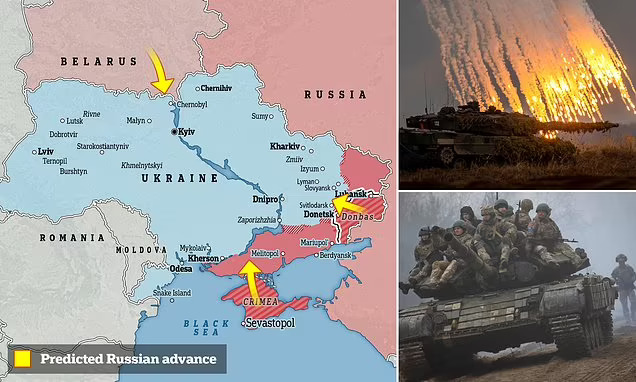
The army, which controls the A-14 Road from
Medawachchiya to Mannar, has tried to penetrate the Wanni from various
points west of the A-9 Road along the Omanthai–Vavuniya stretch. It
happened at Thirukeswaram, Andankulam, and west of Giant’s Tank,
Periyamadu, Palampiddi, Vilattikulam, Pokkaravanni, Iranai
Illuppaikkulam, Periyathampanai and Thampanai. The LTTE has struck back
hard, forcing the military to flee in most instances.
Two months back, on August 5, Senpathi made a pertinent observation:
“With the Wanni waiting to flare up and the buildup already reported
previously, the question is which side would take the initiative? The
LTTE has two options, either to dig in with a formidable defence or,
pre-empt with a strike.”
With the Wanni flaring up with battle after battle, during the past
fortnight, we now have the benefit of hindsight to say which side
actually took the initiative.
The Media Centre for National Security (MCNS) quoting unnamed sources
yesterday said: “Troops have effectively neutralised successive LTTE
attempts to advance into military defence lines separating non liberated
Wanni area.”
Midweek, intense fighting erupted west of Omantai at Vilattikulam, when
a limited operation was organized by the 57 offensive Division headed by
Brig. Jagath Dias, who took over exactly two months back. (His
predecessor, Sumith Manawadu, was transferred days after the 57 Brigade
at Kalmadu army camp, came under LTTE artillery fire and the military
base of the 16th Battalion of the Artillery Regiment at Pompaimadu, west
of Vavuniya, came under attack on June 2).
There was a major reshuffle within the command structure in the Wanni
and Maj. Gen. Jagath Jayasuriya who took over as Security Forces
Commander (SFC) Wanni five weeks back, coordinated the latest
operations.
The Vilattikulam operation that lasted till the following morning-
Thursday, was undertaken by the 6th Battalion of the Vijayaba Regiment (VR)
under Maj. Sisira Pilapitiya assisted by the 8th Battalion of the Gajaba
Regiment (GR) and the 4th Battalion of the VR.
Troops advanced toward the LTTE stronghold, captured a mortar base, a
communication centre and several bunkers. Meanwhile, the 4th Battalion
of the Sinha Regiment under Col. G.S. Welikalage, assisted by the 9th
Battalion of the GR fought for the LTTE stronghold in Pokkravanni, where
LTTE Maj. Jeyam was killed in the attack.
In the recent fighting, 19 soldiers including 14 from the 9 GR were
wounded in action (wia), two soldiers including Capt. Soysa were killed
in action (kia) and another three, were classified missing in action (mia).
According to intercepted LTTE messages, the Tigers’ head of
administration in the area, Solan, who was in charge of supplies to the
Forward Defence Lines (FDL), was killed when a cab carrying Tiger cadres
exploded. A tractor carrying supplies to Tigers was also destroyed by
the army.
So, it appears, the LTTE has taken the first option. It has dug in with
a formidable defence and responded in the face of the military
offensives.
Attack and Retreat
During the past couple of months, the military had launched lightning
operations from a dozen places in the Wanni. But, it has not been all
that successful in penetrating this jungle terrain. At most points, the
Tigers that had to flee the east, over several months, until Thoppigala,
the last bastion fell, have joined in the defence.
What is more, the LTTE has struck back hard, forcing the military to
flee in most instances. It hit back with a barrage of mortar fire and
rained artillery shells on the targets. The Tigers also used direct fire
to push back the military’s FDLs that had advanced in some places.
The military, which controls the A-14 Road from Medawachchiya to Mannar,
has tried to penetrate the Wanni from various points west of the A-9
Road along the Omanthai–Vavuniya stretch. It happened at Thirukeswaram,
Andankulam, and west of Giant’s Tank, Periyamadu, Palampiddi,
Vilattikulam, Pokkaravanni, Iranai Illuppaikkulam, Periyathampanai and
Thampanai among other places.
The military claims it ended up killing dozens of Tigers and destroying
enemy bunkers in the ensuing confrontations. In clashes on Friday at
Navathkulam and Periyathampane areas, it claimed two Tiger were killed
and six others wounded, while four soldiers were also injured.
Nine LTTE cadres were reportedly killed this week in an attack west of
Thampane, but MCNS says 16 Tigers were killed and the bodies of four
were recovered. A fortnight back, on September 22, a Capt. and two
soldiers died and 22 wounded in a battle in Thampane that lasted several
hours and went late into the night.
Operations west of the Giant’s Tank in Mannar, have been more frequent.
They were undertaken by the Commando Brigade and the STF. Several LTTE
bunkers were destroyed, while troops advanced about a kilometer into
LTTE territory. However, troops under Capt. Pandita, had to face Tiger
mortar fire that injured the officer and two soldiers. Maj. Sarada
Samarakoon of the10th Battalion GR, along with the second commando
Brigade, advanced up to the LTTE FDLs and destroyed seven Tiger bunkers
last week, according to claims. The military also claims that 35 Tigers
were killed and 40 more wounded in the confrontations on Wednesday and
Thursday, mainly in the area northwest of the Giant Tank. There was no
independent confirmation of the casualties.
The main aim of the military is to penetrate the first FDL along the
Vidattaltivu-Periyamadu-Mundurmurippu-Puliyayankulam-Marutodai axis from
West to East in the Mannar and Vavuniya districts.
Consolidating gains
The military admits that the LTTE has increased its numbers in
Vidattaltivu area, where a civilian influx has been observed.
To enter the Mullaitivu district, there is another FDL along the
Kannadi-Iramiyankulam-Naddankandal-Kummakulam-Kanakarayankulam axis.
Still further up north, there is the Mankulam, Olumadu Oddusudan axis
secured by the Tigers in 1999. These bases are located by the main
highway that leads to the strategic Elephant Pass complex, the gateway
to the northern peninsula. In 2000, the LTTE went for the big kill and
overran the Elephant Pass base. Smaller camps such as Nedunkerni,
Kanagarayanakulam and Ampagamam, to name a few were also overrun in
1999. While attacking Oddusudan and Mankulan, they took on Weli Oya and
overran Puliyankulam and Gajabapura eight-years-ago.
This week, during a confrontation in the Weli Oya area, three Tigers,
including an area leader identified as Kalivanan, were killed in counter
attacks at Kiriibban Wewa, raising fears whether a third front was
likely to open. As the Mannar operations appear to be time consuming, it
is unclear whether a front is to be opened up in Weli Oya, where the
Tigers, several months ago, said there was a military buildup.
The military claims that the Tigers staged the attack at the Kiriibban
Wewa.
Weli Oya has been identified as a vulnerable area with the LTTE possibly
eyeing this place, to begin its strike. But, it has to make sure it
succeeds.
The Weli Oya Command also changed hands from Maj. Gen. Nimal Jayasuriya
to Brig. M.K. Jayawardena. At the time Jayasuriya took over Weli Oya,
there was no FDL between Padaviya and Kebethhigollewa, which was
attacked twice last year.
As the military had identified Weli Oya as a probable target of the
Tigers, Gen. Jayasuriya had a 25-km bunker line constructed to prevent
raids on villages in Weli Oya. A stretch of five-km of no man’s land
between Kokkutuduvai, almost on the east coast, and Janakapura, was a
tactical disadvantage to the army. The former Weli Oya commander had a
fortified bunker line built linking Janakapura.
On Tuesday (02) security forces launched an attack and destroyed an LTTE
boat after detecting a cluster of Tiger boats, in the seas off
Kokkuthudai in Pulmudai. The battle between security forces and sea
tigers which lasted nearly three hours ended around 3:30 a.m. Wednesday
(03). The forces used heavy artillery, mortar and small arms to launch
the attack on the cluster of boats.
On the A-9 Road, the army has been restricted to Omantai, far below
Puliyankulam. The entry-exit point on this road to the south, is at
Omantai and the north at Muhamalai, which along with the
Kilali-Nagarkovil axis, still appears impregnable on either side.
The 8th Battalion VR attacked LTTE’s Nargakovil FDL this week and
destroyed several bunkers, after an attempt last week did not bring in
the desired results. Ten LTTE cadres were killed and about 20 injured in
Nagarkovil, while two soldiers were killed during a confrontation again
this week on the Kilali FDLs. In attacks the previous week at Kilali,
the military claimed that 20 Tigers were killed, as against two
soldiers, but the Tigers admitted the deaths of four Tigers and an
unknown number of soldiers from the 4th Battalion of the Sri Lanka Light
Infantry. Last week too, there were attacks at Muhamalai and the trend
appears to be frequent lighting attacks to weaken the Tigers, but the
status quo on the ground remains and any area secured eventually, had to
be conceded. Military, officials and the army top brass repeated ad
nauseum, that taking control of real estate was not their intention.
Then, what is the military gain, we may ask?
Gnawing away at the Tigers
As we see it, it is a war of attrition or at least, such a phase, the
military is currently engaged in. Destroying Tiger bunkers has been
another strategy employed by the military in its recent limited
offensives. In the process, it is only logical that the military
sustains losses in the north and the Wanni. In the East, there were
lesser casualties and the Tigers withdrew to fight another day, and that
is in the Wanni.
It its cold calculation of decimating the Tigers, the military may be
blind to the fact that if the Tigers hold out till a change of regime,
to recruit, it would state how the LTTE survived arguably, one of the
most ferocious phases of the war. The undeclared ‘Eelam War IV’ most
certainly, has surpassed the previous one in terms of the concerted
efforts of the three forces, skills and tactics employed, the use of
artillery, mortar and multi barrel fire, intelligence gathering, support
from the ‘Karuna’ group, that almost divided the LTTE into a Wanni and
the eastern faction.
Surviving such an onslaught, is enough propaganda for the Tigers to
recruit both here and in Tamil Nadu.
So, it is obvious why the LTTE has not taken the second option and
initiated attacks, not only in the Wanni but, along the
Kilali-Muhamali-Nagarkovil axis?
The LTTE cannot afford to initiate an attack, unless it is sure to
succeed? The result of the major attack the Tigers initiated in Muttur
and the provocation made in Mavil Aru, is too widely known here and
among the diaspora. The August 11 Muhamalai attack staged by the baby
brigade and followed by the specialized Charles Anthony Brigade was also
a disaster. Not even the Kilali offensive, including the boat landing by
Sea Tigers, could make material difference. It was a failed attempt with
a capital F.
No wonder then, that LTTE Political Wing Leader, in mid September, said,
“The LTTE is maintaining patience and still restricting itself to a
defensive war.”
Tigers dig in
The military, however, can afford to take chances, as it has the success
story in the “East” to brag about. Nevertheless, the military cannot
afford to lose a major battle in terms of territory, casualties or loss
of equipment. The October 11 debacle in Muhamalai, in terms of
casualties reported and equipment lost, is a grim reminder of the many
conventional battles previously lost.
Hence, the recent offensives are lightning attacks by small groups, to
limit the loss in terms of casualties.
So, at this rate, it is estimated that the military would take another
three to four years to succeed, given that the Tigers are well
entrenched and have the added advantage of familiarity with the terrain.
As we said last week, the modus operandi of the security forces was
likely to succeed in the Mannar region via the Wanni. We are not denying
that the military would eventually succeed, but it would be at such a
slow pace that political developments were likely to overtake the
military gains.
Political developments are also shaped by economic considerations, and
the military would find it difficult to sustain its campaign
financially.
LTTE Leader Velupillai Prabhakaran is a master at the game of a
protracted struggle and as we said before, has outlived the tenures of
governments here, in India and will soon do so in America.
Even if there were to be a change of government, the military has
changed the balance of power in the new government’s favour. Having
wrested control of the East, the new dispensation, if it intends
commencing peace talks, will be able to do so from a position of
strength. Contrast this with the UNF’s previous unenviable position in
December 2001, with the East also under the Tigers’ belt and the air
force depleted, having lost some of its fighters.
The air force has wreaked havoc in this ‘Eelam War IV’, taking on Tiger
assets week after week. Repeated attacks staged by fighter jets in
Vashvamadu beyond Pudurippu, over a fortnight, have had a huge effect on
the LTTE. Where the army is unable to penetrate in the Mullaitivu
district, the air force has been pounding sensitive areas. It is
reliably understood that bunker buster bombs are also used to target
underground facilities.
Naturally, the Tigers who called the shots and negotiated from a vantage
position at that time, were able to secure ‘a federal solution.’ The
UNP’s recent dropping of the word “federalism”, is a tacit recognition
of the military achievements on the ground, sea and air.
If the LTTE refuses to talk peace, which is the likely scenario, as it
does not talk from a position of weakness, the alternative might be to
continue the war. The military will not agree to a change in the ground
situation. Hence, one reason cited by the UNP for this change was a
change in the military situation on the ground.
****
|