






















|
The ‘other’ English
Michael Meyler,
a Britisher resident and teaching English in Sri Lanka for over
a decade, has compiled a ‘dictionary’ of ‘Sri Lankan English’
unique to Sri Lanka. Even though Sri Lankans who speak English
as a first language, consider its usage as being correct, it is
definitely not Standard English.
By
Vindya Amaranayake
The existence of a Sri Lankan variety of English is a disputed
fact. Although there are a considerable number of Sri Lankans
who use English as their first language, the establishment of
Sri Lankan English as a separate variety has not been realised
so far. On the other hand, even a slight deviation from the
Standard norm, is perceived by many as a desecration of the
language.
In such a context, the recent launch of A Dictionary of Sri
Lankan English compiled by Michael Meyler, catches the interest
of many.
“There are many who believe that the Standard English is the
only correct usage of English. Any deviation in the form of a
variety is considered incorrect. It is the same with the Sri
Lankan variety,” Meyler said in a brief interview with The
Nation.
This dictionary is a compilation of words and expressions,
slight grammar differences and pronunciation that could be
termed as salient features of Sri Lankan English.
“I used three main sources to gather data for this compilation:
Sri Lankan newspapers, TV and radio commercials and through
simply overhearing,” Meyler said.
Although there are many who have been conducting research on
this subject, their studies are confined to academic circles,
especially, due to their focus on theory, rather than practical
application.
Meyler’s attempt is simpler and has a specific target audience:
“This work is intended for learners and teachers of English in
Sri Lanka. It is also meant for Sri Lankan and foreign linguists
interested in the increasingly popular field of international
varieties of English.”
English used in different parts of the world, especially, in
post colonial times, have evolved into different varieties by
absorbing certain elements of the vernaculars. There are Indian,
South African and Jamaican varieties, which have been
established as being separate from the Standard norm, for quite
some time.
“I’m surprised that no one has taken up this task until now.
Ideally, it should have done by a Sri Lankan,” Meyler pointed
out. He, however, added that being a British it gave him an
outsider’s perspective into the differences in the usage.
“Being British, I could pick on certain differences in the
pronunciation and use of grammar. These may not be major
differences, yet uncommon to the Standard usage,” he explained.
Those who speak English as their first language in Sri Lanka,
are quite few. The majority are second language users, and their
standards are quite low: “There is a growing divide between
these two extremes. Yet, if the majority expect to study and
seek employment in Sri Lanka, it is essential that they learn to
speak the Sri Lankan variety,” Meyler said.
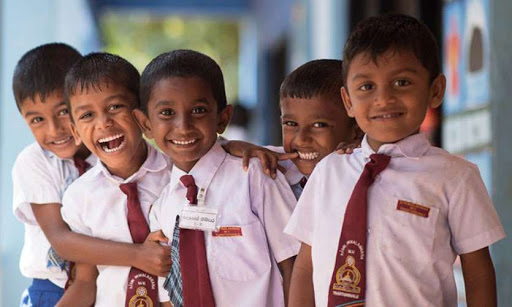
He added that this work could prove useful to school children,
who are in the process of learning the English language, to know
the difference between Standard English and Sri Lankan English.
An English language teacher in Sri Lanka for nearly 12 years,
his experience with Sri Lankan students and their English usage
has given him ample opportunity to gauge the status of English
in Sri Lanka.
The dictionary comprises approximately 2,500 examples of words.
Supported with illustrations and examples, the presentation of
facts is quite simple. The introductory remarks and the brief
explanation on the perceivable differences in the Sri Lankan
variety, is written clearly and simply.
Some of the most striking examples highlighted in the dictionary
are as follows:
‘Ancestral home,’ ‘anicut,’ ‘arecanet,’ ‘bed sheet,’ ‘bed tea,’
‘bio-data,’ ‘pharmacy,’ ‘plantain,’ ‘playground,’ ‘record bar,’
‘ribbon cake,’ rice mill,’ ruggerite,’ ‘saffron,’ ‘schooling,’
‘scrape,’ ‘servant,’ settle down,’ ‘shock.’
Some of these words are entirely new to the Standard English
lexicon. A word such as ‘ruggerite’ is specifically Sri Lankan.
On the other hand, to use a term such as ‘servant’ would be
considered politically incorrect in the Standard form.
In most instances, the words that already exist in Standard
English maybe used in different contexts to denote contrasting
concepts.
The book comprises many such examples, which justifies the
existence of a separate variety of English in Sri Lanka.
Interestingly, Meyler says that there are sub varieties within
Sri Lankan English, as different vernaculars such as Sinhala,
Tamil and Malay have rendered their own flavour to the English
language.
A Dictionary of Sri Lankan English is a timely work. According
to Meyler, the response so far has been very positive. “I am
surprised and very happy for the response I have received so
far, from academics and media,” he said.
****
Prof.
Mohan Munasinghe meets Ban Ki-moon
UN
Intergovernmental Panel on Climate Change (IPCC) Vice Chairman,
Prof. Mohan Munasinghe greets United Nations Secretary-General
Ban Ki-moon, at the IPCC Plenary in Valencia on November 17,
2007. Ki-moon congratulated the IPCC on winning the 2007 Nobel
Peace Prize, and successfully completing the Fourth Assessment
Report which provides the most authoritative review of climate
change. Earlier, Prof. Munasinghe gave a keynote speech on
‘Climate Change and Sustainable Development,’ summarising the
IPCC results at a special session of the UN General Assembly in
New York. He is also Chairman of the Munasinghe Institute for
Development (MIND), Colombo
****
How can we spot let alone stop a suicide
bomber?
By Shenali Waduge
There are many who grumble over the present security check
points where passengers and passers by are often subject to
searches and requested to forward some form of identity. Have
they ever thought how it must be like for the men and women of
the Armed Forces and police who conduct the security checks
through sun and rain? How close they are to death by a potential
suicide bomber who is likely to set the bomb off no sooner she
feels that she has been suspected? How many of us empathize with
our armed forces?
The 90s found the LTTE targeting civilians in a bid to hit the
economy and tourism as a result. Thereafter, their emphasis was
more toward hitting their enemy – the leaders, the armed forces
and heads. The Nugegoda bombing could have then been averted had
the bomb disposal squads attended to the parcel instead of the
constable who unfortunately met his death in examining the
parcel found by the NO LIMIT staff.
This incident however tragic does call for some sensible action
on the part of the public too - a big NO to crowding round any
suspicious looking object just to satisfy one’s curiosity.
The repercussions are likely to be fatal and you are not likely
to live to tell the tale. The Government in turn must
immediately set up national programs and through informational
networks in collaboration with the private TV and radio channels
advise the public including students what to do in case they
identified a potential suicide bomber or a suspicious parcel.
It would require tremendous nerve to know how to act in a
situation where one suspects a potential suicide bomber. Even a
whisper to someone next to you may invite the suicide bomber to
take action.
Yet, allowing her to proceed is likely to create a worse
scenario in that she would be heading for her preferred target.
The reality is that no one has any formula to spot or even stop
a suicide bomber. She is a human bomb prepared to die while
causing death and mayhem to scores of others – it may be any of
us on the street.
Lately the salwar has become their choice of dress, it is easy
to conceal the bomb, but these murderous elements will soon
think of another form of attire.
Another option that the government should consider is relocating
the offices of potential targets. Minister Douglas Devananda’s
office is very close to Isipathana College. You can imagine the
chaos it would have caused if the bomb had taken place during
school opening or closing hours. It was extremely wise of the
Education Minister to declare holiday for schools in the Western
Province. With humanitarian agencies keeping to their diplomatic
proclamations against the bombing, if any such incident had at
all resulted in an attack on the Tamils down South it would have
certainly made headlines and the entire world would have come
down on the government.
However, these 18 or so innocent lives have just had to make do
with the usual diplomatic statements saying that the Sri Lankan
government ‘suspects’ the LTTE for the incident.
With the X’mas season round the corner, the public need to be
quickly educated on handling such sensitive situations and the
need for extra vigilance to avert any calamity that these
murderers are planning to do.
****
|