




















|
An energy secure Sri Lanka

Empowered by the mission of guiding the nation in
developing and conserving energy resources, the Sustainable
Energy Authority marches forward aspiring after ‘an energy
secure Sri Lanka.’ This endeavour however, would not function to
its fullest without active public participation.
Let us be supportive.
The Nation seeks the way
By
Nimashi Amaleeta
They called him ‘Bossa.’ Bossa was of a rare breed. He was
strict with time and didn’t entertain idleness. No sooner had I
introduced myself to him, the first thing he did was operate a
blinking gadget on his table and say “I’ll give you 20 minutes
and when this starts illuminating in red, you better leave the
room!” Naturally, I felt scared. I glanced at it on and off
hoping it to go red and explode at any moment. Suddenly, the
colour did change and I almost choked. “Is that red?” I asked in
horror. “No, it’s orange,” he replied with a grin. I was
relieved. Strange alright, but Bossa wasn’t that unfriendly
after all. And he did allocate more than just 20 minutes to The
Nation, even though the gadget blinked red.
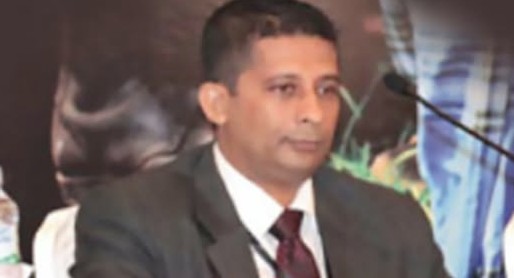
Bossa, or rather boss, was actually Deputy Director General,
Engineer Harsha Wickramasingha of the Sri Lanka Sustainable
Energy Authority (SEA). This organisation, operating within the
Power and Energy Ministry came into being on October 1, 2007.
“It was the government’s way of responding to the need of
achieving sustainability in energy generation and use in Sri
Lanka,” explained the engineer reflecting on the advent of the
organisation.
At present, Sri Lanka fulfils 43% of its energy requirement with
importations. The year 2006 showed a sharp increase in oil
imports, which in turn, consumed over 1/4th of Sri Lanka’s
export earnings. This trend, by all means needs to be reversed.
Accordingly, the SEA focuses on remedying the trend by guiding
the nation to develop and conserve global as well as indigenous
energy resources through exploration, facilitation, research and
knowledge management. This also empowers Sri Lanka to gain
energy security through sustainable practices. “Energy security
of the individual, as well as the nation as a whole, is our
responsibility,” assured the engineer.
Oil crisis and Sri Lanka
Whenever the oil prices escalate and Sri Lanka’s economy
succumbs to chaos, it is customary of us to point the finger at
incumbent governments rebuking everyone under the sun. But have
we ever pondered what the driving factors behind these crises
are? Engineers Harsha Wickramasingha and Athula Jayathunga of
the SEA offer plausible explanations reflecting how they affect
energy generation in Sri Lanka.
“We have two levels in the energy crisis,” explained
Wickramasingha. “One is the global crisis and the other is the
national crisis. The world discovered oil approximately 150
years ago. But by now we have consumed a greater part of it and
therefore oil resources are becoming a luxury commodity. This
inevitably results in the ever escalating prices, at the same
time, limiting access to this resource. As a result, in the
future, only the affluent crowd would have access to it.
“Whoever controls oil controls the world! This creates the
global crisis,” he opined.
Reflecting on power generation (generation of electricity) in
Sri Lanka, Wickramasingha said, “78 % of Sri Lanka’s population
has access to electricity.” This figure is expressed as a ratio
of the number of houses with electricity against the total
number of houses in Sri Lanka. “This value places us among the
best in developing countries. The corresponding value in India
is far less than 50%, while it is much worse in countries like
Bangladesh and Nepal,” he pointed out.
“In Sri Lanka, petroleum drags the base load in power
generation, contributing roughly around 41% while hydropower
generates around 8% and wind generates around 6%,” added
Engineer Athula Jayatunga. He said that presently, our base load
comes from petroleum. Therefore, if Sri Lanka continues to rely
on imported energy, we would very soon face a crisis situation –
the national crisis. Hence, to remedy this crisis, Sri Lanka
should shift its focus from imported energy sources to
indigenous (our own) energy sources.
“This shift can be achieved via two approaches,” explained
Wickramasingha. The first is technically termed as ‘improved
consumption of energy efficiency.’ It includes cutting down on
fossil fuel importations, switching off unnecessary lights,
substituting CFL bulbs, improved road networks (for
transportation)etc. “This is very important. For example, if we
give free CFL bulbs to every household in the country, we would
be saving 300,000 kilowatt hours per day!”
The
second approach is to develop our own resources like biomass,
hydro power, solar, windetc. When asked about the practical
applicability of these two approaches, Wickramasingha said that
the SEA is planning a threefold implementation programme. One is
to phase out the use of all incandescent lamps within the next
three years. Secondly, the SEA will convert the oil-powered
thermal base to a biomass-powered base. Thirdly, the SEA would
commission a massive public awareness campaign, targeting
efficient energy consumption in the power generation sector and
wise road use in the transportation sector.
**** Renewable energy
holds much promise Sri Lanka is endowed with
several forms of renewable energy resources. Among them, the
main renewable energy resources are biomass, hydropower, solar
and wind. These are also termed indigenous resources, because
they are found within the country. The imported forms, like
petroleum, coal, natural gases are known as global resources.
Biomass is the most common source of energy in Sri Lanka. It
comes in the form of fuel wood, municipal, industrial and
agricultural waste. Fuel wood is primarily used for cooking
process in the domestic sector. Growing of fuel wood though, for
electricity generation is deeply debated due to its
environmental concerns. According to the SEA, however, the
concept of biomass based electricity generation – commonly known
as dendro power – holds much promise in Sri Lanka.
Currently, hydropower stations are operated to supply both peek
and base electricity generation requirements. Apart from the
grid connected hydropower stations, there are several mini-scale
hydropower plants serving the off-grid load. Many potential
sites have also been identified for future development.
The potential for developing solar energy plants mainly exists
in the dry zone. As estimated by the National Renewable Energy
Laboratory (NERL) of USA, over most part of the dry zone solar
radiation varies from 4.0 – 4.5 kilowatt hours per square metre
per day. They have also shown nearly 5000 square km of windy
areas with good-to-excellent wind resource potential in Sri
Lanka.
Engineer Jayatunga also said that by 2017 the SEA targets to
produce 100 megawatts from wind (a 10 % contribution to the
national grid), 90 megawatts from biomass and 250 megawatts from
mini-hydropower. “These figures refer to the most plausible
targets,” he further commented. ****
Did you know? The existing
electricity tariff structure
First 30 units cost Rs 3.00 each
Units 31 – 60 cost Rs. 3.70 each
Units 61 – 90 cost Rs. 4.10 each
Units 91 – 180 cost Rs. 11.40 each
Units above 180 cost Rs. 16.40 each
Most of us are not aware that some of the household electric
appliances we use consume a lot of electricity. Following is a
list of a few of the common appliances and their respective
electricity consumption. Note the difference between CF lamps
and incandescent lamps. Up to 80% of energy can be saved if
incandescent lamps are replaced with CFLs.
****

**** Tips to improve Check on
the following. Adopt them so as to reduce energy wastage.
Opt for CFLs
A CFL is speculated to save 80% of energy consumption. For
instance, the light output of from a 60W incandescent lamp can
be fulfilled via an 11W CFL.
Sparing use in rooms
Switch off lamps, fans, air conditioners etc, when leaving the
room.
Check your refrigerators
Doors without proper sealing lead to waste of electricity in
refrigerators. Also, the frequent practice of door opening
should be brought under control. When placing refrigerators,
please make sure that there is adequate space between the walls
and the refrigerator for proper ventilation. If the refrigerator
is exposed to direct sunlight, it could prolong the cooling
process consuming more electricity. Keep adequate space among
the items in a refrigerator. Don’t crowd it unnecessarily.
Adjust the thermostat to maintain temperature as required. Let
the hot items cool down to room temperature before they are put
into the refrigerator.
Iron when necessary
It is always advisable to iron all clothes at once, for it will
cut down on the additional heat requirement for initial heating
up of the iron. Keeping the hot iron upright will reduce heat
loss.
Opt for table fans
Use table or pedestal fans as far as possible. And replace
mechanical fan controllers with electronic fan controllers to
save energy.
**** Dr. Nekaris, only a member of WNPS
February 28, 2008
Dear Reporter,
This is to inform you that Dr. Anna Nekaris is not affiliated to
the Wildlife and Nature Protection Society as mentioned in The
Nation, 24/02/’08 in the article titled
”Monkeys in the chalk circle”. She is only an ordinary member of
WNPS.
Kindly give the same publicity to above facts in your esteemed
paper.
Thank you,
Douglas B. Ranasinghe
President, WNPS
Reporter’s response
The web profile of K. Anne-Isola Nekaris, available online at
www.lasuerte.org/facultyNekaris.html, reveals that she is
affiliated to the WNPS. Please refer section “Professional
Affiliations” in her profile. This website was last accessed by
the reporter on 28/02/’08.
**** Want to test your
creativity? Here’s an opportunity.
Green competition
In commemoration of the World Day for Water, March 22, the
NGO Net Water has organised an islandwide essay competition. The
adult category is held in collaboration with the Green Nation
page while the school category is held in collaboration with the
Kids Nation.
Title: “Water, the blood of life”
Age limit: 17 – 25.
Word limit: 1500 – 1600
Other specifications
Entries can be handwritten or typed, on a single side of an A4
sheet.
Entries should be posted to “Nimashi Fernando, The Nation
Newspaper, Rivira Media Corporation, 742, Maradana Rd, Colombo
10” or emailed to nimashi@nation.lk
All entries should carry the name, address, date of birth,
National ID number, name of the school/Higher Education
Institute/ workplace and contact numbers as appropriate.
A single participant should only submit a single entry.
All entries should reach The Nation on or before March 31, 2008.
Three winners will be selected by the organisers and
certificates will be awarded in September 2008, at their Annual
General Meeting. Date and venue will be announced later.
The Green Nation is open for your queries, comments and
contributions at
nimashi@nation.lk |