









@


HOME
NEWS  
NEWS FEATURES  
INTERVIEWS  
POLITICAL COLUMN  
THIS IS MY NATION  
MILITARY MATTERS  
EDITORIAL  
SPORTS  
CARTOON  
BUSINESS  
EYE - FEATURES  
LETTERS  
EVENTS  
SOUL - YOUTH MAG  
KIDS - NATION  
ENTERTAINMENT  
NATION SPECIAL  


Interviews


“India helps us contain terrorism”– Basil

      Says he does not agree with the composition of the Constitutional Council     

By Vindya Amaranayake
Presidential sibling cum Advisor and Parliamentarian Basil Rajapaksa, in an interview with The Nation, defended the government’s stand on India, a matter which has come to the fore, with the decision to implement the 13th Amendment to the Constitution in full. Whereas, the government’s former ally, the Janatha Vimukthi Peramuna (JVP), has initiated a diatribe against India, Rajapaksa believes that India has a right to take an interest in Sri Lankan affairs. He also defended the allegations against the government’s human rights record, saying abductions are a universal phenomenon

Following are excerpts of the interview:
Q: The New York based Human Rights Watch (HRW) has labelled Sri Lanka as one of the countries in the world, with the worst record of forced disappearances. This is likely to come up in international forums such as the EU and the UN Human Rights Council. How does the government intend to face this situation?
A:
I don’t think the government should respond to all these things that appear on the internet. Most of these organisations have not even visited this country. They don’t talk about violations in their own countries. If you go to a website and see how many people are lost in New York City on a day, I think it is more than the population of Sri Lanka. Recently, a child was abducted and hidden under a highway for one week. This is the situation there. Everyday, if you visit a supermarket, you would see notices pasted on doors, saying, so and so is missing. These are the people who talk about Sri Lanka. Missing persons is an issue all over the world. You cannot just say there are abductions. There are various types of abductions. In family disputes, there are abductions. Some people go missing when they are mentally ill. Sri Lanka readers are aware of the situation. I don’t know about the young generation, but the people who lived during the 1988/89 period, know how abductions took place in Sri Lanka, and how many bodies were there on the roads. I don’t think there are such abductions now. Sometimes, even when a legal arrest is made, it is also called abduction. For example, not only under Emergency Law, but also under the normal law, when a person is taken into custody he can be kept by the Police for 24 hours. Then only they have to produce him/her before a Magistrate. Under British law, it is more, 48 hours or, even 48 days. In Sri Lanka, we have very strong laws to safeguard people’s rights. So, I don’t fully agree with this statement.

Q: Though the government claims that there are no abductions taking place within the city, there have been several reported instances. How do you account for these, when there are vigilant committees looking out for such activities?
A:
This is the problem. Recently, one media reported the abduction of one Ilangakoon, whereas, he was actually arrested. As I said before, there are no abductions or, very little abductions – only one or two for a month. In most cases, you would find that, after about a week, the missing person either comes back or, officially announces that he was in Police custody or, has even gone abroad. Every abduction up to now, has been, finally, solved and found that all of them are in one of those categories. In the recent past, there have been no abductions. There was an abduction in Moneragala today (7). He’s a former SLFP MP, and we are looking for him. Abductions are happening in all parts of the world. This is not a new thing. Since the day civilization was formed, this type of things has been happening.

Q: The International Independent Group of Eminent People (IIGEP) has decided to terminate its work, citing lack of ‘political and institutional will to investigate and inquire into the cases before the Commission of Inquiry.’ What is the government’s response?
A:
The whole report still hasn’t reached the government. So, I cannot respond to their comment and their report. But, basically, you must think how this has happened. The idea to form the IIGEP came from the President. He invited all these people and formed it. Also, the President appointed this Commission, of his own accord. This means, the government, especially the President, wants to find the truth. The government and Human Rights Minister Mahinda Samarasinghe closely monitored these activities. When there were technical and administrative problems, the Minister always came forward and tried to solve them. Presidential commissions’ expenses are borne by the government. Also, they have to follow rules and regulations as well. You have to find officers and room for offices – all these things have to be done. According to the Minister, a huge number of evidence has to be translated, some are in Tamil and some are in Sinhalese, all of which has to be translated into English. You know how difficult it is to find good translators. They are legal documents. So, translation should be done by professional translators. That took time. Also, these eminent persons are from all over the world, and they are very busy people. One person became the foreign minister of France. They did the best they could, but they should have given more time to the Commission. The Commission members are very independent. We must not forget that even the Commission finds faults with some individual, we have to prosecute him before a court of law. Then all the investigations and evidence and the procedures of the Commission will be challenged. So, we have to be very careful. The Attorney General’s Department and the relevant organisations have highlighted this. They have to do this, despite the appearance of delaying and dragging its feet. That might be the case, when an outsider sees this process. The government, especially, the President, wants to find out the truth. When we find out the truth, we will definitely deal with the culprit, based on the present law.

Q: The JVP contested the last Parliamentary general election as a constituent party of the UPFA. They wholeheartedly supported the President at the 2005 Presidential election. Now, the JVP is on the warpath against India, while the government remains mum on the matter. How do you explain this?
A:
Firstly, the government is not mum on this matter. The second thing is that the JVP is a separate party. They have their political agenda and policies. They supported the President. They even supported the former President and were in her Cabinet as well. Then, after the tsunami, they exited. Then again, during the Presidential elections, they supported. In the Budget itself, in the second reading, they voted against, while in the third reading, abstained. The JVP is like that. They have their policies which change from time to time.

Government policy is that India is with us, a good friend of Sri Lanka and a good friend of President Mahinda Rajapaksa. They are helping us to defeat terrorism, and also, they are sensitive to the issues of the people in the north and east. There are good reasons to do that. There are many Sri Lankan refugees in India, who are from the north. They have every right to be involved in this. The government believes that India has helped us in every way to defeat terrorism and find a political solution. And, we are fully with the Indian Government.

Q: The JVP’s India bashing appears to be over the government’s decision to implement the 13th Amendment to the Constitution fully. Has India played a role in getting the government to do so?
A:
No, not at all. When there is an Amendment, it becomes part of the Constitution. You cannot say that any provision in the Constitution is full or partial. So, you cannot divide the Amendment like that. It is the Sri Lankan Constitution. But I must say that the 13th Amendment came as result of the Indo-Lanka Accord. So, India was part of it. When the north and east were merged by a Presidential order, they should have had a referendum, within a year. It was delayed. But, legally, that referendum should be held by a committee, in which a representative of the Indian Chief Justice, is a member. You cannot say that India has no part in the 13th Amendment. But, at this stage, it was the APRC that suggested this. They said, ‘why wait a long time to get a final solution, you can start with an initial stage,’ and suggested the 13th Amendment. More than that, their main focus was democratisation – give democracy to the north and east. We have liberated the east. If the east is fully controlled by the government, with law and order is established there, the next important step is democratisation – to have people’s representation. So, that is what the APRC said. Now we are having local government elections in Batticaloa, which we could not have for many years. Then, we can have provincial council elections – this is democratisation. The people there have no voice. They have no rights to represent themselves. So, that is what the government is doing now.

Q: During the meeting between the President and the Opposition Leader, the President has reportedly said that he was personally against the 13th Amendment to the Constitution. This creates suspicion in the minds of the people that, the JVP’s India bashing has the government’s blessings. Your comments.
A:
I don’t think the President ever said that. I don’t know. Of course, he has his own views not only on the 13th Amendment, but other issues as well. Even the Presidential system and proportional representation, are other questions. But he says there has to be a solution to the problem. We have to get the views of the people of the north and the east, on how to address their grievances. Unfortunately, they cannot speak now. We don’t know what they really want. What is discussed in Colombo, London, Oslo or Geneva, is not what the people want. First, we have to democratise. You cannot allow people to become hostages of people with guns. Then, they have to, slowly, abandon separatism. Then, we don’t need to fear. We go ahead and find a solution to the problem.

Q: Do you think the 13th Amendment is a solution to the ethnic problem? If so, why did the SLFP oppose, when it was initiated by the J.R. Jayewardene regime in 1987?
A:
I cannot say why the SLFP opposed it, because, I was not with the decision makers of the SLFP back then. It was the view of the SLFP then. At that time, I think, that view was correct. People didn’t know what the 13th Amendment was about. Now, they have enjoyed provincial councils (PC). Even people who boycotted the first PC election, are now doing a good job in certain provinces. I think, that fear has gone out of them. But, unfortunately, the people who asked for it didn’t get anything, except only for a few months. Now, after 20 years, they should, at least, have that. It is also a way of democratisation. We must try this first. Ranil Wickremesinghe-Velupillai Prabhakaran document was a ceasefire agreement. There was no solution. Indo-Lanka Accord is the only final agreement signed by all three parties. A Sri Lankan Government with a two-thirds majority, signed it. Even Prabhakaran agreed to it. All the other paramilitary groups too agreed. They even surrendered their arms. So, we must try this. Lets try it out and see whether it’s a solution.

Q: The inaction on the part of the government to appoint the Constitutional Council (CC) has created a political furore within the Opposition. Your response?
A:
It is clear how the CC is appointed. It cannot be appointed by one person or by one party. Many people have to get together. First, the Opposition and the Prime Minister should get together. They took one year to decide on their nominees. Then, there is another representative to be nominated by the small parties. They took more than two years. And now, the President has to decide. So, he too, should be given time to decide. Why cannot you give the President, what the others had? And the other matter is, personally, I don’t agree with the composition of the CC. The candidate who received more that 55% of the votes, can nominate only one member. Others, unable to get even 3 or 4%, can appoint one or two. For example, The Prime Minister and the Opposition Leader appoint their nominee and they themselves are represented in the CC. They are represented twice. From that itself, the composition is not correct. That is my view. But, it is in the Constitution, and we have to adhere to it. The final decision is with the President. He should be given time, because he has to be very careful in making his selection. It is difficult for a political leader to appoint an independent person. You call it an independent council, when its members are appointed by politicians. The government does not have the powers to appoint even an office assistant, but they appoint the CC, which in turn, appoints the Attorney General and others. The President can appoint a CC member, but cannot appoint an office assistant.

Q: There are accusations by the SLMC of armed groups operating in the east and that local government elections in Batticaloa would not be free and fair. Your views.
A:
I don’t know how they can claim these. We have freed the Eastern Province. If there are armed people, they must be the SLMC. Then the armed forces and the Police must ask the SLMC who these people are. I have gone to the east – especially Batticaloa – more often than the SLMC members, or their leader. Other than the security forces, I have never seen anybody else with arms. There is a group, which was fighting with the LTTE, that came out of it. Although the LTTE’s presence is not visible, they are still there. We have a history of this type of disarming of paramilitary groups. We could not provide security for them. The government could not do it, after the ceasefire agreement. Douglas Devananda is one who has survived. Many members were killed by the LTTE. We just cannot withdraw from there. We have already started some programmes, where we train people for various employment.

Q: The east has been liberated, but it is said that armed groups are still freely roaming in areas of government control – Pilliyan group. Would not this curb the activities of other political parties?
A:
When the LTTE was controlling the majority of the eastern areas, we had several elections. There were parliamentary elections, where Rauff Hakeem was elected. Actually, the SLFP is the only political party not represented in the east. The JVP, UNP, SLMC and TNA members are there. Athaulla is representing one Muslim party. Minister Fariel Ashraff is representing another Muslim party. Then, Ameer Ali is representing a third Muslim party. Then, we held the Presidential elections, followed by PC elections in all the pradeshiya sabhas in the Ampara District. Then we had local government elections in Trincomalee, with three local government elections in Batticaloa too. So, out of 46 pradeshiya sabhas, elections were not held only in 10, in Batticaloa. Does that mean, at that time, they weren’t armed. The LTTE was there, openly, the Pilliayn group was there and Karuna group was there. In Sri Lankan history, the gun culture was always there. But, I can say that, from the number of candidates and how the election campaign has progressed until now, it is very peaceful. All the parties had their political campaigns. When I went there, I saw cut-outs. I saw people canvassing. There are three major Muslim parties contesting. Political parties are at work.

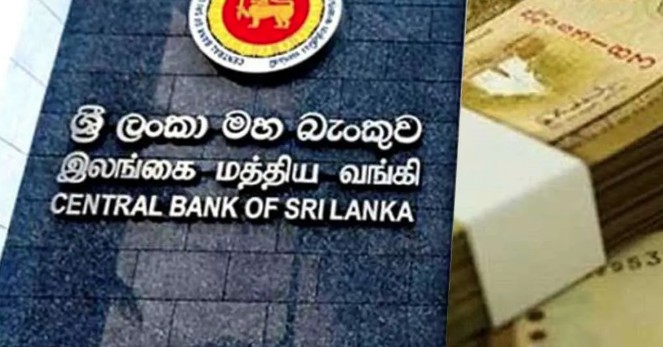
Q: The government has borrowed another US$ 300 million from a consortium of banks. The general belief is that this money is borrowed for debt servicing purposes. How does the government explain this to the general public?
A:
I don’t think it is US$300 million. It is only US$150 million. A 100 and another 50, at a very low interest rate. It is lower than what we got earlier – the US$ 500 million. It shows the confidence the world has in Sri Lanka. This is a very good sign. No one lends to a man who cannot pay back. I must say, categorically, that these borrowings will only be spent on future development. We have a very good development programme. Now, all these debts that we are paying, are not loans that we have taken. They have been accumulating over the years. And we have to pay it. President Rajapaksa, at the end of his term, will hand over a country that would be less indebted. Also, there are many infrastructure developments. For many years, we have not started any power generating projects. Upper Kotmale is coming up after almost 15 years since the Mahaweli development programme. Yesterday, we received an additional US$ 90 million loan from the ADB. I got a SMS from the country director from Manila. He was very happy to convey this news. When Mahinda Rajapaksa came to power, there was not a metre of concrete road in Sri Lanka. Now, at the end of 2007, there are 3,000 kilometres of concrete road in the villages. This year, we are concreting 2,000 kilometres of road within the estates. Now you can see the bridges being constructed. At the moment, there are 67 large, concrete bridges being constructed. Then there are overhead bridges. The Kinnia Bridge is coming up. Recently, I saw four plaques near the Kinnia Bridge – from the times of Montague Jayawickrema, Wijepala Mendis, D.B. Wijetunga and A.H.M. Fowzie. All Highway Ministers who have laid foundations. It is going to be one of the longest bridges in Sri Lanka. Whatever money we borrow, we will spend it on infrastructure development.

****