
























Hirdaramani joins green garments fray
New USD 6 million
facility in Agalawatte to start soon
By Indika Sakalasooriya
The new green apparel factory at Agalawatte set up by Ceylon
Knit Trend (CKT) Pvt. Ltd. a fully owned subsidiary of
Hirdaramani Group will start operations within the next few
months. The new USD 6 million facility named Mihila will be the
third factory to be set up in Sri Lanka falling in line with the
new trend in Europe to go for eco- friendly products.
“The investment for the new factory is a mix of internal funds
and bank borrowings and the project enjoys BoI concessions”
Hirdaramani’s Group Finance Director Ranil Pathirana said.
According to him the decision to construct a green factory was
taken almost a year ago. “The factory has a land area of 6 to 7
acres and expects to employ 1000 to 1500 workers. It will mainly
manufacture knit products such as t-shirts and pants entirely
for foreign markets”
Explaining the rationale to move into a green factory, Pathirana
said that presently the whole world is moving towards green
products and being green will provide Hirdaramani a cutting edge
in the present intensified competitive environment. The UK
garments retail giant Marks & Spencer recently announced that
after the next five years every piece of garment they will be
selling should contain the green tag.
Commenting on the green features of the new factory he said that
use of solar power, rain water harvesting, recycling of
emissions and planting of trees at key locations play a major
role in making the factory truly green.
“Being green is not very easy. It is a very expensive process.
But within a year we were able to complete it and commence
operations. In my view it is quite an achievement for
Hirdaramani” Pathirana added.
During the last few months the Sri Lankan apparel industry
witnessed another two giants in the industry going green, namely
Brandix and MAS. Brandix recently announced that their 30 year
old factory in Seeduwa will be converted to a green plant at a
cost of USD 2.5 and MAS last week opened their new green factory
located at MAS Fabric Park in Thulhiriya.
Consumers in the west are increasingly demanding environmentally
friendly goods. This has pushed large retailers and big brand
names in the west, to look for eco-friendly products. This trend
has resulted in three of Sri Lanka’s biggest garment
manufacturers putting money into setting up ‘green’ factories. ****
Birla’s
arrival to revive KKS cement confirmed
Construction
and Engineering Services Minister Rajitha Senaratne last week
confirmed the much speculated arrival of the India’s Aditya
Birla Group to revive now defunct Lanka Cement Ltd. PLC’s
Kankasanthurai (KKS) cement factory in the near future.
He said that a team of representatives from the Birla Group
visited Sri Lanka in February and a feasibility study has
already been concluded..
“There are some technical requirements that need be fulfilled
from our side before they could come here and recommence
manufacturing. Now we are in the process of clearing all these
barriers with the relevant institutions” Minister Senaratne
said.
Lanka Cements’s KKS factory which has a capacity of 500 Metric
Tons per annum and an area of 105 acres, ceased operations in
1990 due to the increased terrorist activities in the area.
Presently the Sri Lankan Army is using the factory premises as a
ware house
According to the minister, if the KKS cement factory is
re-activated, 40 percent of the country’s cement requirement can
be obtained from it. He also said that in 2007 the country’s
construction sector registered a growth of 7.2 percent and with
the activation of the KKS facility he expressed hope that the
sector would reach a growth rate of about 15 per cent.
However, the nature of the deal is not yet clear as to whether
the Birla Group will acquire the entire KKS factory or lease it
out for a certain period for production.
The stock market analysts pointed out that if the KKS factory is
to be sold to the Birla Group, the need for a mandatory offer
will arise under the new Company’s Act. The government holds
about 80 percent of Lanka Cement PLC through the Treasury, Bank
of Ceylon, CPC and state pension fund EPF while the other 20
percent is held by private investors. IS
**** We are
watching you- CB tells banks
By Samantha Whybrow
A stern warning has been sent out to banking executive and
non-executive directors, telling them to toe the line when it
comes to corporate governance or risk a firm encounter with the
law.
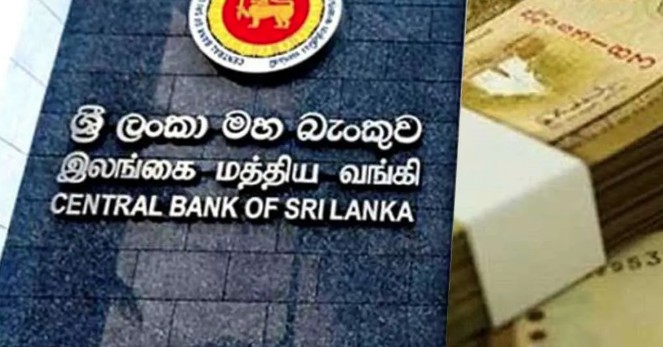
Amidst worldwide turmoil in financial institutions, the Central
Bank of Sri Lanka—which regulates the island’s banking
sector—held a half day symposium on Tuesday (30) to inform
banking directors of their responsibilities to the national
regulator, and to remind them to steer clear of moral
impropriety.
Corporate governance, risk management, and compliance were the
main issues discussed.
The Deputy Governor of the Central Bank, Dr Rani Jayamaha,
stressed the need for bank directors to take full responsibility
for corporate governance and compliance with regulations,
pointing out that better governance would mean less interference
from the Central Bank.
“If moral virtues were upheld, Central Bank regulatory
intervention would be unnecessary,” said Dr Jayamaha, explaining
the need for what she said some might consider interference in
the freedom to operate business in the way they see fit.
Recent global financial crises—notably the sub-prime mortgage
collapse in the US and the Northern Rock bail-out in the UK—have
brought regulatory concerns to the forefront of financial
institutions around the world.
Lapses in corporate governance, and a failure to comply with
basic banking principles, are seen to be at the root of many of
the massive banking failures witnessed in the past year alone,
including the notorious ‘rogue trader’ who lost 4.9 billion
Euros at Paris-based Societe General early in 2008.
“We wish to avoid banking panics, bank runs, or bank failures
that will lead to financial crisis,” explained Jayamaha of the
Central Bank’s present concern with the way banks in the country
are operating.
Sri Lanka’s new Banking Act and Companies Act place greater
responsibility and accountability on directors to ensure
competent management and operation of their companies, which
includes the banks.
During the seminar, the participants—mostly senior level
executives—were warned that the Board of Directors of financial
institutions are legally compelled to ensure adequate corporate
governance structures are in place and monitored in order to
guarantee compliance with the relevant Acts.
“The responsibility is shared equally amongst the board,
including executive and non-executive directors,” said legal
expert Arittha Wikramanayake, sending out a caution to many of
the under-paid executive directors who, he noted, commonly hold
a lackadaisical approach to their accountability in the event of
failure.
“Violations [of the Act] will put you on the dock with
pickpockets and prostitutes.” ****
Colombo Dockyard invests to upgrade facilities (LBO)
– Colombo Dockyard, Sri Lanka’s sole listed ship builder,
said it plans to invest 473 million rupees this year to upgrade
yard infrastructure to meet growing demand for ship building and
repair work.
The yard, a subsidiary of Japan’s Onomichi Dockyard Co., which
provides management. and technical expertise, anticipates it
will be get more business with India’s trade boom and expansion
of its fleet as well as the growth of offshore oil exploration
and drilling.
The yard’s net profit for the 2007 financial year shot up 77
percent to 1.1 billion rupees owing to a steady supply of orders
for new buildings and repair work. It has set itself a sales
revenue target exceeding 10 billion rupees by 2010 with profit
expected to b seven percent of revenue.
“To achieve this target, we will infuse a capital investment of
473 million rupees, which will in turn improve the steel work
production capacity by end-2008,” Dockyard chairman Shinichi
Tatebe said. “We also aim to make a considerable investment
towards improving the facilities within our yard,” he told
shareholders in the firm’s annual report.
The yard has a full order book and even repairs are now booked
well in advance because the ship building boom means a backlog
of orders in many yards. Colombo Dockyard delivered its first
Anchor Handling Tug Supply Vessel for Greatship (India) Limited
earlier this year.
The 80 tonne bollard pull tug named Greatship Anjali is the
largest vessel built by the yard. The second tug was delivered
in March 2008 and the yard is working on a repeat order as well
as holding talks on building more advanced vessels for
Greatship’s subsidiary in Singapore.
The yard is also building two passenger vessels for the Indian
government to be used in the Lakshadweep islands.
**** Dutch
aid to build fisheries harbour (LBO)
– Sri Lanka has signed a deal with the Netherlands
government to get eight billion rupees (44.9 million euro) in
aid to build a fisheries harbour to accommodate deep sea
trawlers and develop the island’s fishing industry.
The port will be built in Dikowita on the western coast,
fisheries minister Felix Perera said. The new port will be Sri
Lanka’s largest fisheries harbour with the capacity to dock 340
multi-day 65-foot trawlers and 150 smaller fishing boats.
Spread over 6.5 hectares, the harbour will be equipped with cold
storage units, ice manufacturing machines and equipment to
process the deep sea catch. The Netherlands will provide 17.1
million euros as a grant, with the rest as a soft loan, Perera
told reporters Wednesday.
The harbour will be built by Interbeton BV, a unit of the
Netherland’s BAM group. After completion in two years, the port
will directly help over 3,000 fishermen, Perera said.
A modern fisheries harbour will encourage the younger generation
to take up commercial fishing with a better understanding of the
industry and its market, which will help stabilize the industry,
Perera also said. The harbour’s location close to international
waters will enable bigger foreign trawlers to unload their catch
in Sri Lanka.
Furthermore, its close proximity to the island sole
international airport will help local exporters in the fishing
industry, the fisheries ministry said in a statement. The
objective of the project is to give bigger fishing trawlers easy
access to ports.
The existing fisheries anchorage in Modera, just north of
Colombo port, is considered inadequate to meet the island’s
future requirements as it seeks to increase the contribution of
fisheries to economic growth.
The Modera harbour is too shallow to dock bigger fishing
vessels. Furthermore, the naval authorities have also imposed
restrictions on vessel movements in Modera because of Colombo
port security requirements. The ministry has also started work
on a modern central fish market in Peliyagoda, in the outskirts
of Colombo. ****
SEC probes stock broker
(LBO) – Sri Lanka’s capital markets watch dog has
questioned two officials of a stock brokering firm at their
office this week as part of a probe, industry sources said.
Securities and Exchange Commission (SEC) regulators also took
away documents, they said.
The exercise was conducted under enhanced powers available to
the SEC under the island’s securities law, sources said. The SEC
has in recent weeks issuing a series of warnings against
violations of the securities law.
Last month, the SEC warned brokers against manipulating share
prices at the market’s pre-opening stage. The month before, it
warned management companies of unit trusts (mutual funds)
against manipulating share prices on the last trading day of the
financial year.
**** Apollo
to re-enter Sri Lanka Medical care
services provider Apollo Hospital’s group said it would invest
about INR 1,000 crore in the next 18 months to set up about 15
hospitals in tier II and III cities in India.
The hospital chain, which is also looking for overseas
expansions, is planning to re-enter Sri Lanka besides expanding
its operations in African continents, Indian news reports said.
India’s Apollo Hospitals sold out of Lanka Hospital Corporation
in September 2006 accepting an offer by Sri Lanka Insurance
Corporation to buy them out, despite governments of both
countries throwing their weight behind Apollo.
Apollo Hospital Enterprise and Indian Hospital Corporation,
which owned slightly over 30 percent, sold 52 million shares,
for 28 rupees, valuing the deal at 1,456 million rupees.
**** |