






























| Making of a
Minister– Chamal vs. Sajin
At
a meeting called by Minister Chamal Rajapaksa on May 2, to
discuss the Aviation industry in general and for the new Board
of SriLankan Airlines to officially meet the Minister as one
body, there was an indication of how far the Minister has come
in getting to grips with problems faced by the industry. It came
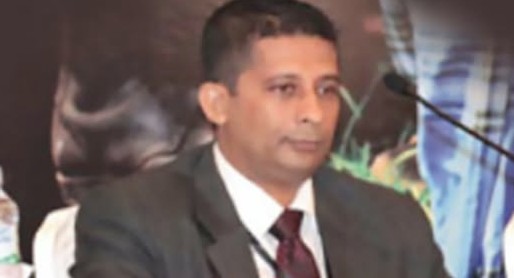
about when the CEO of Mihin Lanka was summoned moments earlier,
to answer to the Minister himself, various discrepancies at
Mihin Lanka, in advance of questions being raised in Parliament
of this operation.
Minister Rajapaksa was not happy with the explanations provided
by Sajin Gunawardena and, in fr ustration,
summoned the presidential aide for a meeting. Grilling Sajin
Gunawardena in a manner that would have done a Kroll
Investigator proud, the Minister reminded Sajin that it was he –
the Minister – who was responsible to Parliament and that, he
wanted the facts as they were, without the frills that Sajin
usually resorted to.
Desperate to deflect the Ministers’ attention from a direct
line of questioning that was becoming more focused by the
minute, Sajin blurted out that he was not happy that Mihin Lanka
was not being given a continued monopoly as a budget carrier out
of Sri Lanka. Sajin told the Minister that Mihin was now being
restructured and that he needed a monopoly to ensure its
success.
In a dramatic moment, the soft-spoken Minister told a visibly
upset Sajin that, there was no harm in allowing other local
companies to indulge in the aviation sector. They were, after
all, using their own money and backing their own business plans.
If they were confident to put their money in this business and
were willing to enter a risky business that was up to them and
we must not block them.
Quite taken aback by the Minister’s thinking, Sajin spluttered
that it was not fair and that, SriLankan Airlines had a monopoly
which had only run out a year ago and that was why SriLankan was
a success.
Chamal Rajapaksa, visibly warming to the debate and spurred
perhaps by the young man’s growing discomfort said that, when
Air Lanka was set up, there was no monopoly, just a lack of
interest from the private sector to enter a largely unknown
industry. But that, when SriLankan was set up, the government
granted that concession, as it was important to secure Emirates’
investment. Ever since, there has been growing dissatisfaction
at the deal and there were some who said that the growth of the
aviation industry was hampered because of that deal.
“Times have changed,” said Chamal. If Mihin wants to be a
success it was up to them to attract the customers by providing
a good service and by being prudent in how to manage a project
of that magnitude.
He added that, after all, unlike Sajin, others were using their
money – not money belonging to the people. He said it was more
important for Sajin to be more responsible with those funds. The
Minister was well briefed: he reminded Sajin that mismanagement
and the structure at Mihin was the root cause of that airline’s
problems and they had to be addressed. Those drawbacks could not
be addressed by continuing a protectionist attitude. With better
planning, management and greater financial control, the Minister
was certain that Mihin could be turned around.
The punch line was yet to come: Minister Chamal asked Sajin how
he intended coping with the growing number of budget airlines
outside Sri Lanka, planning on adding Colombo as a destination.
Under bilateral agreements, Sri Lanka could not stop them from
coming – so, why should Sri Lanka stop locals from taking part
in that business, when international airlines had already
started. He cited a growing list of airlines coming into Colombo
or who had plans to come to Colombo – even Emirates had
announced plans for a low cost airline, RAS Airways was already
here as was Air Arabia, Deccan, Sahara, Jet and new entrants
like Al Jazeera, Nasser Air and others from Saudi Arabia would
all, no doubt, come to Colombo. So, how, the Minister asked
Sajin, did he propose to stop them!!
It was the Cabinet of Ministers who had decided on this
strategy, as they all felt that by encouraging more activity in
the aviation sector, it would benefit Mihin too – services would
be easier to obtain, and the competition would surely bring down
prices for aircraft. Associated businesses like training
schools, would be able to flourish, as would other aviation
industries.
Sajin realised then that, the Minister was no idle mind. He had
studied the case, was well briefed and had the backing of his
colleagues in Cabinet. Uncharacteristically, Sajin backed off,
but the Minister had made his point. Others presnet, including
ministerial secretaries, SriLankan officials and Aviation
Authority representatives were privy to government policy to
revive the industry.
Opportunities gone with the wind
Sajin, who is a master of the canard, sat in on this meeting as
the CEO of Mihin. It was the same man, who had, a few days ago,
as things were getting too hot for him, with exposure after
exposure on the shortcomings at Mihin including the use of funds
to strike a “deal” on ground handling equipment, attempted to
deflect attention by dramatically announcing his resignation.
Sajin even had his photograph taken with his staff, before
telling them and reporters too, that he was stepping down.
Here was a man, who, the government had handpicked to enter one
of the world’s fastest growing industries, who was backed to the
hilt financially, who was granted a monopoly for greater
comfort, who had all the power and influence, had just frittered
away the US$ 20 million and who, after a year’s operation, had
nothing to show.
If he was clever and professional, as he makes out to be, after
a years’ operations, he should have had, not two aircraft but,
at least 10. Instead of having taken the region by storm, his
project has only served to epitomize the inefficiency and lack
of focus that the world has come to expect from Third world
nations.
Having squandered US$ 20 million from the hard pressed
Treasury, having announced his resignation in light of the
growing storm over the manner in which the money was spent, he
arrived at the Ministry only after it became apparent that the
government was considering giving even more money to Mihin. Is
it not reasonable for the people of this country to believe that
Sajin did not actually step down because he wants his finger in
the second pie of hard pressed Dollars that is about to be
released to Mihin Lanka?
His resignation is nothing more than a red herring: he has
neither informed the Treasury nor the rest of the Mihin Board
that, he has stepped down. Instead, trying to be master of the
spin, he also announced his resignation in interviews granted to
the Fifth Estate.
Responsible and professional Managers do not seek the comfort of
resignations to parachute out of an airline whilst it is in the
process of crash landing.
Winds of change blowing at Aviation
HQ
The Aviation industry is undergoing a sea of change, with new
faces being brought in. Changes include the replacement of
Ministry Secretary, Thilak Collure with Thosapala Hewage, with
effect from Monday.
The Civil Aviation Authority Board has also been asked to
resign, to make way for a new Board. Veteran Paddy Mendis, who
was Chairman, has also been replaced with the widely respected
former Director General, Lal Liyanarachi. Included in the line
up is legal eagle, Javed Yousuf. One time consultant, Sugath
Rajapaksa, has also been appointed to the new Board.
****
|