













| Human rights
is not duty free Sri Lanka may be
embroiled in an acrimonious election in the Eastern Province and
a bloody battle in the North, but a different kind of challenge
looms ahead for the country- the review of the Generalised
System of Preferences (GSP+) facility granted by the European
Union (EU) later this year.The GSP+ status enabled Sri Lanka to
export over 7000 items- most of them related to the apparel
industry - to the EU duty free, ensuring a ready market and
healthy profit margins for exporters. The concession meant that
the garment industry thrived, even while other sectors of the
economy slumped.
The concern now is that the GSP+ facility may be withdrawn
amidst a plethora of allegations of human rights violations and
civilian casualties, as the Government prosecutes the war
against terrorism in earnest.
Traditionally, pontificating on alleged human rights abuses in
the developing world has been the favourite hobby horse of the
West. They are quite adept at arm twisting less powerful
countries to do their bidding, by imposing conditions to any
sustenance that they provide. The GSP+ may well be one example.
Where does Sri Lanka stand in this context? Does it bend over
backwards to appease the so-called ʽinternational communityʼ
which is, in fact, a coterie of a few powerful nations? Or, does
it do what Myanmar did recently and snub them, saying we do not
want aid with strings attached?
At the moment, it appears as if Colombo is doing neither. Even
if the Government is willing to address human rights concerns,
its deeds and words are not unequivocal.
On the one hand, an Air Force officer was indicted on abduction
charges, seemingly, a step in the right direction. On the other
hand, the International Independent Group of Eminent Persons (IIGEP)
is, virtually, chased out of the country, after a slanging match
over their conduct. President Mahinda Rajapaksa has indicated
that an attempt must be made to secure the GSP+ facility for a
further period of time. But, he is also of the view that any
attempts to do so, should not be at the expense of the country’s
sovereignty, and its prerogative to act in its own interests,
rather than at the behest of others.
But, is this concept being put into practice? Is enough being
done to tell the outside world that the Sri Lankan Government is
not some despotic regime practicing genocide? Have we been able
to convince the West that we are battling the most ruthless
terrorist organisation on the planet? Perhaps not.
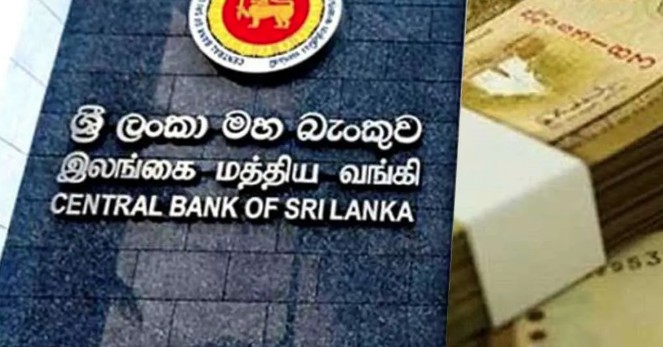
And, to make matters worse, we even have no less than the
Governor of the Central Bank proclaiming that the GSP+ concession
is a subsidy, and that, we really don’t need subsidies.
Despite these lofty pronouncements to the contrary, Colombo does
realise the impact of the GSP+ facility. Hence, the appointment
of a high powered four member ministerial committee to deal with
the issue- ironically, all of them are ‘imports’ from the United
National Party.
However, such appointments alone will not suffice. The
Government will have to demonstrate a willingness to address
human rights concerns and, not only be above reproach but,
appear to be above reproach as well.
As the dust settles on the Eastern Province elections- and the
polls by itself would send some signals about the Government’s
sincerity- President Rajapaksa will have his work cut out to
salvage the GSP+ concession.
Sri Lanka, as the President obviously realises, can ill afford
further economic burdens at this juncture. The GSP+ facility is,
therefore, not merely a subsidy- it will be reflection of the
country’s standing among fellow nations. And we can only help
ourselves by improving that standing.
It’s in the genes and it’s hereditary
Young Navin Dissanayake, Minister in this
Government and the son of the late Gamini Dissanayake, made an
interesting observation this week. There was nothing unusual in
governments using or, abusing State resources for elections,
says he.
It happened during the United National Party regime and it
happens now, Dissanayake says and is not shy to claim that even
his late father did so. So, should we all stand up and applaud
the younger Dissanayake for fearlessly announcing this political
fact of life?
We think not. And that is, firstly, because Dissanayake seems to
suggest that just because the two major parties indulge in this
wrongful practice, we should turn a blind eye and get on with
our business at the elections -which is electing our
representatives. “All governments do it, so what?” asks
Dissanayake (Jnr.)
And that is what is fundamentally wrong about this argument.
There are many practices- from political appointments and
abusing vehicle permits to blatant bribery and rampant
corruption -which all governments have indulged in. Are we to
license these too, on that basis?
These practices are the reason why this country is in the mess
it is today. And if those are to be rectified, such corrupt
actions must be dealt with whenever and wherever possible. The
Dissanayake (Jnr.) formula will most certainly only aggravate
matters even more.
And there is also something else we would like to remind
Dissanayake (Jnr.), before he perhaps unwittingly, sullies his
father’s reputation again: His father never played to the
gallery to score brownie points.
In fact, Gamini Dissanayake once spoke on behalf of Sirima
Bandaranaike, against the stripping her of her civic rights, and
got the cold shoulder from J.R. Jayewardene for many months.
So, the younger Dissanayake must realise that he has miles to go
and many lessons to learn, before he could claim to be a chip of
the old block.
As the late Anura Bandaranaike would have told him, had he been
with us, the genes will help, but they will not take you all the
way to the top!
****
|