















| Privatisation:
Good servant bad master Petroleum Resources
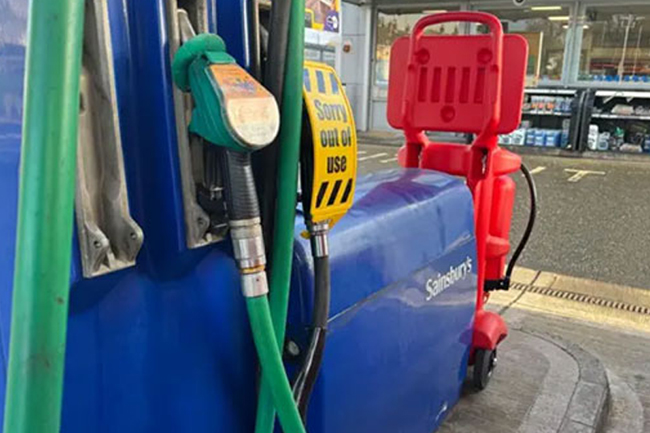
Minister A.H.M. Fowzie was heard lambasting the Lanka Indian Oil
Company (LIOC) in Parliament this week for raising its market
price of diesel. As a result, Minister Fowzie said, consumers
were flocking to Ceylon Petroleum Corporation (CPC) outlets
where diesel is subsidized, thereby increasing the Corporation’s
already substantial losses.
The government is compelled to act in the national interest,
Fowzie lamented, threatening to take over LIOC outlets if the
company did not mend its ways.
We do not propose to discuss this particular bone of contention
in these columns. But, where have we heard all this before?
Wasn’t it only a few months ago that we had Consumer Affairs
Minister Bandula Gunawardena raving and ranting against the
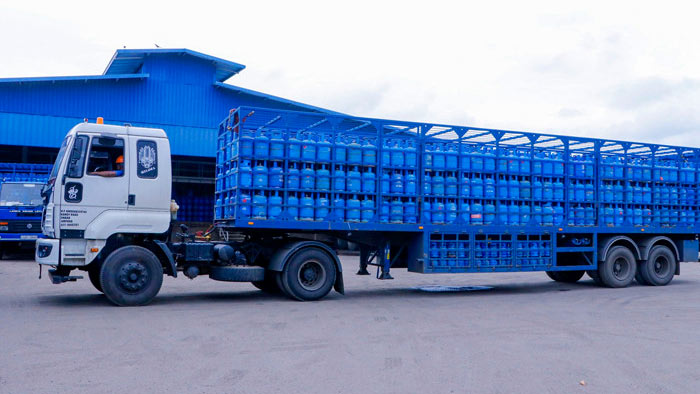
Shell Gas Company, again over the market price of the domestic
gas cylinder?
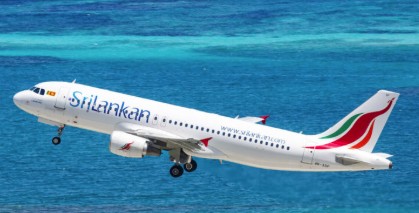
And, didn’t we hear similar rumblings against the management of
SriLankan Airlines by Emirates? That dispute did not see a
resolution, resulting in a parting of ways, with control of the
national carrier reverting to local hands.
Prior to that, the privatised telecommunications giant, Sri
Lanka Telecom (SLT) also had a pricing war, which ultimately
went to the courts of law, with SLT being ordered to reduce
tariffs and pay refunds to customers.
The concept of privatising State ventures was introduced to this
country by J.R. Jayewardene, under his pledge to establish an
‘open’ economy. Jayewardene famously said, ‘let the robber
barons come’ and it was a landmark event in the country’s
finances, marking an about turn from S.W.R.D. Bandaranaike’s
nationalisation drive in the late fifties.
What Jayewardene began, his successors continued. Ranasinghe
Premadasa was instrumental in handing over estates in the
Plantation sector to private companies in a reversal of Sirima
Bandaranaike’s land reform policies. And the Bandaranaikes’
progeny, Chandrika Kumaratunge did nothing to change policies,
speaking instead of an ‘open economy with a human face’.
So, privatisation is here to stay-unless of course the Janatha
Vimukthi Peramuna comes into power and cleanses the country of
all the ‘vijathika balavega’ that it speaks so eloquently of.
Right now though, that is quite a remote possibility.
If privatisation is the name of the game and, if it is to be all
pervasive and extend into vital service sectors such as
telecommunications, airlines, fuel and power generation, then it
is incumbent upon the government to ensure that adequate
safeguards are put in place to protect the general public.
That is, after all, a sine qua non, since any dispute in a vital
sector-such as the dispute over fuel pricing, which Minister
Fowzie is encountering now-will only boomerang on the government
in power, with disastrous political consequences.
It is not that Sri Lanka does not have successful privatisation
stories. The privatisation of the Plantations -a massive
exercise where large areas of land were sold to a multitude of
private sector companies-was opposed at the time by many but
now, few would argue that their productivity is retained only
because this was done in a timely and transparent manner.
Even the privatisation of telecommunications-barring those
hiccups with the SLT-has led to remarkable growth in the
industry, with many private sector players in the market. And
the winner in the face of more competition is ultimately the
consumer.
Perhaps that is the moral of the story. If privatisation is to
be embarked upon for a vital sector, adequate provision has to
be made to protect the consumer and it is the duty of the
government to do so. Another strategy to ensure a level playing
field would be to have more than one player from the private
sector in the fray.
In privatising some sectors, this government - and those before
it - have missed a trick or two. And if that trend is allowed to
continue, it is the government that will have to pay - not only
in rupees and cents but also at the next election.
Back to school
Yet another ministerial brat is in the news for all the wrong
reasons. And, this time around, the Minister, Keheliya
Rambukwella is the focus of attention, because he is alleged to
have visited the school, Royal College, and allegedly threatened
the Principal with a transfer, if disciplinary action was taken
against his offspring.
Thankfully, we hear that President Mahinda Rajapaksa himself has
intervened and requested the Principal to stand by his decision
to punish Rambukwella (Jnr.). But the larger issue of political
interfere nce, intimidation and impunity remains unanswered.
Rambukwella is no Mervyn Silva, and we do not expect him to
behave in a like manner. He is a learned man. He is also the
public face of the Rajapaksa regime, because he is its spokesman
on Defence matters. If so, he must act like one.
To barge into a school and allegedly threaten the Principal with
a transfer, because his son was punished, would be the work of
Kurunduwattey Choppey; not Keheliya Rambukwella, senior
minister, Parliamentarian and government spokesman.
President Rajapaksa has intervened to restore some sanity into
the proceedings and that should be commended, but shouldn’t
Rambukwella be reprimanded as well? Aren’t his alleged actions
worse than his son’s? Wouldn’t such an incident in most other
countries result in the resignation of the minister?
We can only wait with bated breath for such consequences. And,
until such time, may we commend Abraham’s Lincoln’s letter to
his son’s teacher, as reading material for the learned Cabinet
minister:
“He will have to learn, I know, that all men are not just, all
men are not true.
But teach him also that for every scoundrel there is a hero;
that for every selfish Politician, there is a dedicated leader….
In the school teach him it is far honourable to fail than to
cheat...”
**** |