
















@


HOME
NEWS  
NEWS FEATURES  
INTERVIEWS  
POLITICAL COLUMN  
THIS IS MY NATION  
MILITARY MATTERS  
EDITORIAL  
SPORTS  
CARTOON  
BUSINESS  
EYE - FEATURES  
LETTERS  
EVENTS  
SOUL - YOUTH MAG  
KIDS - NATION  
ENTERTAINMENT  
NATION SPECIAL  


This is my Nation


Black July 25 years later


And that must bring us to the two ultimate questions: has the psyche of the majority community changed sufficiently over the past twenty five years to accommodate the concept that minorities should be equal partners in this nation? And, has the thinking of the LTTE changed to accommodate a negotiated, reasonable political settlement? The answer to the latter is a resounding ‘no’. However, it does appear that the majority of Sinhalese—quite apart from a few radical elements who will always be sabre rattling—now accepts that devolution of power to the minorities is the key to resolving the ethnic issue. However, where the present regime has been found wanting is not promoting this concept sufficiently while efficiently prosecuting the war

On Wednesday, July 23, exactly twenty five years ago, thirteen soldiers of the Sri Lanka Army were ambushed on the outskirts of Jaffna. A day later, as the bodies of the dead servicemen were being prepared for a discreet burial at the general cemetery in Colombo, violence directed at the Tamil community erupted.

That violence was to spread countrywide and end in a pogrom of the Tamil community and gave impetus to the Liberation Tigers of Tamil Eelam (LTTE) to wage war with the Sri Lankan state—a war which continues to this date, and the loss of a conservatively estimated 60,000 lives.

Twenty five years is an opportune moment for introspection: it is a period of time sufficient for an entire generation of Sinhalese and Tamils to emerge; it is also adequate enough to examine whether Sri Lanka as a nation has made headway in its attempts to address the country’s most vexed question.

Both positives and negatives have emerged in the quarter of a century since ‘Black July’. On the plus side, the country’s majority community has learnt the lessons of July 1983 well. Apparently they now realise that any indiscriminate retaliation against the Tamil community—distinct from the LTTE—would not only be irrational but also be counterproductive.

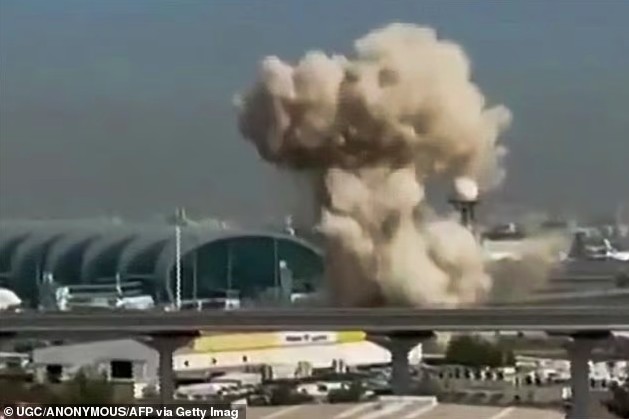
This explains why the Sinhalese in the south have been passive observers in the face incidents far greater in their atrociousness: the Central Bank bombing, the Arantalawa massacre, the Katunayake airport attack and more recently the Habarana attack not mention the numerous bus and train bombs exploding in Colombo and its suburbs. In as much, the Tigers’ strategy of provoking the South has been a failure.

Militarily, the war has had its ups and downs both for the government and the LTTE. There have been great military victories as well as major losses. At present, the current regime has given the armed forces a free hand to prosecute the war and asserts that the Eastern province has been cleared.

This is no doubt a significant achievement but it must be remembered that in the early nineties too, the entire East was brought under government control, only to lose that stranglehold later. The involvement of the Tamil Makkal Viduthalai Pulikal (TMVP) led by Vinayagamoorthy Muralitharan alias Karuna Amman now makes such a possibility less likely, but the TMVP too needs to be disarmed at some point in time.

As for the LTTE, it may have taken a beating from government forces in recent times but over the past twenty five years, it has evolved to become arguably the most ruthless and efficient terrorist group in the world. The Tigers may be cornered and hemmed in to a few areas in the Wanni but they now command a global network of business interests, sympathisers who are also financial contributors and an international diaspora willing to support their cause—a far cry from the band of young men who took up arms in the late seventies and early eighties.

However, at times the Tigers have displayed inexplicable overconfidence in their tactics and committed serious blunders, the killings of Indian Prime Minister Rajiv Gandhi and Foreign Minister Lakshman Kadiragamar among them. As a result, they are now considered terrorists in many countries such as the United States, India, United Kingdom and Canada.

It is politically thought that the conflict is at a stalemate. Successive heads of state have attempted to offer autonomy to the minority Tamil community but perhaps it has always been too little, too late, confounded by the intransigence displayed by the LTTE and its leader Velupillai Prabhakaran.

J.R. Jayewardene’s Provincial Councils are still in place; Ranasinghe Premadasa was killed before he could evolve anything concrete ,and D.B. Wijetunge famously said there was no ethnic problem—only a problem of terrorism. Chandrika Kumaratunge was genuine in her offer of a series of sweeping constitutional reforms in August 2000, but the UNP withdrew its support and they were a non-starter.

The Ceasefire Agreement (CFA) worked out by the Ranil Wickremesinghe administration in 2002 was the closest Colombo came towards achieving a political settlement to the crisis. But the Agreement had two fundamental flaws: it allowed the LTTE to exploit the CFA to regroup and re-arm and when that happened Wickremesinghe failed to convince the South that it was the way forward, a mistake that was to cost him the Presidency in 2005, where the CFA was clearly rejected by the southern electorate.
And that must bring us to the two ultimate questions: has the psyche of the majority community changed sufficiently over the past twenty five years to accommodate the concept that minorities should be equal partners in this nation? And, has the thinking of the LTTE changed to accommodate a negotiated, reasonable political settlement?

The answer to the latter is a resounding ‘no’. However, it does appear that the majority of Sinhalese—quite apart from a few radical elements who will always be sabre rattling—now accepts that devolution of power to the minorities is the key to resolving the ethnic issue.
However, where the present regime has been found wanting is not promoting this concept sufficiently while efficiently prosecuting the war.

The present Mahinda Rajapaksa government clearly does not believe in negotiating out of fear, but its reluctance to offer a substantial package of devolution to the minorities—as evidenced by offering districts as the unit of devolution at the All Party Representative Committee (APRC) — sends the wrong signal that it fears to negotiate as well. As a result, Colombo’s bona fides are now being viewed with suspicion by the international community and this is to the advantage of the Tigers.

Then, after twenty five years, is there a solution to the ethnic issue on the horizon? One cannot answer that question in the affirmative with any degree of confidence. Alas, after a quarter of a century of bloody and brutal conflict, Sri Lanka’s circumstances would have to get worse, before it gets any better.

****