




























|
Asia Capital ventures into carbon trading
First of its kind in the country, with much
future potential
By
Indika Sakalasooriya
Asia Capital PLC has ventured into emissions trading through its
newly established subsidiary, Carbon Asia. The company is one of
the first in the country to engage in greenhouse gas reduction
project development and consultancy, and carbon trading.
Carbon Asia is a USD 3 million joint venture between Asia
Capital PLC and Sindicatum Carbon Capital, a UK based developer
of climate change-related projects. Asia Capital currently has a
80 percent stake in the subsidiary.
“We see a lot of potential in Sri Lanka in reducing and
controlling greenhouse gas emissions. We help our clients to
assess their emissions and introduce new working practices or
clean technologies to cut their carbon ‘footprint’. In doing so,
we create revenue streams through carbon credits, providing a
market solution to climate change,” Carbon Asia’s Co-Founder and
CEO Suranjan.J.Cooray told The Nation Economist.
Under the Kyoto Protocol, which is linked to the United Nations
Framework Convention on Climate Change, developed countries must
reduce their greenhouse gas emissions by an overall target of
five percent by 2012. National targets have been set at varying
levels. For example, the European Union (EU-15) must make an
eight percent cut, while Australia is permitted an eight percent
rise.
Those countries that are unlikely to meet their targets are
allowed to buy credits called Certified Emissions Reduction (CER)
certificates through a facility called the Clean Development
Mechanism (CDM) to make up the shortfall. One CER represents one
tonne of the greenhouse gas CO2 (or equivalent amount of another
greenhouse gas) being prevented from entering the atmosphere.
The mechanism enables developing nations, such as Sri Lanka, to
generate CERs through greenhouse gas reducing projects.
Once generated, CERS can be sold as a commodity through various
carbon exchanges around the world. As several developed nations
seem likely to miss their Kyoto targets, there are plentiful
opportunities for developing nations to create and sell credits,
without encountering the usual trade barriers imposed by the
West.
Cooray explained the company has two operating wings: project
development and consultancy. Carbon Asia’s Project Development
Division acquires, finances and implements projects that deliver
cuts in greenhouse gas emissions and create CERs.
Projects might include developing wind farms to create renewable
energy or putting in place new technologies to capture the
methane, a strong greenhouse gas, from landfill sites. Taking a
project from the conceptual stage through implementation to
receiving credits is a complex process that is strictly
regulated by UNFCCC validating bodies.
Carbon Asia’s Consultancy Services Team audits the greenhouse
gas footprints of public and private sector organisations and
develop integrated strategic business plans and energy policies
for them according to internationally recognised standards. The
aim is to help them prosper in a carbon-constrained world.
“We either charge a fee or offer a share of credits for our
project development and consultancy services. We also buy and
sell credits,” Carbon Asia’s other Co-Founder and CFO, Eshan
Perera said.
He also added that already there are six local companies who
have sought Carbon Asia’s assistance on project development and
carbon trading related operations, while there are several
others in the pipeline.
Carbon Asia also expects to open subsidiaries in the countries
in the region by partnering with companies in those countries.
“A subsidiary of Carbon Asia will be opened in Indonesia in the
near future as a joint venture with a large Indonesian company”
he disclosed.
According to Perera, Carbon Asia is a significant investment by
Asia Capital and in the long run it would be a very lucrative
business to the group as it has capability to produce large
returns, given increasing regulatory pressure and the greater
green consciousness of consumers worldwide.
Six Sri Lankan projects are already cashing in on their
greenhouse gas savings, made by running environmentally friendly
hydropower, wind power plants, biomass and biofuel projects.
Among Sri Lanka’s top companies that have initiated emissions
reduction programmes are conglomerate Hayleys, Tokyo Cement and
clusters of mini-hydro power developers. The Sri Lankan
government in 2006 has also established a Carbon Trading Fund
worth of Rs.100 million. ****
Aspic Group to build the largest office complex
in Colombo
Aspic
Corporation (Pvt) Ltd, one of the thriving privately owned
businesses presently in Sri Lanka, expects to construct the
largest office complex in the country.
“We are planning to build 28 story office complex in the heart
of Colombo, in Kollupitiya, investing Rs.5 billion” Aspic
Chairman, Deepthi Perera told The Nation Economist.
He said that the Aspic Group would in the very near future
purchase a half built building located on a prime land in the
Kollupitiya area, of which the company has already come to terms
with the seller. However he was reluctant to give the exact
location of the building.
“We will construct this half built building to a state-of
–the-art office complex, equipped with all the modern facilities
like Wifi, copper cable connections, elevators, escalators,
vaults, etc” Perera said.
“We also have planned a 6 story car park for the building and
the building is expected to be completed within two year’s time”
he added.
When asked about the way in which the investment was being
financed, he said that 75 percent of it was internally financed
and the rest would be financed with bank borrowings.
The Group also expects to start a housing project costing Rs 1.6
billion, on a 15 acre land in the Homagama area. “The initial
designs of it have already been finalised” Perera said.
He also revealed that the Group has plans to strengthen its
plantation business by acquiring the controlling stake in a
major plantation company listed in the Colombo Stock Exchange.
Aspic presently owns a several tea and rubber estates in the
Dereniyagala area.
Through its fully owned subsidiary, Aspic Micro Finance, the
Group plans to invest Rs.500 million on agricultural finance,
this year. Aspic Micro Finance also hopes to increase its
presence in the paddy cultivating areas in the country, by
setting up ten new branches. (IS)
Responding to a query, as to whether the company is
contemplating listing in the Colombo Bourse, Perera said that
they will probably consider it an option in about five years
time.
Aspic Corporation (Pvt) Ltd. Sri Lanka is an extension of Aspic
Investments Pty Australia founded in 1999 by Deepthi Perera.
Aspic Group has 16 fully owned subsidiaries under its umbrella
in 12 sectors varying from finance, asset management,
plantation, transport, real estate to ornamental fish exports.
Apart from its offices in Sri Lanka it also has branch offices
in India and Thailand, while the headquarters are in Australia.
**** SAFTA needs
radical overhaul By
Samantha Whybrow
The South Asian Free Trade Agreement (SAFTA) cannot go forward
without a radical overhaul according to a group of regional
economic experts who were speaking at the first South Asia
Economic Summit in Colombo on Thursday.
“SAFTA has no role in its current form,” said Dushni Weerakoon,
Deputy Director of the Institute of Policy Studies (IPS), which
co-organised the summit.
SAFTA, and its predecessor SAPTA (South Asian Preferential
Trading Arrangement), have long been criticised for failing to
deliver on the promise of deeper economic integration in the
region despite over a decade of existence.
The failures of the early SAPTA arrangement are one of the major
reasons bilateral agreements have proliferated in the region,
with South Asian countries showing more willingness to enter
into free trade deals on an individual rather than group basis.
And experts from the region are now coming together to call for
a major policy rethink, to determine how economic connectivity
in the region can move forward, which includes questioning the
future of SAFTA.
According to Weerakoon, there are two policy alternatives for
the future. The first is to overhaul SAFTA, and the second is to
continue with the status quo in terms of bilateral and external
regional agreements.
Overhauling SAFTA would mean a radical re-think of the current
agenda.
A panel of experts pointed out that, alongside a binding
agreement to remove non-tariff barriers, SAFTA countries need to
reduce the number of items on sensitive lists, re-think
controversial rules of origin criteria, and include investment
and services in the SAFTA agenda.
In its current format, SAFTA is more restrictive on these issues
than other bilateral agreements such as the Indo-Lanka Free
Trade Agreement (ILFTA).
“The time frame for tariff liberalisation under SAFTA is7 years,
but under ILFTA it was just 3,” said Weerakoon, highlighting one
of the shortcomings of SAFTA.
Panellist Macky Hashim, Past President of the Federation of
Chambers of Commerce and Industry in Sri Lanka, pointed out that
it was India that needed to make a lot of changes if SAFTA had
any chance of progressing, particularly with regards to
non-tariff barriers.
“I am not optimistic about whether or not SAFTA can do much good
by 2016,” said Hashim echoing the sentiments of other panellists.
Although, like the others, he did not seem ready to give up on
the idea of SAFTA yet, pointing out that countries like Sri
Lanka could benefit enormously if countries like India and
Pakistan were to make greater investments on the island.
“We must promote investment from India and Pakistan. Their money
and technology can come in and, with out labour, we can
manufacture goods to export outside the region,” said Hashim.
“It is a win-win situation and can make profits for us all.”
**** FTZ
General Services Union employees issue ultimatum to JAAF
Employees of the Free Trade Zone and General Services Union gave
an ultimatum to the Joint Apparel Association Forum Sri Lanka (JAAF)
to respond to the allegation made by International Trade Union
Confederation (ITUC) that the apparel industry in the country
has the most number of labour rights violations in the country.
Free Trade Zone and General Services Union, General Secretary,
Anton Marcus said the union had given an ultimatum to its
employers to respond to the allegations, as otherwise, the
garment industry in the country would be adversely affected.
“If the JAAFSL does not respond to the allegation, we as the
workers would be forced to tell our grievances to the European
Union which might be disadvantageous to the country to obtain
GSP plus.”
He noted that the government also should inform to ITUC whether
it is was willing to accept the benchmarks given by the
international trade union, which requires the Government to
establish law and order in the country and to give the workers
in both private and public sectors, their legal labour rights.
“We have tried our best to convince the Government of the
importance of accepting ITUC benchmarks, as they would be
handing over a report about the freedom of association situation
in the country to the International Labour Organisation (ILO)
which would be handed over to the EU subequently,” he explained.
Marcus said that the government had requested for time for it to
discuss the issue with JAAFSL, but so far both JAAFSL and the
Government had not responded to the appeal made by the
employees. (AE) ****
Productivity increase the key in troubled times:
Deputy Governor
By
Aisha Edris
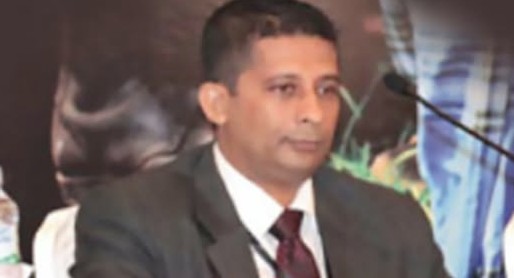
Developing countries need to increase their productivity levels
to face the sky rocketing inflation stressed the Deputy Governor
of Central Bank, W. A. Wijewardena at the John Exter Memorial
Oration held last week.
“Economies have to adjust themselves to face the skyrocketing
inflations prevailing in the international markets. The only
thing they could do is to increase their local productivity to
face a better tomorrow,” he suggested.
Wijewardena noted that presently the world was facing an
inflationary pressure due to the soaring fuel prices and food
crisis and the government needed to adjust their monetary policy
to curb the problem and to reduce the demand for fuel.
He also added that, when governments gave subsidies to the
people, it could not control inflation, which in turn would
affect the long term growth of a country. He also noted that,
the governments should not borrow from banks to pay for
subsidies, because as a result, the monetary expansion would
threaten the future stability of a country.
Wijewardena explained that the central banks were forced to
adjust the domestic prices to match the international prices to
fight long term inflation.
Meanwhile, he noted that when the economies are hit by terrorist
activities, governments needed to use all the available
resources to fight it, as it would affect the economy on the
whole.
“Governments do not have a choice but to use all the available
resources to fight terrorism. Economists would not dispute this
thesis, but we have to find out what sort of measures we should
take.”
He noted that a country should always have a stable base before
it fights terrorism, quoting John Exter the first governor of
CBSL he said, “the best asset of all whether in inflation or
deflation, will be gold at the base of the pyramid. Accumulate
what you can of it, either above ground, like coin or billion or
in the ground, like hedged mining shares.”
He noted that Central Bankers should not be tempted to use
monetary policy to create more employment and output because
normal instruments like monetary policy cannot bring about real
outcomes.
During the session, hostility arose between Governor Ajith
Nivard Cabral and a leading economist in the country, Dr. Harsha
De Silva, who is considered a vociferous critic on the present
CBSL operations.
**** Harry J given time to
file objections
By
Stanley Samarasinghe
Colombo Commercial High Court Judge Rohini Walgama gave business
tycoon Harry Jayawardena, time till October 15th to file
objections to two cases instituted against him by his business
partners.
When these two cases were taken up before High Court, S. A.
Parthalingam PC, Nihal Fernando PC with N. R. Sivendran
Attoryney-at-Law appeared for Jayawardena and moved for time to
file objections.
R. K. Obeysekera of No. 833, of Sirimavo Bandaranaike Mavatha
Colombo 14, and also No. 284, Nawala Road Nawala, Zaki Alif of
No. 833, Sirimavo Bandaranaike Mawatha Colombo 14 and V. P.
Vittachchi filed two cases in respect of Milford Export (Ceylon
Ltd.) and Stassen Export Limited of No. 833, Sirimavo
Bandaranaike Mawatha, Colombo 14, Harry Jayawardana of No. 833,
Sirimavo Bandaranaike Mawatha, Colombo 14 and also of No. 82,
Main Street Ja-Ela.
Mrs. Sonia Weiman, No. 17, Alfred Place Colombo 3, Secretaries
and Registrars (Pvt) Ltd of Sir Mohamed Macan Markar Mawatha of
Colombo 3 are respondents in both cases, while Dr. N. M. A.
Ghaffar of No. 833, Sriimavo Bandaranaike Mawatha Colombo 14 is
respondent only for case of Stassen Export Ltd.
Petitioners in their petitions stated that they met Jayawardena
while they were working in Sri Lanka State Trading (Consolidated
Exports) Corporation.
On September 7, 1977 Petitioners and Jayawardena jointly formed
a company Stassen Exports and commenced operation on a very
small scales, and 3rd Petitioner V. P. Vittachchi as the
Chairman of the company provided critical guidance. All the
decisions of the company were taken in mutual consultation and
agreement with each other.
Petitioners further stated in 1978 another company was formed,
called that Milford Exports Ceylon Ltd, with Jayawardena, for
the purpose of trading in Green Tea. In eleven years time, the
company purchased share holdings in Hatton National Bank Ltd for
a sum of approximately Rs. 77.7 million.
Thereafter the company invested money in Lanka Milk Foods,
Distilleries Company, Madulsima Plantations Ltd., Balangoda
Plantations Ltd., Brown Beach Hotel Ltd., Sampath Bank Ltd.
Milfords Holdings Ltd, through those companies, procured
substantial controlling interests of Ambewella Farm, Pattipola
Farm, and Sri Lanka Insurance Corporations Ltd.
According to Petitioners they noticed gradual change in the 2nd
respondent Jayawardena’s attitude towards them, and the manner
in which he conducted his affairs in relation to the Company,
when he was appointed to various positions in Government and
Corporations, including his appointment as Senior Advisor to the
President.
Petitioners stated that Jayawardena ignored or flouted any
decision of the Board of Directors of the Company, and conducted
the affairs of the Company as he wished, irrespective of the
wishes and decisions of the Board of Directors or Petitioners.
As a result they have lost all confidence in Jayawardena.
In the circumstances, Petitioners prayed for court to declare
that Jayawardena conducted company management in a manner
oppressive to the Petitioners.
The Petitioners prayed Court to make an order directing
Jayawardena to purchase the shares of the Petitioners or to sell
Jayawardena’s shares to Petitioners.
Romesh de Silva PC with Chanaka de Silva, Sugath Caldera, Aruna
Samarajeeva, Shanaka Cooray and Eraj de Silva appeared for
Petitioners instructed by G. G. Arulpragasam.
**** |