





























@


HOME
NEWS  
NEWS FEATURES  
INTERVIEWS  
POLITICAL COLUMN  
THIS IS MY NATION  
MILITARY MATTERS  
EDITORIAL  
SPORTS  
CARTOON  
BUSINESS  
EYE - FEATURES  
LETTERS  
EVENTS  
SOUL - YOUTH MAG  
KIDS - NATION  
ENTERTAINMENT  
NATION SPECIAL  


Editorial


Our society reaching a nadir of morality

Two events of last week are an ominous reflection of the prevailing status of law and order within the country: the residence of a lawyer, known for his appearances in public interest litigation, was subjected to a grenade attack and a young lady doctor was brutally murdered, allegedly by a soldier.

The two incidents, unrelated as they are, suggest that professionals are not being allowed the freedom to engage in the tasks they have been trained for. Sri Lankan society appears to be fast disintegrating into a nadir of morality, where people take the law into their own hands at the slightest provocation.

In the attack on the lawyer, the message appears to be not only for that particular individual. It appears to be a general signal for those who dare to dissent and agree with an alternate point of view. And the message is that, such views will not be tolerated. In that sense, it is chilling.

It is a facet of civilised society that dissent is not only tolerated, but also encouraged. Diverse opinions lead to progress, if only such opinions are afforded the opportunity of discussion, where they can be evaluated and incorporated into the existing norms of society.

When a society fails to do so-or worse still, refuses to do so-and subscribes only to one vision dogmatically, it can only lead to repression and regression, and, in the light of the attack on this lawyer, we must pose the question as to whether that is the direction in which Sri Lankan society is heading today.

When incidents such as this occur, it is incumbent upon the authorities to apprehend whoever is responsible. When a lawyer known for his briefs that have frequently brought him into confrontation with the State, is attacked, suspicion is naturally centred on someone wielding power, and that is precisely why, the offenders should be apprehended speedily: if not, at least in the public conscience, the State becomes the culprit by default, perhaps unfairly so.

Conversely, the second incident, where a young lady doctor was gunned down, allegedly by a soldier, may have been the end result of a personal dispute. Yet, it reflects adversely not only on the armed forces but also, on the prevailing status of law and order in the land.

Recent events-too well documented to merit repetition here, have encouraged a culture of impunity, where politicians are a law unto themselves and go about beating anyone who they believe are an obstacle to their own nefarious objectives.
That culture of impunity has thrived in recent times, and those responsible continue to hold doctorates and high government office with gay abandon. Indeed, they appear to be rewarded rather than reprimanded!

It is therefore, only a matter of time, before this culture of impunity percolates to other strata of society, resulting in the kind of tragedy we have witnessed this week, with the slaying of a young doctor just embarking on her professional career.
How many more such incidents do we need- and how many more lives do we need to sacrifice unnecessarily, to awaken ourselves to the reality that something is seriously rotten in our social fabric, before we decide to put things right?
This is why we must strongly urge that the perpetrators of these incidents be brought to justice speedily, for not only must the powers that be administer justice, they must appear to administer justice as well.

Doctors and trade union privileges

Any observations on the slaying of the doctor at Badagiriya in the Hambantota district will be incomplete without commenting on the response of the doctors’ trade union, the Government Medical Officers’ Association (GMOA) to the tragedy.
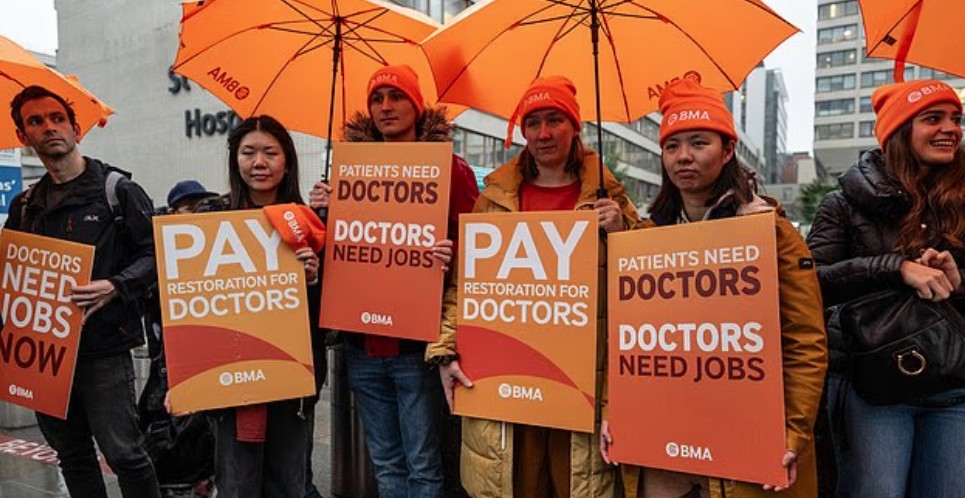
At first, doctors in the Hambantota district staged a ‘work-to-rule’ protest against the killing and then threatened to strike, if the alleged killer is not apprehended within 48 hours. He was but, it is as yet unclear whether they will stage a one-day token strike nevertheless.

We unreservedly condemn the murder of the young doctor and sympathise with her bereaved family but surely, the medical profession- or any other profession, for that matter, should not abuse trade union privileges, just because one of its profession happens to be a murder victim.

There is every indication that this incident was the end result of personal animosity, with no apparent link whatsoever, with issues which usually concern trade unions. Even so, the GMOA has decided, arbitrarily, to call for a strike, setting a deadline to the Police to nab the suspect. Such an act would only constitute myopic and malevolent thinking and is, first and foremost, an insult to the late doctor.

This same GMOA was deafening in its’ silence, when a doctor was recently charged with the horrific rape and murder of a patient. If one were to abide by the perverse logic of the GMOA, the entire nation should have boycotted doctors, if the suspect doctor in that incident was not tried and sentenced within 48 hours!

It is high time the medical profession, particularly the GMOA, faces the reality that it is no longer regarded with the veneration and respect that it was treated with some years ago. And, if the GMOA wants to ascertain reasons for that, they do not have to look far- only as far as the closest mirror.

****