















|
Remembering
D S of Botale Walauwa
The gentle
farmer of Ceylon who refused a knighthood
By
Dinesh Iriyagolle Weerakkody
This article is to commemorate the 124th birth anniversary of
the Father of the Nation and the first Prime Minister of
independent Ceylon Rt. Hon. D.S. Senanayake. He was born on
October 20, 1884, to a land owing family in Botale. The property
stood on the frontier of the former Kandyan Kingdom.
D.S was educated at St Thomas College. He excelled in cricket
and other sports but not in studies. One day young DS brought
his school report card to his father, who asked, “What is your
position son?” to which DS replied “fourth” without any
hesitation and the father was pleased. Only later he discovered
that there were only four boys in the class!
DS did not have any substantial academic attainments and
professional standing, but dealt with statesmen of the highest
intellectual calibre and was admired by them for his natural
intelligence, and for his noble and decent character traits.
Within the legislature he established a reputation for sound
common sense and shrewd judgment of men and policies. DS sought
the best advice which he could access on every subject he
tackled, but made the final judgment on his own, relying on his
common sense, which proved beyond doubt an invaluable asset in
decision making.
A giant of a man with a moustache and with a commanding
presence, DS had been the kindest of men, and a great lover of
children and poor folk. He made a great impression as a leader
with foreigners and countrymen. DS had the gift of making
friends and influencing people. Lord Atlee, the Labour PM of
Britain at the time Ceylon gained independence, spoke of DS’s
personal charm while Sir Robert Menzies the Australian PM spoke
of his singular personal attraction.
Agricultural activities flourish
DS was Ceylon’s first minister of agriculture and lands. Never
since the days of Sinhala Kings, was there so much irrigation
and agricultural activity in the dry zone. Minneriya Minipe,
Polonnaruwa and several other schemes had begun to yield the
bounty of the earth.
DS was also considered an environmentalist and a founding member
of the Ceylon Temperance Society which later produced almost all
the leaders of the Ceylon independence movement.
His great ability to make the right decision at the right time
for the benefit and stability of the newly independent small
island nation, which sometimes confused and surprised many at
the time, was one of his most admirable qualities, and can be
commended even today, more than half a century later.
Incarceration & refusal of knighthood
DS experienced the worst colonial injustice when incarcerated
following the riots of 1915, but nonetheless he maintained and
continued a cordial relationship with the British. DS refused
the knighthood in 1946 but expressed gratitude for that gesture
of goodwill. He believed in the Commonwealth. He agreed to keep
the British navel base at Trincomalee and the air base at
Katunayake. By these decisions DS intended to establish security
of a country which did not have a strong naval and air power,
was able to keep India at bay. This was another example of his
ingeniousness considering the political climate that prevailed
at the time.
DS although a Buddhist, opposed any departure from secularism in
favour of Buddhism. Though he was a strong patriot and was
concerned about the poor, he did not support the communist
movement and the leftist parties. DS was against harboring
hatred and anger among the people in the society along the class
lines. He did not let Ceylon be isolated from the rest of the
world soon after the independence. He was concerned about the
development, the economy, the poor and the farmer.
The plight of the Kandyans
He was also concerned of the plight of the Kandyans, whose lands
were confiscated and taken over forcibly by the British rulers
for plantations, and to settle indentured labourers from India.
He was also aware of the fact that most of the Kandyan chiefs
were beheaded or shipped to prisons outside the country after
the great rebellion in 1818. He identified the Kandyan peasants
as the most deprived and marginalised section of the population
of Ceylon under British rule, who were specifically targeted to
be marginalised by the colonial masters to prevent any uprising
for freedom of the country.
DS knew that Kandyan Sinhalese who comprised 28% of the
population at the time, held only 3.2%f the professional
positions, while Sri Lankan Tamils who comprised only 12.8 % of
the population had secured 31.8% of the professional positions,
mainly due to British patronage. As a remedial measure in this
regard, DS was instrumental in forming the “Udarata gami
punaruththapana Comisama,”- the ‘Commission for the Development
of Underprivileged Kandyans’.
Development of the country
Unlike some newly independent nations, and later Prime Ministers
of the country, DS was not in a hurry to jeopardise the economy
by taking over the plantations and confiscating property, even
though he understood the great disparity between the have and
have-nots. DS understood that at the time, Ceylon depended on
the success of these enterprises for its economic stability and
development, even though the proprietorship of those still
belonged to British subjects even after independence. Instead DS
spearheaded agricultural, irrigational and other economic
development programmes from the revenues of the above
enterprises.
Again we can see the ingeniousness of this great man in making
these decisions. DS not only kept the administrative and the
civil service of Ceylon from collapsing, but developed it to an
extent that these institutions were a model for the British
Commonwealth, to the envy even for the developed nations.
Expansion of welfare measures
Under his administration welfare measures were expanded
systematically. These measures included free education up to the
tertiary level, free health facilities and above all the
provision of food, mainly the staple food rice, at a subsidised
price for all. In 1950 welfare expenditure exceeded the
expenditure over development. However these measures helped the
country to maintain its investment in human capital at a higher
level, and were responsible for lifting the human development
status of the country well above other developing countries, and
almost to the level of developed countries.
Having founded Ceylon’s Co-operative Movement in 1923, he
emphasised the importance and the development of co-operatives,
and attempted agricultural modernisation. DS was against
communism but at the same time, an innate pragmatism led him to
recognise socialist China, and to allow the sale of rubber to
the Chinese on the open market during the Korean war.
In a country without coal, oil or gas deposits, a start was made
in developing the hydropower potential of the country with the
commissioning of the Lakshapana station in 1950.
The two development programmes prepared during his period, the
six year development plan (1951-1957) and the six year
investment programme (1954 - 1959), placed major emphasis on
investment in agricultural infrastructure. The private sector
was expected to play a leading role in the development process.
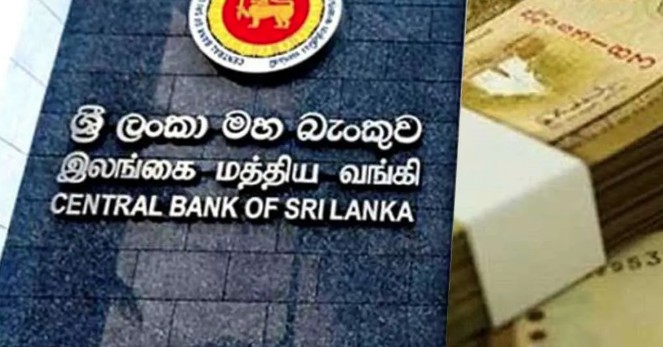
The Central Bank of Ceylon was established in 1958 by replacing
the currency board system, to implement an independent and
flexible monetary policy.
Passionate agriculturalist
DS was a passionate agriculturalist with close affinity to the
rural farmer, and directed much of his formidable energies
towards the improving the conditions of the peasantry and
boosting food production. Only very few in present generation
know that when work for the Gal Oya settlement scheme in the
Eastern Province was completed, the first preference was given
to people from the same province. It was only after about six
months when faced with the paucity of local applicants, that the
doors were opened to the applicants from other provinces.
DS was able to command the sections of the Tamil leadership. The
first Parliament had over 40% of the seats represented by the
candidates from the minorities or left inclined members. There
was also a distinct possibility of a coalition Government of the
leftist parties. DS was concerned over the strength in
Parliament of these members. DS valued democracy and feared
being taken over by communist parties. This far sighted leader
also saw a danger in this to national sovereignty and
territorial integrity of the country.
Citizenship Act of 1948
These aspects motivated DS to introduce the Citizenship Act of
1948. Following the passing of the legislation, the vote was to
be confined to citizens of Ceylon. The Indian and Pakistani
residents (Citizenship) Act of 1949, permitted only those Indian
and Pakistani residents in Ceylon who satisfied certain
stringent conditions, to obtain Ceylonese Citizenship. Almost
all of the Tamil elite representing the Ceylon Tamils through
both UNP and the Tamil Congress, either voted for, or were not
serious about opposing them.
The vote was along class lines
G.G Ponnambalam the leader of the Tamil Congress opposed the 1st
Bill but voted for the second Bill. It is correct to say that
vote was along class lines disenfranchising the Indian Tamils
and was not simply a communal vote. Opposition to this Bill came
from the major left parties, and prominent Sinhalese
independents who voted against the Bills were Wilmot Perera, R S
Pelpola, IMRA Iriyagolle and Lakshman Rajapakse. In this sense
it is wrong to say that DS was involved in a deep anti Tamil
conspiracy to bring about Sinhalese domination. DS believed in
an inclusive nationalism in which minority relations would be
ameliorated by moderation on the part of the dominated group.
End of an era
Ceylon’s future took a different turn on March 22, 1952, the day
DS was thrown off his horse near Galle Face Green. At ninety
second intervals, an SOS for help was broadcast to London by
Radio Ceylon. It concerned the life and death of the nation’s
precious Prime Minister.
British PM Vincent Churchill gave a personal order to send the
fastest plane available with surgeons. Immediately the
refuelling crew were roused from sleep and told to take up their
stations. But soon another order was given to cancel the flight
due to bad news from Ceylon that, “there was no hope for the
PM”.
Since this day, Ceylon, the most untroubled country in Asia, has
gradually become the most troubled country in the world.
The writer is a resident of Australia and is practicing as an
Australian Solicitor & Barrister. He can be contacted on
dweerakkody@hotmail.com
**** |