

































| Importance of
thwarting ‘flying’ Tigers
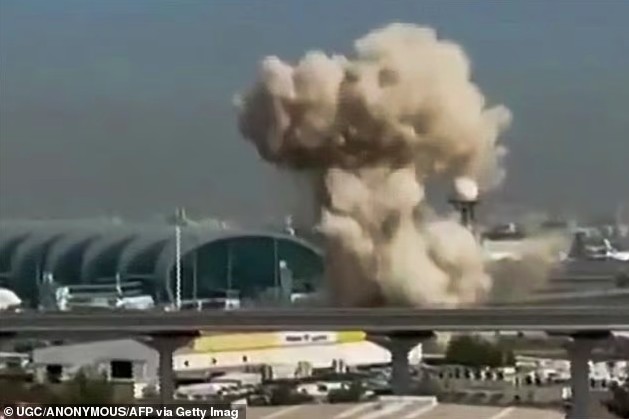
The events of Wednesday night, when aircraft of the
Liberation Tigers of Tamil Eelam (LTTE) attacked the Army camp
in Mannar and then inflicted more damage on the Kelanitissa
power station on the outskirts of Colombo, have shaken the
nation.
Moreover, the incidents come at a time when the security forces
have made significant advances against the LTTE in the northern
theatre of conflict and are poised to wrest control of
Kilinochchi, touted as the ‘administrative capital’ of the
so-called Tiger run ‘state’.
They also highlight the fact that, while the military
capabilities of the terrorists are on the wane on the ground,
they are still tactically savvy, and retain the capability to
inflict considerable damage through surprise attacks on selected
and crucial targets.
And therein lies the significance of Wednesday’s attacks. As the
Tigers get cornered to an increasingly restricted area in the
jungles of the Wanni, the more they will be compelled to resort
to such attacks, both, to shore up their sagging morale and
also, to try and arm-twist Colombo into re-thinking their
military options.
But there is another element to the incidents. Wednesday night’s
events also lead to serious questions being asked of the
nation’s security and the vulnerability of key institutions and
installations to air-strikes, in view of the chain of events
that unfolded.
Several days after the attack, it is still unclear as to how
exactly the attacks were staged. There is even confusion as to
whether one or two Tiger aircraft were used for the attacks.
What is clear though, is that, the attacks on Mannar and
Kelanitissa occurred with a time interval of no less than one
hour.
What it means is that, after Mannar was attacked, Colombo would
have been-or, should have been- on high alert for possible
attacks on a key target. All security measures-including
activating air defence systems-would have been triggered by the
Mannar attack.
Nevertheless, not only did a Tiger aircraft manage to fly to
Colombo-perhaps flying over the western coastline of the
country-but, it also ventured inland, attacked the Kelanitissa
power station and then got away, apparently unscathed, leaving
the citizens of Colombo bewildered and in fear. Inevitably
therefore, Wednesday’s events would lead to some searching
queries.
This is not the first aerial attack-and will probably not be the
last as well. The Tiger terrorists staged their first aerial
attack on the Katunayake Air Force base in March 2007, targeting
the MiG fighter jets stationed there.
The impact of that attack was not so much the damage inflicted,
but the realisation that the Tigers were the first-and as yet,
only-terrorist group to have their own air wing. Suddenly,
literally overnight, the Eelam War had taken an entirely new
dimension.
Since then, there has been much thought and effort devoted to
thwarting future air intrusions by the terrorists. The
government had to set up a sophisticated air defence system to
protect Colombo and other key locations, at great cost, and this
was done.
However, questions are now being raised as to whether the best
state-of-the-art equipment was utilised for the task.
What Wednesday’s attacks demonstrated is that, whatever air
defence strategies were in place, were probably inadequate to
meet the threat now posed by the Tiger aircraft. We must leave
it to the experts to figure out the deficiencies and take
appropriate remedial measures but, this must be done sooner,
rather than later-before another attack with greater
consequences is staged.
In the aftermath of the incidents, there have been calls for the
Commander of the Air Force to resign. Air Marshall Roshan
Goonetilleke is widely reputed to be an officer and a gentleman,
and we do not, for a moment, believe removing him from the Air
Force will be a panacea -rather, it would aggravate what is
already proving to be a difficult military conundrum.
We must not forget at this juncture that, one of the key
elements for the success of the Armed Forces in the north is the
contribution of the Sri Lanka Air Force. It is in air power that
government forces have an overwhelming superiority over the
Tigers and that has been a crucial cog in the wheel of recent
military victories against the enemy.
But, it is also imperative that, the Commander asks some tough
questions from his senior officers-to ascertain what exactly
went wrong on Wednesday, and what could be done to minimise the
risk of a similar incident from happening again, instead of
awaiting the next catastrophe to descend upon us.
It is also important that, the Air Force-and the government-
provide the public with a plausible explanation for Wednesday’s
events, instead of resorting to paint a picture that nearly
nothing happened and that, Sri Lanka’s skies are nothing but
safe. Half-truths and make-believe statistics will only add to
speculation and fuel rumours.
If there were lapses in security last week, let the Air Force
acknowledge them candidly- in so far as security concerns would
permit- learn from those errors and move on to become a stronger
force, a force that lives up to its’ motto of protecting the
skies of Sri Lanka. That is the need of the hour.
**** |