

























@


HOME
NEWS  
NEWS FEATURES  
INTERVIEWS  
POLITICAL COLUMN  
THIS IS MY NATION  
MILITARY MATTERS  
EDITORIAL  
SPORTS  
CARTOON  
BUSINESS  
EYE - FEATURES  
LETTERS  
EVENTS  
SOUL - YOUTH MAG  
KIDS - NATION  
ENTERTAINMENT  
NATION SPECIAL  


Business


 Rubber joins tea ‘party’

The present recession could spell hurting times for the local
export plantation sector says Lanka Securities Research Head

By Indika Sakalasooriya
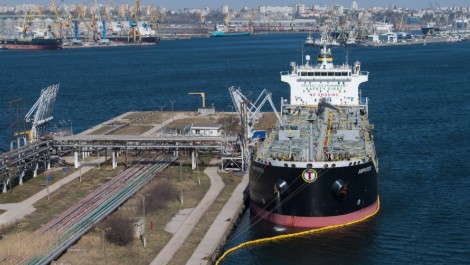
Amidst the sharp decline in tea prices, a negative sentiment is growing among Lankan rubber industry stake holders, with the future outlook for natural rubber exports looking dim, due to the present dip in crude oil prices and demand for motor vehicles in large economies in the world.

“The inability to draw a timeline for this demand drop to reach an end, has been the catalyst of this sentiment. Experts initially said the present financial turmoil would end in 12 to 16 months time. This is the general time period presumed for an ordinary recession to end. But now they say the crisis we experience goes beyond the boundaries of ordinary recessions, and no one knows how long it will take for things to recover” Lanka Securities, Research Head, Srimal Liyanage told The Nation Economist.
According to many international experts the present recession has some shocking similarities to the Great Depression in 1920s, and the IMF Chief recently said this is the, ‘largest financial shock since the Great Depression’.

“If what these experts say is true, the coming few years are likely to be very hurting times for the local export plantation sector, because after the Great Depression, it took almost 12 years for commodities to recover” Liyanage stressed.

According to the Colombo Rubber Traders Association (CRTA), October to December is the high producing period. “According to rubber manufacturing factories, cost of producing a kilo of natural rubber is approximately Rs.140.00. But the last auction price per kilo was Rs.100. The industry is at a critical juncture” CRTA Chairman, Anura Edirisinghe said.

Sri Lanka is the 9th largest producer and the 10th largest exporter of Natural Rubber in the world. However it provides only 1.3% of the world rubber production with a yield of around 1,150 kgs per hectare. Approximately 80% of the world’s rubber production is consumed by the tyre industry. Prior to 2007, rubber estates were the highest profitable plantation crop in Sri Lanka, and helped most profitable plantations to show positive results at the bottom level while mitigating losses from tea.

The way out

The only way out for rubber and tea industries is to change the country’s exchange rate policy i.e. let the rupee depreciate, an analyst on the ground of anonymity told The Nation Economist.

The fundamentals prove that the present exchange rate is highly over stated and the high inflation compared to our trading partners make our exports expensive in their soil and their imports cheaper at our soil, he said.

He also pointed out that over-relying on foreign capital flows and CBSL’s intervention to stabilise the external value of the local currency, would be detrimental in the long-run, given the volatile global markets

“Trade-flows are stable in the short run: however the capital flows are very volatile in the short run. Thus the above scenario would lead to sudden flight in the capital flows from the country, creating massive foreign reserve outflow from the system” he stressed.

He also pointed out that, if the country would not be able to garner any capital inflows due to bad sentiments, then it would be inevitable that the country would run into a foreign exchange crisis.

The recently released IPS’s State of Economy 2008 also pointed out that the Sri Lankan rupee has appreciated significantly and as a result our export competitiveness has eroded. It has pointed out that the real effective exchange rate of the Sri Lankan rupee calculated against the currencies basket of 24 countries has appreciated by 6.5% in 2007 and by a further 8.5% from December 2007 to May 2008.

****

Lanka’s first one stop vehicle shop debuts at Rajagiriya

Introducing a brand new concept to the local consumer, RTT Group of Companies last week launched Sri Lanka’s first and only automobile supermarket comprising a 24 hour filling station and break down service, service facility, , spare parts centre, wheel alignment centre, rent-a-car facility, customer lounge and a Wi-Fi enabled internet cafe was opened in Rajagiriya, Kalapaluwawa

(Pic by Rukshan Abeywansha)

****

 Results in brief

  •  Kelsey Development : 2Q09 net loss of -Rs16.4 mn vs 2Q08 net profit of Rs0.1 mn

Kelsey Development PLC 1H09 net loss rose 186% YoY to Rs.30.6 million. Sharp YoY decline in revenue and steep YoY increase in finance costs of the company can be seen, while the book value per share stands at Rs.14.

  •  Hunters - 2Q09 net profit down 58% YoY to Rs4.9 mn

Hunter & Company Ltd 1H09 net profit fell by 60% YoY to Rs6.6 million. The book value per share of the company as at September 30 was Rs.258.00. However the land and buildings of the company had last been valued in FY04.

  •  eChannelling: 1H09 net loss up 1,189% YoY to -Rs9.1 mn

eChannelling Plc1H09 revenue rose 35% YoY amidst sharper increase in admin costs.
The main component of the company’s other income has been the interest income and despite eroding into reserves, balance sheet remains cash positive.

  •  Kotmale Holdoings - 2Q09 net profit down 3% YoY to Rs100 mn

Kotmale Holdings PLC 1H09 net profit fell by 24% YoY to Rs188 million. GP margins have gone down YoY, amidst flat revenue while Capex has pushed up sharply in 1H09.

  •  Lower copper prices likely to support 2H09 results

Lanka Hospitals Corp - 2Q09 net profit of Rs18.8 mn vs 2Q08 net loss of -Rs25.0 mn
Lanka Hospitals Corporation PLC has recorded a net profit of Rs36.4 mn for 1H09 vs 1H08 net loss of -Rs60.4 mn. Steady rise in revenue and GP margins compensate for sharp increase in staff costs. Lower finance costs following rights issue in Jan 2008 has raised the company Rs1 billion.

****

NTB debentures attracts institutional investors

Nation Trust Bank has successfully raised Rs.1 billion through a private placement of Unsecured Subordinated Redeemable Debentures, of which 99 percent are institutional investors.

The 10 million debentures issued were scattered among 11 institutional investors namely, National Savings Bank, CTC Eagle Insurance Policy Holders Fund, CTC General Fund, CTC Eagle Indurance Life Share Holders Fund, Sri Lanka Insurance, Arpico Employee Provident fund, NTB Staff Provident Fund, Union Assurance Life Insurance Fund, Union Assuarance General Insurance Fund, Mackinon Keells Financial Services Limited Executive Staff Provident Fund and John Keells Executive Staff Provident Fund.

The only private investor is LN and P.K. De Silva who have subscribed 60, 000 debentures.
This issue comprised debentures with a par value of Rs.100 and a fixed interest rate of 21 percent payable annually from date of allotment until expiry of five years.

As analysts point out the money raised though debentures would suffice to fulfill the tier 2 capital requirement and would help the bank to go forward with its expansion plans.

The debenture issue was to close on September 30 but closed on August 19 on full subscription. Hence they are expected to mature in August 19, 2013. (IS)

****

Hotels cutting down on contractual labour due to decline in bookings

Tourist arrivals expected to drop by 20 percent, 1st Qr, 2009

By Aisha Edris
The Tourist Hotels Association of Sri Lanka (THASL) predicts that the country would record a drop in tourist bookings in resort hotels by 20 percent during the first quarter of 2009.

According to THASL, President, Srilal Miththapala, resort hotels have not recorded new bookings from foreign tourists, especially from the Europe.

“Currently we are only having a around 60-70 percent occupancy rates in hotels during the winter seasons. Last year it was at 90 percent. We do not know what is in store for 2009, but, we are predicting a further decline in tourist’s arrivals,” he said.
Miththapala added that hotels have not employed contractual labour for the current winter period. According to a survey conducted by THASL, hotels have begun to cut back their employment.

Around 1500 contract labour were not employed for the winter seasons due to the drop in tourist’s arrivals in all parts of the country during the latter part of 2008.

He noted that if the down turn continues for a long period, hotels would be compelled to down scale operations by shutting down rooms, which might lead to unemployment.

“If the trend continues, there can be long term unemployment created. We really do not know what would happen in the future,” he said.

According to THASL, there about 65,000 people who are directly employed in the tourism industry, and three times as much in the informal sector. Around 260 000 people are employed in the industry both direct and indirect, while around 900, 000 to one million people depend on the industry for their livelihood.

****

Commercial Leasing to de-list

By Santhush Fernando
Lanka Orix Leasing Company PLC’s associate company- Commercial Leasing Company PLC, is to de-list its shares from the Colombo Stock Exchange (CSE), the company says in a CSE filling.

“The Board discussed the request to de-list Commercial Leasing Company PLC (CLC) shares from the Colombo Stock Exchange (CSE), on considering that LOLC holds approximately 98% of the Stated Capital of CLC. LOLC has no immediate plans of divesting its holding in CLC,” Commercial Leasing Company Secretary Nihal A. Rodrigo said in the filling.

“The cost and administrative efforts involved in CLC’s maintaining its listing on the Colombo Stock Exchange is not justified by the quantum of Stated Capital held by the public” the filling also said.

LOLC in a bid to expand LOLC’s scale of business, took control of Commercial Leasing acquiring a 66.68 percent stake in the company in May 2008, and became one of the largest non-banking financial service companies in the country.
Chemanex Ltd and Commercial Bank sold 36.68 and 30 percent respectively through the stock exchange, and LOLC obtained 30 percent stake held by Singer Sri Lanka under a mandatory offer.

Raja Nanayakkara and his family acquired a controlling interest in LOLC in 2002, and currently hold over 54% of its equity, while Orix and the general public hold 30% and 16%, respectively. Orix Corporation, the single largest leasing Company in the world was established in 1964 in Osaka, Japan as Orient Leasing Co., Ltd. by three trading companies and five banks and is listed in the Tokyo and New York Stock Exchanges.

Lanka Orix Leasing Company (LOLC) became the third Joint Venture of Orix with the private sector development arm of IMF- International Finance Corporation (IFC), when launched as a leasing entity in Sri Lanka 28 years ago, and the Group has now morphed into a total financial solutions provider.

The Group offers services beyond leasing such as insurance, factoring, savings and fixed deposits, pawning, micro finance, mortgage loans, Islamic finance, working capital, and stock brokering.

****

Commercial Bank’s Rs. 1bn hedging payment on the mat

Commercial Bank will be in liability of Rs. 982.3 million (USD 8.93 mn) under the hedging contract to its back-to-back market risk counterparty, the Bank said in a corporate disclosure issued yesterday.

“On 28 November 2008, the Supreme Court issued an Interim Order suspending the payment by Ceylon Petroleum Corporation (CPC) of the payments under CPC’s oil hedging contracts,” the statement said.

“Commercial Bank has an outstanding ‘WTI Crude Oil Hedging Contract with CPC’ due to expire on 30 June 2009. Commercial Bank has a continuing liability under its back-to-back hedge contract with its international counterparty. If the suspension of payments under this hedging contract continues, our liability under our contract to make payments to our back-to-back market risk counterparty would total USD 8. 93 Mn. (Rs. 982.3 mn) at today’s exchange rate of Rs. 110), if the price of WTI Crude Oil remains at the current price of USD 48 per barrel throughout the remaining period of this contract,” it added.

****