




























|
Hedging with no
responsibility
When Poker was a highly popular card game in America,
different players had to deal the deck of cards to ensure there
was no foul play. The person who was next in line to deal would
be given a token, which was usually a knife, the handle of which
was made of a buck’s horn. When the dealer’s turn was done he
passed the knife; hence the term, ‘passing the buck.’ In modern
usage though, the phrase is used to indicate the shifting of
responsibility to others.
If the origins of the phrase came about because of a mechanism
to ensure a fair deal for everyone, last week was quite the
opposite. The buck was passed furiously and figuratively but in
the end, the people of Sri Lanka had to be content with a raw
deal: A loss that has been estimated to cost the country at
least US$ 400 million.
The Supreme Court was to intervene in the matter last week when
several individuals filed fundamental rights applications
against the ‘hedging for oil’ agreement entered into by the
Ceylon Petroleum Corporation (CPC).
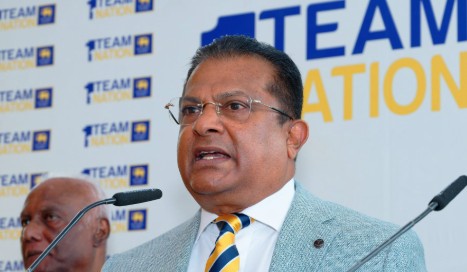
In yet another landmark judgment, the Supreme Court ordered that
cricket selector turned CPC Chairman Ashantha de Mel be
suspended and severely questioned De Mel’s competence and
capabilities to head a vital state venture of this nature.
Not quite content with that, the Court also suggested that
President Mahinda Rajapaksa take over the duties and
responsibilities of Petroleum Resources Minister A.H.M. Fowzie,
relieving the veteran minister of his portfolio.
De Mel has already been replaced, but Minister Fowzie has been
defiant. Making a statement in Parliament this week he said he
did not wish to cause the slightest disrespect to the highest
court in the land, but was keen to emphasise two issues.
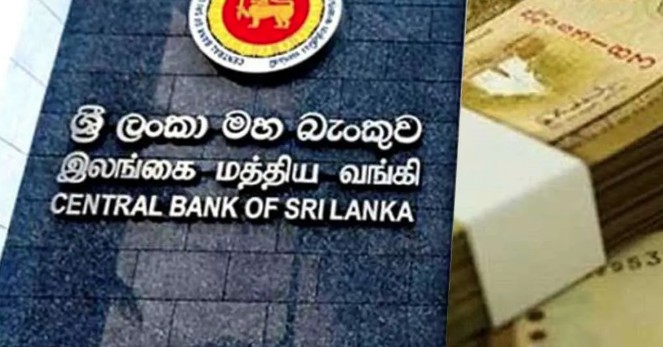
Fowzie claims hedging was not his brainchild; instead it was the
baby of Central Bank Governor Ajith Nivard Cabraal and that the
governor had in fact suggested that the hedging agreement be
entered into ‘without delay.’ The Minister was also keen to
point out that the contract was entered into only after approval
by the cabinet of ministers.
This raises a plethora of questions. The Supreme Court clearly
found the conduct of Ashantha de Mel wanting, especially in the
manner the deal was concluded; apparently heavily in favour of
several banks with no protection for the state in the event of a
sudden fall in world oil prices.
But de Mel, influential as he was, is a nobody in the political
hierarchy – he is merely the chairman of the corporation
concerned and for all intents and purposes a mere bureaucrat.
Who then takes the political responsibility for the transaction?
The Supreme Court seemed to be of the opinion that Minister
Fowzie is responsible, which is why it suggested that the
minister be relieved of his portfolio. Minister Fowzie is
adamant that this was not his idea but that of the Governor of
the Central Bank. Then, Fowzie was also hinting that if he is in
any way to shoulder blame, then the entire cabinet should do so,
because he claims the agreement had the sanction of the cabinet.
This blame game will take the country nowhere. De Mel’s
resignation may appease a few and perhaps even Minister Fowzie’s
resignation will satisfy his detractors. But, such resignations
are only imposed upon them by the Supreme Court, rather than
being offered voluntarily and indicate that neither Fowzie nor
de Mel nor Ajith Nivard Cabraal for that matter are taking any
responsibility for their actions.
Contrast this attitude with what transpired in neighbouring
India in the aftermath of the recent terror attacks in Mumbai. A
host of ministers and key officials resigned. No one asked them
to and some of them were only indirectly responsible for the
events that occurred – yet they felt resigning were the right
thing to do.
That culture of responsibility appears to be sadly lacking south
east of the Palk Straits. Here is a deal that was obviously
ill-conceived and ill-advised, leading to a loss of massive
proportions; an amount of money that has been estimated as being
sufficient to fund the war effort for three months. Yet, there
is no sense of responsibility or accountability for the loss.
We are not for a moment interested in apportioning blame to
anyone in particular. In fact, that will get us nowhere as a
nation. But, what we would wish for is that there is
transparency in transactions of this nature, and that there is a
clear line of responsibility that can be delineated when matters
take a turn for the worse.
The recently concluded ‘Waters Edge’ case was again an instance
of bungling and lack of responsibility. There too, then
President Chandrika Kumaratunga’s defence was that the decisions
were taken with the sanction of the cabinet.
It is time that this blame game stops at some point. Who passes
the buck to whom is immaterial as finally the buck has to stop
within the boundaries of the government in power. Therefore, it
augurs well for the government if maximum transparency is
ensured in mega transactions of this nature at least in the
future.
**** |