













@


HOME
NEWS  
NEWS FEATURES  
INTERVIEWS  
POLITICAL COLUMN  
THIS IS MY NATION  
MILITARY MATTERS  
EDITORIAL  
SPORTS  
CARTOON  
BUSINESS  
EYE - FEATURES  
LETTERS  
EVENTS  
SOUL - YOUTH MAG  
KIDS - NATION  
ENTERTAINMENT  
NATION SPECIAL  


Interviews


 “UNP has given the best deals to people”

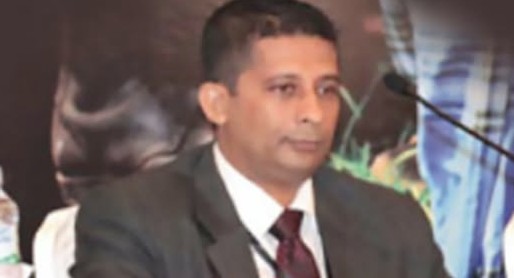
The United National Party (UNP) has saluted the brave soldiers for their success in the Wanni. Besides, the party has also praised President Mahinda Rajapaksa and his government for prosecuting the war to the end. The party, while congratulating the government, has also warned that the failure to evolve a political package soon, would give rise to various other problems. UNP stalwart John Amaratunga says the UNP is willing to help the government provided it shows a keen interest to find a solution to the ethnic problem. Amaratunga says the government’s failure in not placing before the APRC its own proposal is something that worries the main opposition. “Simply calling us to help the government is not going to really help them. But the government by now should have submitted its own proposal for our consideration. We just don’t want to sit and talk for months and come out empty. In the history we have seen many APRCs that have failed. We want to help but the question is whether the government wants our genuine help,” he told The Nation in an interview.

Following are excerpts:
Q: In an unprecedented move, UNP leader Ranil Wickremesinghe paid a glowing tribute to the government, the President and the soldiers for the success in the war. Is this view also held by the party in general?
A:
Certainly, it is the view of the party. I have been advocating from the inception that we should, when we have to, beat those who challenge us. LTTE chief Velupillai Pirabhakaran has been throwing many challenges on the government saying that Kilinochchi cannot be touched by the Sri Lankan soldiers. But now the place is taken over by the security. Mullaitivu was the next challenge of the LTTE and we must praise the soldiers for having taken this town also under their control. We understand that Mullaitivu is under the government control. I hope this is the correct information. We must accept and concede that our soldiers have been brave. If something good happens then we must praise but if something bad is there then we must spotlight it. We should be happy that terrorism has been brought under control to some extent. Nevertheless the theory that we put forward is that there must be a political solution. Because the present ethnic problem arose due to political injustice to the minority. So now, we must try to evolve a political solution and ensure what the majority is enjoying is also enjoyed by the minority too.

Q: The UNP has been advocating a settlement through dialogue. Does not this statement of the leader of opposition negate the original UNP’s formula to end the war through negotiations?
A:
The UNP though has been advocating for a negotiated settlement to the ethnic problem, has never said the Tigers should not be dealt with militarily. Up to the time of President Wijetunge, we were proceeding with the military operation. The rebel held territories taken over by the present government today were under the government control when we were in power. During this time I have visited these places as the Acting Defence Minister. As the Minister of Home Affairs, I have visited most of the places and reopened divisional secretariats that were closed down by the rebels. However, after 1994, during President Chandrika Kumaratunga’s regime, we lost the territories again. In 2000, knowing what had happened in the past, only Ranil Wickremesinghe was of the view that a permanent solution could be brought about only through a ceasefire and negotiation. I must say that Wickremesinghe was very successful in handling the LTTE. He was on the verge of cornering Pirabhakaran when President Kumaratunga unfairly dissolved parliament. Even Karuna had broken away from Pirabhakaran during our time. And this is why the LTTE became so weak. So therefore the credit of achieving military victory does not solely attribute to the present government. Part of it was Wickremesinghe’s operation that resulted in the breakdown of LTTE. Even Pirabhakaran admitted in the last Maveerar’s speech that the worse period for his struggle was during Wickremesinghe’s time. At that time we weakened the LTTE through our political maneuverings. Whatever it may be, we must appreciate that the government has succeeded it. Even now it is not too late to come up with a political solution. That has to be the final solution

Q: ‘What next’, seems to be the question that arises in everybody’s mind once the war is over. Is this your question as well?
A:
Of course. I think the government is unable to put forward any package because of certain elements within the government. There are two political elements, namely the JHU and the breakaway faction of the JVP which are preventing the President and the government to put forward any proposals. The President himself may be anxious to put forward a political package but reasons beyond his control are hampering him.

Q: What is your view of the APRC and the outcome of it? Do you think if something concrete comes out of the APRC that could be the final solution?
A:
We have had APRCs in this country since 1983. These APRCs have been sitting for months and months but not produced any good results. The present APRC is identical. They are talking but nothing happens. I think there must be a will to put forward proposals that will be acceptable to the people of the North East in particular.

Q: There is an allegation by the government that the UNP is not cooperating with the APRC process. Is this true? At least now in what way is the UNP ready to help government achieve peace?
A:
The UNP has never said it will not cooperate. What we have been asking from the government is to come out with a set of proposals first and then for us to scrutinize it and see whether any changes or amendments are needed. But very sadly the government, to date, has not come out with any convincing proposal. This is why I said there appears to be no will on the part of the government to bring a genuine proposal in order to find a solution.

Q: Does this mean to boycott the APRC?
A:
No. We have made it clear that it is the incumbent government that should first place its proposals for us to then react. Unfortunately the government has not evolved any mechanism to put forward a proposal that is acceptable to the Tamils. My view is that the government should go for a referendum in North-East, putting forward some major principles for people to come up with their response without trying to waste money and hold prematurely the provincial council or parliamentary elections. First there must be a peaceful settlement before looking at elections in the South.

Q: The President has reiterated his call for the UNP to come and help him solve the crisis. Has the party decided to lend its hands or has the party at least inquired from the President what he actually wants?
A:
Whenever he calls us, he is asking us to join the APRC. I must report here again that we did participate at the inception, but later we realised that nothing valuable was coming up and then we decided to boycott. Now we feel that it is a big eye wash on the part of the government which just invites us to the APRC and not place anything before us. Is the government trying to show the entire world that they are interested in solving the problem? I don’t think we can be taken for a ride like this. We will help when a comprehensive proposal is placed before the APRC.

Q: Now that the elections are round the corner, is the UNP ready for it?
A:
Yes, we are now prepared and are also filling up the gaps and readying to face any election that is to come. Now that the war is over, issues such as cost of living and mere survival due to various reasons are emerging to play a role. The economy will be affected due to world recession. On that basis, it will be difficult for the government to continue to be popular, always. The people then will be forced to turn to us. As I have always said Winston Churchill won the Second World War but at the end of the war he lost the election. People always look for safety, comfort and good living. Throughout, Sri Lanka, after independence it was the UNP government that has given the best deals to the people. They were long lasting, in the field of development, social security and cost of living. The Bandaranaikes came and ruined the whole thing.

Q: Already a number of UNP members have raised concern about the party’s record of losing elections. If the UNP is defeated again then what will be the plight of the party?
A:
Nothing. We will have to reorganise the party again and strengthen the party administration and go ahead. After 1977 the SLFP came down so badly that even the Leader of the Opposition was from the TULF. But the party returned to power. The UNP too came down badly in 1956. We had some eight members or so. But the following years we reorganised and came back to power. In 1977 it was the greatest victory. So this is the trend anywhere. We have to lose and we have to win. Defeat is nothing for the UNP. But let me bring forward a challenge right now. If there is a parliamentary election the UNP will bring more seats and votes. With provincial council elections the government in power will always have an edge over the opposition.

Q: The entire country is able to witness a significant swing in favour of the government after the military success in the Wanni. This trend can have an adverse impact on the UNP. What is your view on this?
A:
Well, as I said earlier if there was an acceptable political solution or a set of proposals which could convince the North-East people, then of course there could have been a lasting peace in this country. This is what the international community says every day. The Indians have said the same thing. So the present swing is only based on the war victory. But remember the people are not struck with this menace only. There are so many other issues to be ironed out.

Q: Already pre-election violence has been reported. Are you expecting a violent election?
A:
Yes. The government, I feel, will unleash violence to win the election. Already some incidents of violence have been reported. If there is a free and fair election, we can even win the election. But I know it will never happen. That is a signal that the government is weak in other areas, except the military operation. The government has used violence to win elections even in the past. When the government realises that people are not able to accept their policies, then they unleash violence.

Q: There is a sudden surge of violence and crimes in the country. The present rate could be either close upon or similar to that of the 1988/89 era. What causes do you see for this trend?
A:
The present crime rate is due to the government’s failure to appoint the Constitutional Council (CC) arising out of the 17th Amendment. Still there is a battle going on between the government, the opposition party and the Supreme Court. When there is no proper CC the commissions that are functioning, namely the Police Commission, Media Commission, Election Commission and Public Service Commissions will fail to function as independent or non-political organisations. The result is politicisation. Take for instance the Police Department. Wherever the government has a hand in any of the violence that is related to the media or killing of important people the Police is prevented from investigating into it. There is pressure on the Police not to investigate. So if the Police was under the Police Commission, the police officers would not have worried about their transfers and promotions and as a result they could have conducted proper and independent investigations. If so, the crime rate would have come down and the culprits brought to book.

Q: The present main Opposition appears to be in deep slumber when the cost of living is skyrocketing, violence increasing and human rights trampled. Why?
A:
One thing is sure. Our voices are not reported in the media. The government has systematically brought about this against us. So what can we do? What is raised in parliament is not reported. There is an embargo for newspapers to report our views made in parliament. Both electronic and print media are frightened by the government to report about the opposition party. The Opposition is not sleeping. We make a lot of noise in parliament but who reports? When we organise mass protests, people are prevented from participating in them, by the state. Who is to be blamed? The Opposition voice has been gagged or drowned I must say. These are signs of an emerging dictatorship. If a man comes out with a bare truth his mere existence is at stake. As a legislator and politician I hope and pray that there would be a lasting peace in this country, so that the citizens and their decedents could live happily thereafter.

****