



























@


HOME
NEWS  
NEWS FEATURES  
INTERVIEWS  
POLITICAL COLUMN  
THIS IS MY NATION  
MILITARY MATTERS  
EDITORIAL  
SPORTS  
CARTOON  
BUSINESS  
EYE - FEATURES  
LETTERS  
EVENTS  
SOUL - YOUTH MAG  
KIDS - NATION  
ENTERTAINMENT  
NATION WORLD  


News Features


Private Medical Colleges:  BOON  or  BANE

Russian Medical Degree

Currently, there is a move to establish a Private Medical College (PMC) at Millennium Drive, Weliwita, Malabe. Lectures will commence in September 2009, to correspond with the Russian University Calendar.

The eligibility criteria is GCE ALs with good ‘Z’ scores for students unable to enter local universities.

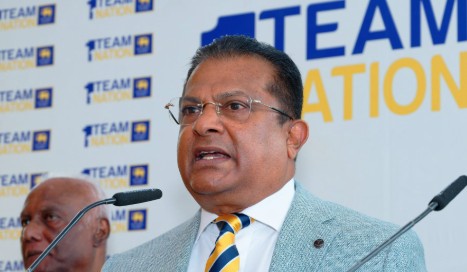
When queried as to who is in charge of the curriculum, President- South Asian Institute of Technology & Management and founder of the PMC, Dr. Neville Fernando, stated that already Professors and Lecturers have been appointed from among leading academics, who have retired or are on sabbatical leave. Dr. Fernando stressed, “I have prevailed upon some who were going abroad for good, to work in my Institute. Nearly 20% of the Lecturers and Professors will come from Russia.”

The Degree offered is MD, Niznhy Novgorod, Russia, which is among the first 10 Medical Colleges in Russia.

Dr. Neville Fernando asks, “Why protest against students paying to get a medical degree from abroad after studying in Sri Lanka and one year in Russia ?.”

In order to practise in Sri Lanka, they will have to sit the Act 16. They can also go abroad, as the Degree is recognised by the GMC UK.

Prof. Carlo Fonseka, formerly of the Medical Faculty of Colombo, is an authority on this subject. When asked as to why some people persist in the belief that Medical education should be a State monopoly and PMCs are wrong, he replied; “One reason is that it has always been a State monopoly and we have produced some of the best doctors in the world, so, something of proven value and established merit should not be changed”

By Ishara Jayawardane
In the recent past, there has been much debate about the establishment of Private Medical Colleges (PMC) in Sri Lanka. A range of arguments have been put forward and the topic remains open to debate. Will the establishment of a Medical College be a boon or a mistake? Is it for the greater good of our country or is it simply unjust?

This is not merely a philosophical question. At a point in our history, this issue led to certain tragic events. According to the Final Report of the Presidential Commission on Disappearances, 263 university students were killed during the second JVP insurrection in the late 1980s. Out of this number, 45 students were from the Faculties of Medicine and Veterinary Science. One wonders why such a large number of students, belonging to prestigious faculties in the university system, got involved in the student movement. One of the major reasons, which led to the radicalisation of the student movement in the mid-1980s, was the protest campaign started against the North Colombo Private Medical College.

Much time has passed since those troubled days; however, the student movement has not changed its negative attitude at all towards PMCs in Sri Lanka. It is not only the students, but also the professionals within the GMOA who opposed it.

The need for a PMC has risen simply because the State is unable to cater to the demands for Medical studies. This is not limited only to the Medical field, but also to other fields of education. As a whole, State universities are unable to absorb all those who are eligible for university admission. According to statistics published by the University Grants Commission (UGC), in 2006, only 14.34% could enter the university out of those eligible for university admission. Dr. Tara de Mel recently pointed out during a video conference organised by the American Centre, 164 students with 3 A’s grades, the highest grade one can secure at the GCE Advanced Level, and 1,464 students with 2As and 1B grades, did not find placement in the universities.

Is it fair to leave such a large number without an alternative? The sense of deprivation is so high among these students that they may say: “What is the use of this society? I have worked so hard to come this far; my parents have worked so hard to afford me tuition classes; I have obtained marks, but I don’t have the money to go abroad and I have no place in this country. So, why should I accept this society?”

Is it realistic to expect the State to provide all the resources necessary for the expansion of university education? In 2006, the expenditure for education in Sri Lanka was 2.85% of its GDP and the share for university education was 0.51%. The expenditure for education as a percentage of government expenditure was 9.98 % and the share for university education was 1.78%. This has been the case for several years. There is a big gap between the State funds available for the expansion of higher education and the growing demand for higher education. In fact, this gap is widening. Can the private sector come in, of course, with State supervision, to fill this gap?

The organised student movement is totally against the involvement of the Private sector in education. Convenor- Inter University Student Council (IUSC), Udul Premaratne insisted that, “Education is a service and not a commodity or an article of trade; the private sector has no place in it.”

He further added: “Free Education must be there in society. The establishment of private universities will violate the principle of free education. Even those who are wealthy should be entitled to receive education free of charge. The wealthy can pay income tax and enhance the income of the government, but even they should have access to free education.”

Collapse of State Univerities?

He added that the introduction of private universities will lead to the collapse of State universities. For example, in all the areas where government has allowed the Private sector to come in, e.g. public transport, public health, oil and gas distribution, the so-called competition did not lead to betterment, but to the deterioration of services. Premaratne went on to say, “If you have a PMC, do you think that, those who have the skills, motivation, desire and talents will have a chance to get in, depending on their merits? No, Unless they have money, there is no chance. What we oppose is that.”

He says that, it is the responsibility of the government, to expand the university education, to meet the needs of the society. Refuting the argument that the State has limited resources to meet diverse needs of the society, he says that, enough and more funds could be secured by eliminating corruption and wastage.

The present reality is that there are private higher educational institutions, which award degrees in the fields of management studies and social sciences. These institutions have affiliations with foreign universities and they grant “cross border Degrees.” The student movement has grudgingly accepted this reality. However, their objections to the establishment of a PMC, remain very much the same.

At present, there are seven universities with Medical Faculties: Colombo, Peradeniya, Sri Jayewardenepura, Kelaniya, Jaffna, Ruhuna and Rajarata. During Academic year 2006/07, 1,111 students were admitted to the Medical Faculties. The most recent Medical Faculty established was Rajarata University.

Chairman- UGC, Prof. Gamini Samaranayake, categorically stated that, the government has no plan whatsoever to privatise State universities. He said that the government has been consistently trying to expand university education, even though at a slow pace. The progress made, to date, regarding the establishment of a Medical Faculty at Rajarata University has been quite satisfactory. One should bear in mind that, what is required for university expansion is not merely physical resources, but also human resources in terms of qualified academic staff and their willingness to serve in those areas. University expansion should not be done at the expense of quality.

Former Vice Chancellor- University of Colombo, Prof. Tilak Hettiarachchi, strongly defended the establishment of private universities, including a PMC. He said that he has spoken on this issue in public, particularly, when he delivered the “Lalith Athulathmudali Memorial Lecture 2008”.

“The fears of privatisation of State universities are totally unfounded, because it cannot happen. Government has had the policy of free education established in the country for the last 60 years. No government can survive, if that policy is abandoned. The need for creating private universities is to cater to another sector of the country, who are also its citizens, and who are denied of higher education, just because there are no seats in the existing universities” elaborated Prof. Hettiarachchi.

As the facts stand, more than 85% of students who qualified for university education, do not get an opportunity, because there are no seats and only a very small minority can afford to go abroad for higher education. According to our Constitution, education is a fundamental right of a citizen. Students are being denied of their fundamental rights, because there are no places at State universities and the doors are closed for other sectors to come in to fill this vacuum.

Looking back at the last 20 to 30 years, our universities have produced a larger number of Medical graduates. It would be pertinent to ask how many of them remain in this country? They get free education and then serve another country. These are the very people who protest, when that education could be obtained at a fee in your own country.

Go abroad for education

Since Sri Lanka does not have its own PMCs, students have to go abroad for Medical education. The colossal drain of foreign exchange is astounding. These students have to go to countries like Nepal and Bangladesh, which are Third World countries. “Why can’t we organise our own PMC, when we have better facilities” asks Prof. Hettiarachchi.

A PMC need not cater only to those who can afford it. There is something called “corporate social responsibility.” They can assign a certain number of vacancies to brilliant, but poor, students. The government can even impose a tax, and that money could be used to create a fund to give scholarships to needy students.
There is a fear that, PMCs would attract a large number of lecturers from State universities, because of the higher salaries offered. Prof. Hettiarachchi was adamant that this is a far-fetched argument.

“The academic staff of State universities have considerable benefits, which cannot be given by a private university. They are given 3-4 years paid leave to obtain postgraduate qualifications. They also get vacation leave, conference leave, sabbatical leave with passage for spouses, research grants etc. Doctors in Medical Faculties can also engage in private practice under certain conditions, and are also better placed. There is so much prestige attached to these Faculties, which can attract a lot of Research grants. Therefore, they would not resign, just because a PMC can offer better pay.”

Prof. Hettiarachchi explained that, “Eexcept for a very few students from SAARC countries, we do not have foreign students in our Medical Faculties, even though the medium of instruction is English. The presence of foreign students in a faculty is also a criterion to get higher ranking in the international university ratings. The income thus generated from tuition fees paid by a few foreign students, can be used to upgrade the welfare facilities of students. These possibilities are not exhausted, because of the heavy local demand on State universities.”

No doubt that, there is a lucrative market and a big attraction for a PMC in Sri Lanka. Other than local students, it will also attract foreign students from neighbouring regions, because Sri Lanka has a reputation for quality education. This potential has to be tapped, but a lot of thinking has to go into this project. It is a sensitive issue, which should be handled carefully.

If the North-Colombo Medical College became a success, there would have been several other Medical Colleges by now. What happened was that, it was later taken over by the government. There were reasons for doing that, and it was later found that, admission had been given to some unqualified students. Therefore, the credibility and reputation should be protected, and a PMC should not be started merely as a business venture. In Sri Lanka, there is organised opposition against PMCs, but hardly any organised effort to promote them.

In most countries, university education, even in State universities, is not completely free. Even in China, students are required to pay tuition fees and other expenses. But in Sri Lanka, in addition to free education, students are also given other forms of financial assistance in the form of scholarships and bursaries. You are entitled to these privileges only if you are selected for university admission. Almost 85% of the students who qualified, but not ‘good’ enough to get into the universities, are deprived of any of those facilities. This is grossly unfair. Some of these students have missed out by a narrow margin of marks. Some have scored more marks than those who got admission to the universities, on district basis. Who takes the responsibility to look after them?

Prof. Carlo Fonseka, formerly of the Medical Faculty of Colombo, is an authority on this subject. When asked as to why some people persist in the belief that Medical education should be a State monopoly and PMCs are wrong, he replied; “One reason is that it has always been a State monopoly and we have produced some of the best doctors in the world, so, something of proven value and established merit should not be changed.

When something works well, why do you want to change it? The other point is that, some people think that PMCs will not be able to produce doctors of the same level of competency. These arguments are not very convincing”

Prof. Fonseka who took part in a debate organised by the Postgraduate Institute of Medicine in 2005, on the question “Is there a role for the Private sector in Medical Education in Sri Lanka,” supported the establishment of a PMC, because he was convinced of a role for the Private sector in Medical Education in Sri Lanka.

When asked why he was in the opposition, when a PMC was established in Ragama, Prof. Fonseka explained that he opposed on one simple fact; because the PMC wanted to give these students the Degree offered by the Colombo Medical Faculty. As they did not undergo any training at the Colombo Medical Faculty, there is no logic in giving them the Colombo University Medical Degree.

The debate was published in the newspapers and one of the arguments our side proposed was the huge drain of foreign exchange involved in not allowing medical schools here. About 200 students go abroad annually, and several millions are leaked out of the country. We said that it will result in the saving of foreign exchange.

The argument put forward by students supporting the continuation of State monopoly was that, there are better ways of saving and earning foreign exchange, than starting a PMC. One is increasing the tax on tobacco and liquor or limiting the number of luxury vehicles granted to politicians. Increasing taxes on tobacco and liquor will not save foreign exchange. These kind of arguments are absurd. They don’t answer the real questions.

When asked whether it is reasonable to admit students to a PMC, simply because they can afford to pay, he said that a certain criterion should be adopted. “As I have argued elsewhere, during the five-year period from 2000 to 2004, an average of about 2,000 students had grades higher than those of the lowest achieving student selected to a State Medical Faculty. Presently, such students have nowhere to go. PMCs should absorb only from this category of high achievers.”

****