


































e
w
s
f
e
a
t
u
r
e
highlight |
|
Mental Health to the Black Dogs
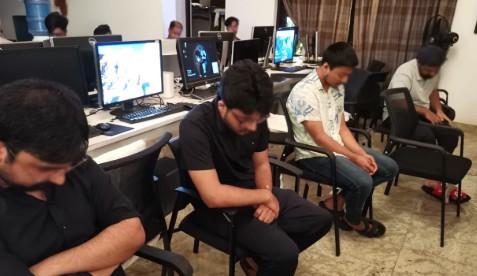
The Programme was launched at the Sri Lanka Foundation Institute (SLFI) on March 24, with more than 100 local clinicians, doctors and mental health workers participating. Though the Programme has been spearheaded by the Mental Health Directorate attached to the Ministry of Healthcare and Nutrition, it appears that, the Health Ministry hierarchy is not aware of this Programme. The controversial Programme was also attended by senior officials attached to the Health Ministry, including the Director General of Health, Dr. Ajith Mendis, but The Nation learns that, they too, are now reluctant to make any public statement regarding the Programme, as this has involved two local and international organisations whose credentials are questionable. Most medical experts attached to the Ministry pointed out that, the Programme, though it had an impact on the prevailing mental illnesses of Sri Lankans, to some extent, the manner in which it has been organised was dubious.
Locally, the Programme was supported by the Institute for Research and Development (IRD) headed by the controversial Dr. Athula Sumathipala, and internationally, by another dubious Australian organisation called ‘Black Dog Institute’. Though the name of the Health Ministry has been dragged into this Programme, it is not certain whether, the Programme itself, was conducted with the blessings of the Ministry. When contacted, Health Ministry Secretary Dr. Kahanda Liyanage said he did not know of the Programme, adding that, the Ministry was now busy with another Mental Health Programme conducted in conjunction with the Ministry of Resettlement and Disaster Relief Services led by Minister Rishad Bathuideen, catering especially to the IDPs. He then directed The Nation to the Additional Secretary Dr. Nihal Jayathilaka, who too, admitted he had no knowledge of the Programme, but said that, questions relating to Mental Health should be addressed to Dr. Neil Fernando, who is in charge of that sector. Besides, The Nation also reliably learnt that, the Advisory Council of the Health Ministry that meets every second month, has not been informed of this particular Programme. When queried as to whether there was no conflict of interest, when involving NGOs in conducting national level programmes, Dr. Fernando said that, the World Health Organisation (WHO) recommendation is that, when services are provided, there must be inter-sectoral coordination and added, there was no harm in involving NGOs in implementing programmes of this nature When contacted, members who attended the meeting, confirmed that, a Programme of this nature was never tabled at the Advisory Council meeting that took place last month. They said it was mandatory for any department to table details of every project and programme in the pipeline, for necessary sanction by the Advisory Council. Government’s view on NGOs Unlike in the past, the present UPFA Government has taken a strong stance against some of the NGOs and INGOs that are operative in the country with ulterior motives. In this context, many local medical experts have expressed concern about the role played by both the IRD and Black Dog Institute, in organising the Mental Health Programme to train mental health workers. These experts have also expressed fears and concern over the involvement of both Dr. Neil Fernando, who himself has been attached to NGOs and Dr. Athula Sumathipala, who is closely linked with the Janatha Vimukthi Peramuna (JVP). It is no secret that Dr. Sumathipala had been JVP leader Rohana Wijeweera’s physician, during the time he contested the presidential election in 1982, and is also alleged to be closely associated with the present leader Somawansa Amarasinghe. As for Dr. Neil Fernando, it is also no secret that he was earlier with an international NGO called ‘Basic Needs’ and later, with a local NGO called ‘Creative Action’, which too, was plagued with financial mismanagement. What is Black Dog? According to the website, the Black Dog Institute is an educational, research, clinical and community-oriented facility dedicated to improving the understanding, diagnosis and treatment of mood disorders. The Institute was formally launched in 2002 and is attached to the Prince of Wales Hospital, and affiliated to the University of New South Wales. According to the website, the Black Dog Institute is an educational, research, clinical and community-oriented facility dedicated to improving the understanding, diagnosis and treatment of mood disorders.The Institute was formally launched in 2002 and is attached to the Prince of Wales Hospital, and affiliated to the University of New South Wales Black Dog, is a relatively unknown but, well funded foreign organisation, which supports the diagnosis of depression or mood disorders, as they preferred to be called. It is involved in the training of doctors and mental health workers to subjectively label simple conditions of life as depression, and to treat these conditions in one of two different ways, both of which, many local doctors say, are very damaging to the wellbeing of Sri Lankan society. A random survey of Black Dog Institution, through its website, gives ample evidence of being well funded by various sources. The website further elaborates on the methods applied to treat or diagnose mental conditions. It shows that, when a condition is labelled as a mood disorder or depression, it could be treated either by prescribing drugs or else, by an equally or, perhaps more dangerous and ethically unacceptable type of intervention known as ‘Cognitive Behavioural Therapy’ (CBT). Local doctors are critical of the application of CBT, which they say, is tantamount to changing a person’s beliefs. A Sri Lankan psychiatrist based in London, told The Nation last week, during his brief stay here, that the CBT approach is now being criticised even in developed countries. Contrary to Buddhist values The CBT application is contrary to Buddhist philosophy that underscores the need to meditate. “For example, when CBT is applied to a person who is sad or melancholy, and unable to focus on his work, and tells the health worker or a doctor that, he feels sorrow because of his karma or by particular astrological reasons, the doctor will apply the CBT method and change the person’s belief in karma and astrology, which amounts to converting the person to give up his Buddhist heritage and beliefs. He then directed The Nation to the Additional Secretary Dr. Nihal Jayathilaka, who too, admitted he had no knowledge of the Programme, but said that, questions relating to Mental Health should be addressed to Dr. Neil Fernando, who is in charge of that sector. “This amounts to forced conversion, and it is strange why the Ministry of Health is giving its blessings and support to a campaign where, its mental health doctors and workers are being trained to destroy the country’s belief systems, which are the country’s heritage,” some leading Buddhist activists pointed out to The Nation, when asked for comments. According to Buddhist culture, symptoms of depression are also defined as losing interest of material things or worldly possessions. Many people try to move out of worldly interest or interaction with people, for their own mental wellbeing and, according to Buddhist culture, this is not defined or described as mental illness, while in Western culture, the same symptom could be described as depression. Prof. Gananath Obesekara, in one of his writings, has mentioned that, depression in the Sri Lankan context, cannot be interpreted as illness. Based on this, Buddhist activists said that, what the Health Ministry is trying to do, in collaboration with the Black Dog Institute and IRD, is unethical and a violation of Buddhist sentiments and values. “International forces are now commissioning psychiatrists and psychologists, and the new tribe of mental health workers to destroy Buddhist beliefs and attitudes, by capturing and funding our country’s mental health system and ideologically, directing it against the Buddhist way of life. This must be stopped immediately. The Government must stop this immediately, before Black Dog finds its way into our villages with the help of foreign funded NGOs and with the help of the Health Ministry.” Mounting pressure Medical experts have already raised questions regarding the bone fide of Black Dog Institute, and are dismayed over the Health Ministry’s involvement with NGOs. “Why is it allowing the anti depressant market, which is being exposed and destroyed in developed countries, to establish itself in our country, and thereby, transfer itself from the developed to the developing countries of the world?”, were some of the questions raised by concerned citizens. When contacted, Director- National Institute of Mental Health, Dr. Jayan Mendis, said that mood disorder is a kind of a disorder seen in psychiatry, like schizophrenia, and is related to a person’s change of mood. He said that, though this is prevalent in Sri Lanka, he did not know why Black Dog was so interested in being involved in Sri Lanka. He said that, he was totally unaware of Black Dog’s operation. Asked whether he was invited for the inaugural meeting held on March 24, he said that, his invitation was given to him at the eleventh hour, and, as he had another parallel meeting, he could not attend. Asked whether details of this Mental Health Programme were submitted to the Advisory Council of the Health Ministry, of which he is also a member, he replied in the negative. Doctors worried Many local medical doctors, like Dr. Mendis, are worried that, NGOs and other dubious organisations are still allowed to play major roles within the country, when they are continuing to work with commitment and willingness with the local patients on all 365 days. “These organisations are part-timers. They come, they go. But we serve the people and live with them. We don’t understand why the Ministry or, for that matter, even the Government is giving them room for these types of Programmes,” they lamented. Dr. Neil Fernando comments Dr. Fernando said that, the Programme was designed to take Mental Health to the community as a community based programme. He said that village hospitals were catering to Primary level healthcare. Dr. Fernando said that the Mental Health programme launched on March 24, was aimed at taking Mental Health services to the Primary level. Asked whether Black Dog was funding the Programme, he said that Black Dog has provided funding and technical expertise to train local doctors free of charge. When queried as to whether there was no conflict of interest, when involving NGOs in conducting national level programmes, Dr. Fernando said that, the World Health Organisation (WHO) recommendation is that, when services are provided, there must be inter-sectoral coordination and added, there was no harm in involving NGOs in implementing programmes of this nature. Asked whether his involvement with an NGO was not a conflict of interest, he said that, once he was appointed Director - Mental Health, he gave up all involvement with NGOs. |
|
The Nation’s efforts to contact Dr. Athula Sumathipala failed. On telephoning the doctor’s office, an aide took down the telephone numbers of The Nation office, and pledged to return the call. But, until the edition went to press, there has not been any call from the doctor’s office. |