



















o
r
l
d
n
e
w
s
Indian leaders in unlikely slanging matchIn my 25 years as a journalist – during which I have reported on eight national elections – it is difficult to recall a precedent for the manner in which the prime minister and the opposition leader have launched their vicious diatribes at each other. The exchange is all the more surprising because both the leaders have a reputation for being soft spoken, well-mannered and affable. Advani is in his early eighties with nearly six decades of experience in public life. The Cambridge-educated Manmohan Singh is in his mid-seventies and is known for his scholarly conduct and thinking. There’s some history to this hostility. So almost from the beginning of Mr Singh’s tenure the prime minister became a target. The attacks turned much sharper once Mr Advani was named as the prime ministerial candidate of the BJP. He said that it was Sonia Gandhi who wielded real power and the prime minister only executed her orders. Once, after a particularly prolonged boycott of a parliament session by the opposition, the then vice-president of India who is also the chairman of the upper house, Bhairon Singh Shekhawat, told me about the almost complete lack of communication between the leader of the house (the prime minister) and the leader of the opposition. “How can the parliament function when there is simply no communication – let alone goodwill and trust – between Manmohan Singh and Advani,” he remarked in exasperation. “If the two leaders were on good terms with each other normal business of the house would have resumed after some disruptions.” Each time Mr Advani called the prime minister weak, their personal equation only worsened. Sometimes the prime minister was referred to as weak and ineffective as many times a day as the BJP leaders opened their mouths. And when he did, the normally shy, soft spoken and reticent Mr Singh struck back with such vengeance that it shocked almost all those who believed that they had an inside track to the prime minister’s personality and thinking. Indian press praise ‘brave’ votersNEW DELHI (AFP) – Indian newspapers applauded Friday the millions of voters who cast their ballots during the first day of marathon general elections, despite attacks by Maoist rebels in several states. “Red Terror can’t stop India’s Ink,” ran the headline in the Hindustan Times, which noted a turnout of around 50 per cent in those states where Maoists, known in India as Naxals, had threatened to disrupt the polls. “That people turned out in substantial numbers shows that they still have more faith in our flawed democracy than the Naxal version of rule through the barrel of a gun,” said the paper. “It is only natural that groups opposed to the idea of a democratic India choose this occasion to advertise their extremist views.” Sporadic attacks by Maoist rebels in several eastern states on Thursday killed at least 19 people, including 10 paramilitary troopers and five election workers. Average turnout across all areas that voted in the first phase of the five-stage elections was put at between 58 and 62 per cent. “Ballots stronger than bullets,” ran the front page banner headline in the Times of India, which praised the turnout as a “celebration and an affirmation” of the country’s democratic ideals. The paper welcomed the turnout as a setback for Maoists and other extremist groups, who “see a successful electoral democracy as a negation of their political beliefs.” But the Times warned that politicians must take voters’ concerns seriously and deliver on promises to “reinforce the trust of people in democracy and marginalise violent opponents.” The Mail Today newspaper ridiculed the rebels’ claims that voting is a meaningless exercise for India’s poor and downtrodden classes. “Electoral democracy may not be perfect system but it is better than the kangaroo-court system that the Maoists provide,” it said in an editorial. The month-long general election will wrap up on May 13, with final results expected three days later. Neither the ruling Congress party nor its main rival, the Hindu nationalist Bharatiya Janata Party (BJP), is expected to win outright, setting the stage for some old-fashioned political horse-trading to build a coalition that can govern India’s one billion people. |
17th Century problem shackles 21st Century world
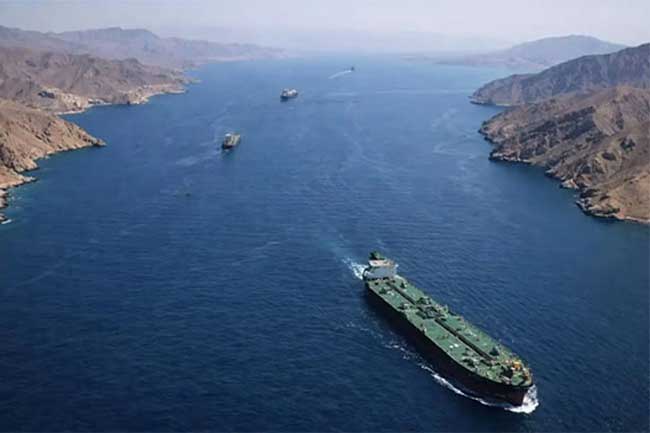
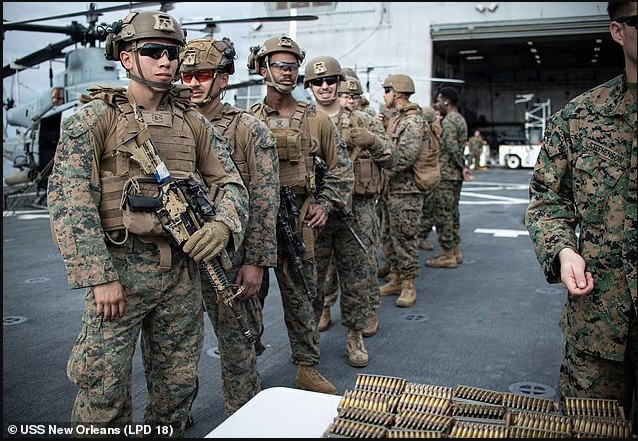
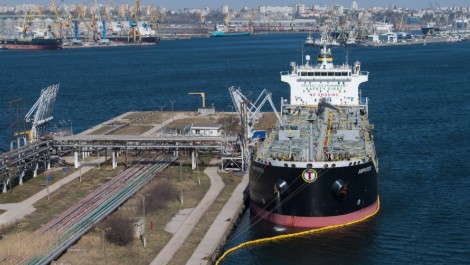
These attacks on American vessels are just the latest in a long list of incidents which have been reported off the shores of Somalia. Currently, various pirate groups are holding at least 16 ships with more than 250 crew members as hostages. They are demanding enormous sums of money as ransom and if the recent incidents are anything to go by they are most likely to receive these demands. Earlier this year pirates released an oil-laden Saudi super tanker after receiving US$ 3 million as ransom after holding the crew and the ship for many weeks. The MV Sirius Star, a brand new tanker with a 25-member crew, was seized in the Indian Ocean on November 15 last year. The incident contributed to the escalation of world crude oil prices since many feared that the increasing acts of piracy would disrupt the smooth flow of oil across the globe. Another high profile incident was that of the hijacking of a Russian vessel laden with tanks and many other military materials intended for Kenya. At first the United States and its regional allies believed this was the work of Al-Qaeda related elements operating out of Somalia. There was a real fear that the weapons would be used by the extremists fighting the US. However, it was later proven that this was once again an issue of piracy. It wasn’t to be the first time that pirates in Somalia may have stumbled upon a cargo that was bigger than they could imagine. Last August, pirates seized the MV Iran Deyanat, a ship owned by the Islamic Republic of Iran Shipping Lines. Somali officials contend that the ship had been carrying weapons destined for Islamic insurgents, a claim denied by Tehran. Ironically, the activities of the pirates may be lifting the lid on the illicit trade in weapons around the Horn of Africa. These developments have once again drawn world attention to the troubled region of Africa and have made it impossible for world powers to ignore the crisis that has been simmering in Somalia for many years. Since the failed intervention by the US in early 1993 to Somalia and the eventual withdrawal of American troops the country has virtually disintegrated. The only concern of the US in the region until the outbreak of piracy was the extremists Jihadists using the country as a base for their operations. To counter this threat the US has been engaging Somalia’s neighbour Ethiopia while also carrying out strikes using unmanned aerial vehicles well within Somalia against Jihadist targets. However, until now none of these actions demanded a direct US military involvement in the region. All this might change with the pirate issue now reaching a level which cannot be contained with mere proxies. In a sign of concern in the Obama administration to get on top of this deteriorating situation, US Secretary of State Hillary Clinton pledged this week to look into a new strategy to track down and freeze the assets of Somali pirates. Clinton says pirates are using ransom money earned from hijacking ships to buy increasingly sophisticated weapons. She says the US needs to track the money like it does with drug traffickers and terrorist groups. She promised to come up with “21st Century solutions” for a 17th Century crime as she described the pirates that are now wreaking havoc with global trade and causing a serious security concern to the developed world. The US is planning to convene an anti-piracy task force to co-ordinate international naval action in the area, and to push for diplomatic efforts in Somalia, where the international community is urging help from the largely powerful transitional central government and from local warlords. “We have noticed that the pirates are buying more and more sophisticated equipment, they’re buying faster and more capable vessels, they are clearly using their ransom money for their benefit – both personally and on behalf of their piracy,” Clinton said. The crisis has already seen several nations sending their navies to the region to patrol the dangerous waters. This has also created uneasiness amongst many over the virtual ‘take over’ of international waters for the interest of some. Russia was one of the first nations to send its ships after the incident involving the hijacked vessel with Russian tanks. The French, British, Chinese and Indian navies are known to petrol the region in addition to the US. For the first time in its recent naval history, China has ventured beyond its traditional sphere of influence which in turn has unsettled countries like India and the US. Though there might be a universal consensus to curtail the activities of the pirates, in international politics there are many other agendas and sub scripts running through the entire drama. While the US Secretary of State was emphasising on the need to fight the problem at hand, piracy, there was also an indication that the new Obama administration has realised that until there is some sort of stability in Somalia there is little chance of achieving any lasting solution to the issue. Secretary of State Clinton announced that President Obama plans to send an envoy to a conference on piracy in Brussels next week. “The long-term solution will be development and restoring the rule of law in Somalia, which has been without an effective central government since 1991,” Clinton said. One only needs to take a look at the world map to realise the significance of the East Indian Ocean region for international shipping. Most of the East-West shipping occurs through the Suez Canal and the Red Sea. For oil tankers, container ships and numerous military and non-military vessels plying these seas the only other alternative of getting through this narrow stretch is an arduous, expensive and a very long journey around the Cape of Good Hope in South Africa. Therefore, with little option left but to secure this trading route the more assertive players in the global stage will no doubt converge upon the seas off Somalia. However, until there is some effort to stabilise this war torn region, there would be little success against the Somali pirates even if the world’s greatest navies have now vowed to crush them. |
58-62% turnout in Phase I polls; Naxalites kill 19Elections in 124 of the 543 Lok Sabha constituencies on Thursday – the first of the five-phase polls – witnessed the killing of 19 people in violent incidents at 86 polling stations, mostly in the naxalite affected areas of Chhattisgarh, Orissa, Bihar, Jharkhand and Maharashtra. Polling, however, was largely peaceful in 1.85 lakh polling stations covering an electorate of over 14.31 crore. A total of 1,715 candidates, including 122 women, were in the fray. The 19 killed were nine civilians and polling personnel and 10 men of the Central Reserve Police Force, the Border Security Force and other Central and State police forces. Seven were injured. At Chatra in Jharkhand, a landmine blast killed seven BSF jawans and two civilians. A group of poll officials was abducted and polling could not be held. At Bastar, Chhattisgarh, a polling station was burnt and in about a dozen blasts, several policemen and civilians were killed. The Election Commission, however, expressed “total satisfaction, considering the problems, difficulties and challenges” faced in conducting polls in remote areas. It was also happy that preliminary reports suggested a 58 to 62 percentage voter turnout. At Kandhamal in Orissa, which witnessed anti-Christian violence since last August, the voting percentage could be as high as 65, Deputy Election Commissioner R. Balakrishnan said here. Besides the Lok Sabha constituencies, covering 15 States and two Union Territories, elections were also held for 154 of a total of 294 Assembly segments in Andhra Pradesh and 70 of 147 seats in Orissa. Swiss Red Cross hostage released in PhilippinesPhilippine security forces Saturday rescued a Swiss Red Cross worker held hostage for three months by Islamic militant guerrillas, government officials said. Andreas Notter, 38, was freed on the outskirts of the town of Indanan on Jolo island in the extreme south of the country following a joint operation by the military and local police, the officials said. Notter was due to be flown to the southern city of Zamboanga later Saturday where he was to be reunited with colleagues from the International Committee of the Red Cross (ICRC). The government said they had no immediate details about the fate of a second Red Cross hostage, 62-year-old Italian national Eugenio Vagni who was believed to be unwell and in need of hernia surgery. Interior Secretary Ronaldo Puno said the kidnappers had been trying to slip through a large military-police cordon when they were intercepted. “They gave chase and the kidnappers were forced to leave Mr Notter behind, because they were not able to drag him with them anymore,” he told reporters. “This is a major breakthrough that we hope shall eventually lead to the rescue of the last remaining hostage, Eugenio Vagni,” spokesman Cerge Remonde said in a statement. Armed forces chief General Alexander Yano declined to give further details of the rescue mission as he said it would compromise efforts to free the remaining hostage. He said “non-violent” efforts were underway to free the Italian including dialogue headed by five Muslim clerics who were dispatched to the Abu Sayyaf’s stronghold last week to negotiate. |
Homes damaged as cyclone lashes Bangladesh– A cyclone packing winds of up to 90 kilometres (56 miles) an hour lashed Bangladesh’s southeastern coastal area, damaging houses and uprooting trees, officials said Saturday. Cox’s Bazar police chief Motiur Rahman told AFP few casualties were reported after Cyclone Bijli weakened before making landfall late Friday. “The cyclone was not very strong. We took precautionary measures and all people living in low-lying areas went to shelters,” he said, adding that those evacuated were allowed to return home on Saturday morning. “Dozens of thatched houses were destroyed in the cyclone and some trees were uprooted.” Three people had died, including a 50-year-old man and a month-old baby, both of whom had medical conditions that deteriorated while being moved to the shelters. “A nine-year-old boy was also killed after a tree fell on his family’s corrugated tin-roofed thatched house during the cyclone,” Rahman said. Chittagong district administrative chief Farid Uddin Ahmed, overseeing the emergency response along the 300-kilometre (186-mile) southeastern coast, said rescue workers were still trying to reach remote areas. “We are still waiting for final reports of damage. Some houses have been hit but overall the damage is minimal because the tide was low which meant the tidal surge was not too severe.” Boats remained at shore Saturday and fishermen were urged not to sail because seas were still rough. Flights to and from Cox’s Bazar and Chittagong were also suspended Friday but airports were expected to reopen later Saturday. Obama offers talks with Cuba US President Barack Obama on Friday seized on an extraordinary overture from Cuba to propose talks aimed at breaking the half-decade hostility born between Washington and Havana during the Cold War. He told a Summit of the Americas with Latin American leaders in Trinidad and Tobago that he wanted to establish “a new beginning” with Cuba that would recognise past US “errors,” but require reciprocal gestures from the communist island. The conciliatory language raised the prospect of the United States considering ending to its 47-year-old embargo on Cuba. Several other leaders at the summit – including those from Argentina, Nicaragua and Belize – voiced a general consensus in Latin America that the embargo should be scrapped and Cuba readmitted into regional bodies. “I am prepared to have my administration engage with the Cuban government on a wide range of issues -- from drugs to migration and economic issues to human rights, free speech and democratic reform.” Cuba was excluded from the summit, which brought together all the 34 other countries from the Americas. But it was foremost in the minds of participants, after Cuban President Raul Castro on Thursday made an unprecedented offer to discuss the issues of human rights and political dissidents with the US government. |