
















| Another war well worth
fighting Colombo is no Chicago, and Sri Lanka is no
Colombia, but a wave of crime over the past few weeks have
captured headlines in no uncertain manner.
Sri Lankans who would have wanted to believe that violence
was on the wane, after the end of the war against terrorism,
have been in for a rude shock. There were several incidents of
school girls being abducted in broad daylight, only to be found
sexually abused and murdered a few days later. We also watched
horrified, as a triumvirate of triple murders unfolded within
less than a fortnight.
We were then told of how underworld figures were threatening
politicians and demanding ransom. The latest in this saga is a
series of gangland killings in and around Colombo, in which, one
gang leader M.K. Imtiaz, better known by his nom-de-guerre,
‘Anamalu Imtiaz’, was found hacked to death with his body dumped
in the streets.
These events must necessarily lead to the question on the
status of law and order in this country. Such issues have been
pushed to the periphery for three decades, owing to the
separatist war, which captured headlines throughout those years.
But, as we emerge from the shadows of the ‘Eelam War’, there
appears to be other monsters lurking in the shadows.
Clearly, the Police have been caught napping, while the
menace of crime has been growing exponentially. To be fair by
the law enforcement authorities, theirs is a force that had been
stretched to the maximum during the years of terrorism, where
providing public security occupied a huge share of their
workload.
But the Police Force is not without its problems. We all know
that appointments, transfers and promotions in the Police are
heavily politicised. This is mostly seen at the grassroots
level, where the local Police station is the local MP’s kingdom
- the MP’s word is law, and anyone who dares to flout it is
gifted with a ‘punishment’ transfer!
With such a reputation, Police Officers quickly learn to
adapt by adopting the Darwinian maxim of ‘survival of the
fittest’: they fathom the art of serving their political masters
and turn a blind eye to deeds that they would have otherwise
intervened in. This cancer of lawlessness grows rapidly,
resulting in the creation of underworld gang-lords who direct
networks of organised crime, which are usually linked with the
illegal drug trade for good measure.
Fresh from his success in combating terrorism, President
Mahinda Rajapaksa has now decided he would wage war on this
nexus of crime and drug trafficking. It is a huge challenge, but
we know that will not deter the President.
Significantly, President Rajapaksa has stated that he would not
only seek the help of the Police in this exercise, he would be
entrusting most of the task to the Army. Obviously, while this
is a compliment to the integrity of the Sri Lanka Army, it is
also equally an indictment on the Police.
The President being the pragmatic politician that he is, has
now realised that political interference in the workings of the
Police are so extensive and complicated, that using the Police
Force to weed out crime and drugs would be striving for the near
impossible. Hence, the delegation of some of those tasks to the
Sri Lanka Army.
It is an extremely far-sighted move, and we hope the Army
achieves the kind of success it accomplished in defeating the
Liberation Tigers of Tamil Eelam (LTTE). The handicap though is
that, while they were given a free hand in their war against
terror by the President, they may find different politicians
trying to tie their hands in their war against crime and drugs.
Nevertheless, considering the horrific events of the past few
weeks, we believe, it too, is a war well worth fighting for.
Right man needed for the right job
President Mahinda Rajapaksa must be a busy man these days.
Not only is he the Executive President of the country, he is
also the Head of State, Head of Government and the
Commander-in-Chief of the Armed Forces. But that has not stopped
him from becoming, every now and again, a mere Cabinet minister.
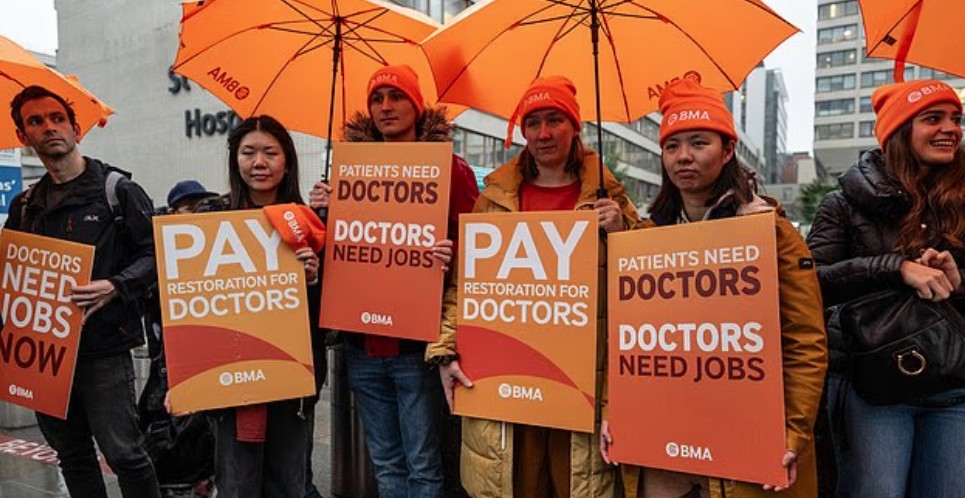
Just last week, the President had to intervene, to have a
strike by government doctors stopped. And there were no major
policy decisions involved- the doctors wanted an appointment
list squashed, because they believed it was irregular, the
Minister of Health and his Ministry was refusing to budge, and
so the matter went to the President.
In such circumstances, we must ask why we should have a
hundred plus cabinet of ministers. Ministers are a dime to the
dozen, and they go about as if they are God’s gift to
government, yet, when it comes to a simple procedural matter,
such as an appointment list, this has to take up the valuable
time of the Head of State.
We have had Presidents who were more authoritative and
dictatorial in the past. The names of J.R. Jayewardene and
Ranasinghe Premadasa come readily to mind. They have governed
with a much smaller cabinet of ministers. Yet, they have had to
rarely intervene in the day-to-day running of ministries or in
simple administrative actions. But today, this is what President
Rajapaksa is compelled to do, because of the incompetence of
some of his ministers, some of them occupying the front benches
of his government.
We know the President is now looking at the prospect of
elections, both General and Presidential. Therefore, the
possibility of a reshuffle looms large. We believe that, when
this happens, the President will do the needful, to find the
right man or woman for the right job- because some of his
ministers are obvious misfits in their ministries right now.
****
|