


















|
Preservation of planet Earth, a habitat like no other, for
humankind’s existence, for posterity
The
right to survive
Among the concerns that govern global relations today,
environment enjoys a pivotal position. According to Environment
Minister Patali Champika Ranawaka, the concern for environment
and the consequences of climate change constitutes the main
political conflict brewing across the entire world. He also says
that climate change is a worse disaster than colonialism for the
developing world, because it has the capability to wipe out
entire civilisations, unlike in the case of colonialism, where
only political freedoms were subjugated for selfish gains. In an
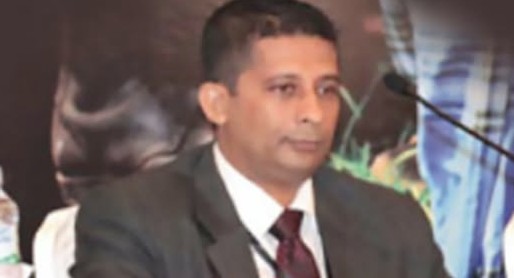
interview with The Nation, the Minister spoke at length of the
need to form a global governance system to resolve the issues
that will arise due to climate change. Bringing the issue closer
to home, the Minister also says, the failure to rehabilitate the
garbage dumps stinking up the country, lies with the problems
within the country’s legal system
Following are excerpts:
By Vindya Amaranayake
Q: During the recently held session of the Asia Pacific
Network (APN) for global change, you initiated a talk on the
need to have a global governance system to protect the
environment and the future of the Earth. Could you elaborate on
that?
A: The APN mainly consists of representatives from countries
in the Asia Pacific region. It is a gathering of scientists.
This organisation has been there for a while, but due to lack of
funds, it was defunct for a while. We managed to revive it this
time. What is meant by global change is that there is a
significant demographic transition taking place in the Asia
Pacific region. Big cities are coming up and the internal
migration towards cities is increasing. But, none of these
cities can sustain the influx of the mass migration. After some
time, these become ‘sick’ cities. They can be called vertical
slum cities.
One of the main issues we focussed on was the coming up of these
mega cities. The other was climate change. This is not caused by
us – none of us in the Asia Pacific region, including India,
Pakistan, Bangladesh and us, are responsible for climate change.
However, we are ones who will have to bear the consequences of
this change. The APN is about knowledge sharing between
scientists from the region, and to realise possible actions that
could be taken to minimise these consequences. Then, we also
focussed on marine resources, including rare species of fish and
other marine species. There’s massive scale biodiversity
degradation taking place when it comes to marine life. We have
focussed on this issue as well.
On the other hand, countries in the Asia Pacific region have
now become the movers and shakers of the global economy. We are
in the driving seat now. We want to avoid what has happened to
Europe and North America, in their drive towards development,
from happening to us. We also discussed steps that need to be
taken to enable a paradigm shift towards achieving a green
economy. This is where climate change comes in. When we talk in
legal terms, this concept is termed as ‘environmental justice.’
When we talk about climate change, whether I’m a contributor or
not, I’m affected by its consequences. Even if I’m extremely
green friendly and do not cause any harm to the environment,
because of the high emission rate of others, I’m affected by the
climate change. For example, nearly 100,000 people died and one
million displaced in Myanmar because of Cyclone Nargis. But,
this is a country that burns a minimal amount of fossil oil.
They make little contribution to global warming. This is the
same in Bangladesh. It is believed that, within this century,
about 20 million will be displaced. Then there’s a water stress
in certain areas in India, Nepal and China. They obtain their
drinking water from glaziers. When the glaziers in the Himalayas
retreat, they’ll be pressed for fresh water. That’s why they
have called for a meeting in Kathmandu to discuss the matter.
This is a serious enough problem that it could cause entire
civilisations in this region to disappear. But, countries such
as Nepal and Bhutan have done nothing to increase global
warming.
Global warming is, in fact, worse than colonialism. Although
the countries in Asia and Africa were subjugated, the
fundamental existence of their civilisations was not threatened.
We lost our autonomy in the colonial era. But this, climate
change, challenges our mere survival.
Also, every one is talking about human rights, especially
civil and political rights – freedom of speech, expression,
employment etc. However, our right to live is no longer a
subjective condition. It is an objective condition, where no one
can interfere with. Also, whether we like it or not, we are
destined to die, one day. Therefore, we must bring in human
rights into a broad spectrum. For example, what we are saying is
that, we must try and include a person’s carbon footprint into
that person’s individual rights. This is not included in the UN
Human Rights Charter, but something that should be.
Apart from talking of individual rights, group rights or
national rights, there has to be a system to address the rights
of posterity. That is why we need a global governance system.
Just as each and every individual has the right to living space,
tomorrow’s generations too, have that right. This equity
principle should enjoy a temporal distribution. Otherwise,
there’s the danger of present generations usurping the living
space of future generations. The United Nations came as a
consequence of World War II, to prevent another from occurring.
The requirement for a global governance system is somewhat
similar to that – where the impact on the environment, in
whatever action that is taken by the world authorities, is
seriously considered. As an example, let’s take trade. Is it
correct to manufacture a good, without considering the need,
just because you have the capability to produce that good? How
much carbon is spent when producing that good? This is what gave
rise to the concept, ‘fair trade.’ We must not purchase goods
that have consumed a large amount of carbon and fossil fuel
during the process of production. What we want is to include
these concepts; fair trade and equity, into a system of global
governance.
Q: Has this system already been formed?
A: Not yet. What we are doing at the moment is to create a
system of awareness. And we aim to amend the UN Human Rights
Charter to include the carbon footprint as a human right. It is
all about my right not to let others usurp my living space in
this environment. There has to be a mechanism to prevent someone
living in America snatching away my right to living space. We
must start regarding this as a human right violation. Then we
must change the UN system. We need a new governance system,
within the UN system, that includes environmental concerns. It
has to be something that goes beyond the Kyoto Protocol. And, it
has to have an objective criterion. There are no objective
criteria in the Kyoto Protocol. It needs to come after many
deliberations, conflict of ideas and consensus reached, after
much sharing of knowledge. It also requires greater political
changes in each country.
Q: Is the ‘Polluter Pays’ principle included in this
system?
A: Definitely. During the Rio Convention in 1992, all the
representative countries accepted the ‘polluter pays’ principle.
But nobody adhered to the conditions. I would like to present a
very important example: According to the Inter-governmental
Panel on Climate Change (IPCC), which exclusively comprises
scientists from across the world, with no political agenda, it
says that there has to be a carbon budget for the 21st Century.
Accordingly, what each person should emit is 1,456 kT. But, even
if we completely stop emitting, the temperature will continue to
rise by 0.7 degrees. This, together with the 0.7 degrees
increased from the pre-industrial period, will cause a 1.5
degree temperature rise by about year 2100. We can only go up to
2 degrees from the pre-industrial level. Therefore, according to
scientists, the probability of humankind being wiped away in a
widespread environmental disaster is 50/50. This is the
situation now. According to the carbon budget, a single person
can only emit 2,170 kT in 2009. A single person in Sri Lanka
emits only 600 kT. In the US it is 22,000 kT, in Norway 20,000
kT, Australia 20,000 kT and Canada 21,000 kT. This is how it
stands at the moment. Then Great Britain 9,800 kT, India 1,200
kT and China 3,600 kT. Then, we are below the permissible level.
We can emit more than we are emitting at the moment. We have the
right to do so. But, we can’t do that in actuality, because our
space has been usurped by countries with high emission rates.
They have reached high development levels by emitting a higher
percentage of carbon. Yet, we cannot emit the same amount to
reach the same development level. Hence, our right to
development has been violated. This is one aspect of the
environmental justice principle. Also, they have usurped our
space for development without our consent. It is in this sense
that we have coined the term ‘carbon debt.’ The question is, who
took our remaining carbon emission right? – the amount left
unused after 600 kT. It is those developed countries such as the
US and Australia. Today, a tonne of carbon is sold at US$ 20.
Then, for the past eight years of the new century, the US alone
would have to pay us US$ 1.9 billion. This is exactly the amount
we requested from the IMF. One way to ensure the prevalence of
environmental justice is by paying off this carbon debt. Hillary
Clinton has no right to impose conditions on us, because they
have violated our rights. We work on this basis. But, what the
developed countries are trying to do is trying to stop our
emission. This is wrong. Global warming has intensified to the
level of it becoming a cold war between the developed and
developing worlds. The developing countries say they want to
reach better development levels and for that, they need to burn
more fossil fuels. But the developed countries object, saying
there’s very little space left to emit for everyone. Today, this
is the biggest political conflict brewing across the world. It
is no longer the debate between liberal and communist economic
system. The debate is about who should cut down on their
emissions; the developed world or the developing world.
From Sri Lanka, we have presented three proposals to
Copenhagen. One is, there has to be an objective criterion. The
Kyoto Protocol calls for a 5% reduction from the 1990 carbon
level. Nobody knows the reason behind this decision. In 1990,
the individual emission rate is 4,200 kT. A reduction of 5% from
this is not going to make much of a difference. It should be 50%
from this level. Therefore, the Kyoto Protocol is no longer
valid. Then, there should be historical responsibility for
carbon debt. The developed countries should either pay us this
debt, or compensate it for the financial debts that we owe them.
The third one has to do with climate change strategies. There
are two methods; mitigation and adaptation. It is the developed
countries who should fund the adaptation methods across the
world. If Myanmar has to face deadly cyclones and it is a direct
result of the excess emissions of the US, then, it is the US
that has to pay for the adaptation methods. Therefore, we say
there should be an adaptation fund. And this should also be
based on an objective criterion. They should assess whether the
cyclone was a direct result of climate change and assess the
damage and make the payment accordingly. These countries accept
that there should be an adaptation fund, but they do not give a
single penny to the fund. They want the World Bank to manage the
fund. The World Bank is an organisation where developed
countries hold majority stakes. But the adaptation fund should
be instituted for the benefit of the developing world. It is
strange how the consequences of climate change are skewed in a
way to cause more damage to the developing countries.
When we take the Vienna and Montreal Conventions, there are
no big bosses controlling the conditions. There are governing
councils, and the countries that cause harm to the ozone layer,
pay according to the quantity of the damage they cause. That is
an objective formula. Then, we present projects to the governing
council and the scientists assess whether the requests are fair
and in need, the funds are released. No one can move political
muscle at the Vienna Convention. That is why it is successful.
Our request is to create a similar rational structure to solve
this issue as well.
Q: You also concentrated on the need to control e-waste.
What progress have you made in this regard?
A: As a first step, we have approached the mobile
telecommunication service providers and informed them that we
are ready to provide them with the infrastructure to collect
e-waste including phone batteries, chargers, and other parts.
I’m happy to say that Dialog Telekom PLC has agreed to this, and
you can see that at every Dialog Arcade there is a facility to
collect used mobile phones and accessories. However, it was only
Dialog that cooperated with us in this regard. They have already
established a facility in Piliyandala. We declared it open
recently. We request the other mobile telecommunication service
providers to follow suite. Nearly 10% of e-waste is heavy metal.
This can cause severe damages to our kidneys. Then, we plan to
concentrate on other e-material, particularly CDs and DVDs. This
is a bigger problem than we realised. We have assessed that 72
million discs are imported into Sri Lanka per year. They
ultimately accumulate in garbage dumps. We have also counted the
number of personal computers, photocopy machines, washing
machines and other electrical appliances in the country. We have
already informed the people who import the appliances to take
them back once they are no longer in use. We facilitate this
through the environmental conservation levy.
Q: The polythene regulation introduced a couple of years
ago, failed to bear fruit. What are the new developments to
strengthen plans to control the use of polythene?
A: It is like this. We wanted polythene that is less than 20
microns in thickness to be banned from use. It was done so to
ease the management of waste. But we understand that this is not
being properly implemented. One reason is that polythene
production has now become a cottage industry. When we introduced
the regulation, there were only about 300 polythene
manufacturers. Now, it appears that there are about 3,000-4,000
manufacturers. Therefore, we have realised that it is difficult
to control this. There’s a limit as to the number of people that
could be arrested for this. Therefore, we have decided that the
manufacturer should print their label on polythene packs
released into the market. Otherwise, they are not allowed to
continue their business.
Q: Then, is polythene, with less than 20 microns in
thickness, permissible now?
A: No. That is not the case. People who produce polythene
have to have their label on the packet. Then it is easy for us
to identify those who produce polythene with less weight. Then
we encourage the public not to buy polythene products that has
no label on the pack.
Q: You once called Colombo a ‘sick city.’ It has a severe
garbage issue and the drains are clogged with waste. What are
the steps taken to clear up this matter?
A: In 2007, we identified three issues with regard to waste
collection: The lack of funds, technology and space. We solved
two of these three problems. We are ready to provide funds to
any local authority, if they come to us with a sound project
report on garbage disposal. We can also provide them with the
necessary technology. Bloemendal, Karadiyan, Porawatte in
Kalutara and Guhagoda in Kandy are the four worst garbage dumps
in the country. We have already presented a paper and received
the approval of Cabinet to rehabilitate them. But due to various
problems, especially legal problems – and some Municipalities
refused to hand us over the garbage site, such as the Kandy
Municipality, we were unable to put it work. But we would like
to say, we are ready to take over and rehabilitate these four
major dumps and any other dump in the country, if they are
handed over to us even today. They only need to hand them over
to us. We would rehabilitate them and hand them back to the
local authorities. We have the money and the technology. But
unfortunately, due to the problems within the legal system, it
is being delayed by the day. This is causing severe problems to
our children’s health, which is bound to intensify, unless it is
addressed immediately.
Q: The two baby tuskers taken from the Pinnawala Elephant
Orphanage are now faced with health problems, after being
separated from their mothers. As the Minister of Environment,
have you looked into what has happened?
A: The Pinnawala Elephant Orphanage does not fall under the
purview of the Environment Ministry. It is under Minister Gamini
Lokuge’s Sports Ministry. They presented a Cabinet paper to hand
over two baby tuskers to the Malwatta and Asgiriya Temples. It
was approved. I’m not aware what transpired afterwards.
Q: This issue is causing much concern among wildlife
activists and enthusiasts. As the Minister of Environment, are
you going to intervene to solve the matter?
A: I do not have the authority to interfere into this
matter. The elephants should be held under the supervision of
the Department of Wildlife Conservation. The Pinnawela Elephant
Orphanage is also operating on a permit given by us. The
Directors in charge of Pinnawela must take the responsibility.
**** |