







|
Tigers eliminated talented leaders
|
|
“Killing persons articulating voices
opposed to the LTTE was one of the
greatest wrongs the LTTE did. It not
only eliminated many experienced and
talented leaders, it also prevented many
up and coming people from contributing
to the cause of the Tamil-speaking
people of the island. This is one of the
reasons which prevented the LTTE from
becoming a popular movement” |
Following are excerpts:
By Stanley Samarasinghe
Q: What is your opinion about the Sri Lankan Government’s
humanitarian operation against the LTTE to combat their
terrorism?
A: In my view, the peace process should have been put on
the front burner and the military process in the backburner.
The more appealing and compelling the peace process was, the
support to the LTTE would have diminished. Since the peace
process was put on hold and the military process was put on
the front burner, it created a humanitarian crisis in the
areas where the battle was going on. While we totally
disagree with the methods adopted by the LTTE, more should
have been done by the government to prevent or mitigate the
suffering. The efforts made by the security forces in
rescuing and moving tens of thousands of Tamils caught up in
the war zone to areas of safety should be appreciated.
Unfortunately, the decision to constrain the rescued into
fenced camps resulted in the people being moved from LTTE
captivity to Govt.of Sri Lanka (GOSL) captivity. As the
rescued came out of LTTE captivity, they greatly appreciated
the role of the Army in bringing them out. But as time went
on, they felt they were constrained in the GOSL-controlled
camps and the goodwill gained began to evaporate. The sooner
the people in the IDP camps are allowed to move to places of
safety of their own choice, the better it is for the effort
at winning peace. Though delayed, news of the release of
lactating mothers was well received.
Q: Do you recognise the LTTE as a liberation movement
of Sri Lankan Tamil people?
A: Firstly, a liberation movement must be a people’s
movement. Secondly, in the island’s context, only
non-violent democratic movements can win the rights of the
people. Therefore, I did not and I will not recognise the
LTTE as a liberation movement.
Q: During the heydays of the LTTE they claimed that
they are the only organisation representing the Sri Lankan
Tamils. Do you agree?
A: It never enjoyed the popular support of the Tamil
people. Further, at any time, it was not the only
organisation representing the Tamils. During their heydays
they did not allow others to function. The majority of
Tamils preferred democracy and non-violence, but were caught
in the process of militarisation on both sides. Hence, I do
not accept it.
Q: Do you agree that all efforts to find a peaceful
solution to the outstanding issues in North and East were
repudiated by the LTTE, and the government was compelled to
take measures to combat the terrorism unleashed by the LTTE
on the people of Sri Lanka irrespective of their
nationality?
A: The LTTE should be faulted for failing to take the
2002 peace process forward from the Oslo Declaration of
December 2002 and other opportunities it had, to work
towards a negotiated settlement. But at the same time, we
should bear in mind that the response from the GOSL side in
meeting the legitimate aspirations of the Tamils of the
island has fallen short of the expectations of the
Tamil-speaking people. At the same time, there has been
repudiation from the other side too.
Q: The Indo-Lanka Accord was signed in 1987 by the
leaders of the two countries to solve the Sri Lanka Tamil
problem. As a well-experienced lawyer and public activist
with commitment for Tamil people’s cause, could you explain
the reason for its failure?
A: The concept of linguistic states successfully
addressed the aspirations of different linguistic groups
within the Union of India, influenced the Indo-Lanka Accord.
But, since the Sri Lankan Constitution was rigidly unitary,
constitutional changes had to be made to accommodate
meaningful devolution of powers. This had to be done through
a two-thirds majority in Parliament followed by a referendum
in order to make it work. Unfortunately, the then
Jayewardene Government, which had a five-sixth majority in
Parliament, did not take up the challenge of putting it
before the people at a referendum which would have made it
workable. Having failed to bring about the necessary
constitutional change, they made the great mistake of
pressurising the Indian Peace Keeping Force to disarm the
LTTE on one side and clandestinely providing weapons and
money to the LTTE to fight the IPKF.
Q: The LTTE and its leader, Velupillai Prabhakaran
killed thousands of Tamil men and women, though deeply
committed to the cause of Tamil people, did not espouse the
LTTE ideology. They also treated the public under their
command with contempt, heaping taxes on them and instituting
unreasonable laws on them. In view of such treatment could
you say the Tamil people in Sri Lanka support the LTTE to
achieve Eelam?
A: Killing persons articulating voices opposed to the
LTTE was one of the greatest wrongs the LTTE did. It not
only eliminated many experienced and talented leaders, it
also prevented many up and coming people from contributing
to the cause of the Tamil-speaking people of the island.
This is one of the reasons which prevented the LTTE from
becoming a popular movement. Some people went along. Some
supported them. Some people feared them. The struggle for
Tamil rights should be seen separately.
Q: The TULF leaders were committed to seek solutions
through peaceful means. With the emergence of the LTTE and
their resorting to violence, it damaged the peaceful image
of the Tamil community and destroyed the Tamil cause. Can
you comment?
A: During the period of late Mr. Chelvanayakam, there
was unwavering commitment to non-violence. It was more than
that. It was a conviction that Tamils should win their
rights by impressing the Sinhala people through democratic
non-violent means. I earnestly hope that this conviction
will predominate Tamil opinion in the future.
Q: Your father, late S.J.V. Chelvanayakam always
resorted to democratic path. Had the TULF been allowed to
engage in politics, could you say the Tamil community would
have secured their political objectives by now?
A: I do agree that the democratic path would have
delivered substantial gains to the Tamils in a peaceful way.
Unfortunately, the use of police force and the security
forces by the Sri Lankan Governments and other forms of
communal violence against the Tamils resulted in the TULF
leadership not being able to carry forward its commitment to
continue in the democratic peaceful way. This created a
political vacuum which was unfortunately filled by the
militants. It is equally the responsibility of the people of
all communities in the island to see that this does not
happen again. It must not be forgotten that apart from the
Tamils who have suffered in a very big way, members of the
Sinhala and the Muslim communities have also suffered
considerably.
Q: Now the TULF is free to engage in politics without
any hindrance. Do you expect to return to Sri Lanka and get
involved in politics to realise a negotiated settlement?
A: I have a lifetime commitment to be involved in
finding a meaningful negotiated settlement to the problems
of the Tamil-speaking people. As to whether it necessitates
engaging in party politics or Parliamentary politics will
depend on needs and compulsions.
Q: The Sinhala-Tamils conflict is essentially a
dispute over sharing of power. In that atmosphere, do you
believe that politicians of both sides, Sri Lanka and India,
must create mutual trust among each other before reaching
any political solutions?
A: We greatly appreciate the question highlighting the
most important factor, that is, the creating of “mutual
trust” between the two nations as the challenge to all
people in the country, irrespective of race or religion. As
a refugee living in India, I have witnessed many occasions
where members of the Sinhala community, who had come to
India and who had visited refugee camps spent emotional
moments with the refugees, wishing and praying for their
early return to the country.
Organisation for Eelam Refugees Rehabilitation (OfERR) is
an organisation of Tamil refugees. When a few Singhalese
came to India as refugees in 1988 and 1989, Tamil refugees
considered it a privilege to assist them. If Sinhala
fishermen are stranded in some part of India, Tamil refugees
go to their assistance. We cherish these moments of
happiness.
May I add that I dream of the day when Tamils will stand
up and speak for the rights of Sinhalese and Sinhalese stand
up and speak for the rights of the Tamils.
Q: In 1957 and 1965 your father, as the Federal Party
leader, entered into two agreements to solve the Tamil
problem. Unfortunately, neither of them was implemented.
What was the reason for the non-implementation?
A: This was because it was then found advantageous to
play majoritarianism and gain politically by opposing the
grant of rights to the Tamils. There were extreme views
among the Tamils, but the Tamil leadership was able to
justify the settlement by going to the people. But on the
Sinhala side, the challenge of convincing the people was not
adequately met.
Q: Your father, the late Chelvanayakam, never resorted
to violence; he always insisted the Tamil people to confine
their struggle to democratic path. What is your comment on
this view?
A: Mahatma Gandhi was the great advocate of non-violence
and my father uncompromisingly followed the path of
non-violence. It is powerful because it causes no physical
harm to the opponent. It sensitises the nobler instincts of
human beings and seeks a response in a way in which the
person giving or compromising does so with the fullness of
his heart. During the period of the Tamil non-violent
struggles, no Sinhalese was harmed. Even if there was
disagreement, there was always respect that was generated by
this process.
Q: The LTTE promoted separation and violence. Do you
believe separation as a solution to the problem?
A: It is a time to look forward and I wish to do so.
From 1948 to 1976, the Tamil-speaking people not only wished
to achieve their rights within a united country, they also
disavowed separation. During the latter-50s and thereafter,
there were some Tamil leaders who advocated for a separate
Tamil Eelam. The late Chelvanayakam and the Federal Party
that was led by him, strongly argued against separation and
the people accepted their arguments and voted for the
Federal Party overwhelmingly, rejecting the call for a
separate Tamil Eelam.
It was after losing all hopes of living together, that the
Tamils in 1976 changed their view. The Indo-Sri Lanka Accord
of 1987 went a long way of restoring the hope that Sinhalese
and Tamils should live together in one country. The peace
process of 1995 and 2002 clearly articulated the call of the
Sinhala people and the Tamil people that effort should be
made to try and live together. In that context, I believe
that every effort should be made to live together in one
country. I consider it the responsibility of the Sinhala
people to ensure justice and peace to the Tamils.
Q: According to you, what is the most appropriate
solution to the problem?
A: The Tamil-speaking people, being a minority, wish to
achieve their aspirations in the Northern and Eastern parts
of the island where they live in large numbers. The power of
governance should be shared between the Centre and regions
ensuring that the Tamils have their own federal or regional
area in which their legitimate aspirations can be met.
While the political settlement is being negotiated, all
Tamils who are living in the IDP camps are in no way
restrained from going to safe places of their own choice and
rehabilitated in their own habitats.
During the two JVP insurrections in the South and
rehabilitated in their own habitats of the country, those
who engaged in the insurrection and later chose to come into
the mainstream were given amnesty and provided opportunities
to get into the mainstream of democratic politics. All
Tamils who have now been segregated as having been
cadres/supporters of the LTTE should be offered an amnesty
on their choosing to give up militancy and reverting to
democratic activity.
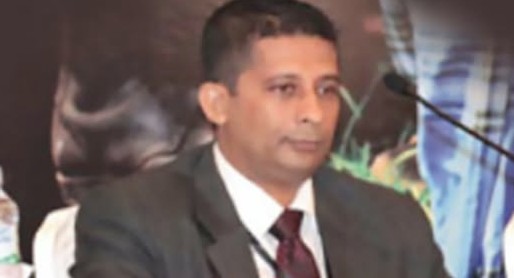
| S.C. Chandrahasan was
born on May 12, 1942 at Inuvil in the Jaffna
Peninsula. His parents were S.J.V. Chelvanayakam
and Mrs. Chelvanayakam of Tellippalai in Jaffna.
Chandrahasan received his school education at
Royal College, Colombo and studied law at the
Law College, Colombo. It is significant to note
that the Tamil medium classes were started at
Royal College for Tamil students on the
insistence of Chandrahasan, who wanted to study
in the medium of his mother tongue, Tamil. His
father, Chelvanayakam was totally immersed in
the politics of the non-violent struggle of the
Tamils to realise their aspirations, hence,
Chandrahasan had to shoulder the professional
legal responsibilities of his father, who was a
Queen’s Counsel, in addition to his professional
responsibilities as a leading lawyer in Colombo.
Chandrahasan also
served as the legal secretary of the Tamil
United Liberation Front till 1983. In the late
1970s, he directed his legal skills and energies
to combat the cases of serious human rights
violations by the Sri Lankan Government
facilitated by draconian legislations passed by
the Jayewardene government in 1978.
His involvement in
galvanising those opposed to human rights
violations such as arbitrary arrests and
detention of Tamil youth was the precursor to
the formation of ProTEG in India, which
continued to highlight and combat human rights
violations in Sri Lanka through advocacy work
undertaken by him in India. He also was
instrumental in forming the OfERR which is the
humanitarian organisation providing much needed
services to the hapless refugees in India.
Chandrahasan’s work has also been appreciated by
the countless numbers of refugees who own their
very existence to the work and response of
Chandrahasan. |
|