

















By Rathindra Kuruwita
Q: It has been almost six months since the defeat of the
LTTE. How do you view the government’s post Prabhakaran
strategy? What do you propose the government should do?
A: Until May 2009, the strategy of the Sri Lankan
Government was to neutralise the LTTE, the world’s most
ruthless terrorist group. Although five months have passed
since the LTTE organisation in Sri Lanka was
dismantled, government is still grappling with the legacy
left behind by Prabhakaran, the man who focussed on
destroying Sri Lanka. Government has failed to understand
the post-Prabhakaran realities and build new ideas,
structures and develop the trained manpower to meet the post
Prabhakaran realities. The range of challenges Sri Lanka is
facing can no longer be fought with guns, tanks, ships and
aircrafts, but with laptops, diplomacy and media skills.
|
Professor Rohan Gunaratna is the head of the
International Centre on Political Violence and
Terrorism Research and Professor of Security
Studies at the Nanyang Technological University,
Singapore. He is a member of the Advisory
Council of the International Institute for
Counter Terrorism in Israel. He was a former
Senior Fellow at the United States Military
Academy’s Combating Terrorism Centre and at
Tufts University’s Fletcher School for Law and
Diplomacy. He serves on the editorial boards of
Terrorism and Political Violence and Conflict
and Terrorism Studies, the two leading terrorism
journals in the world. As a litigation
Consultant for the U.S. Department of Justice,
he testified in the Jose Padilla case. |
In the post-Prabhakaran landscape, Sri Lankan
government’s strategy should engage:
(a) The national and international media as media shapes
public opinion.
(b) The general population especially the Tamils as human
terrain is a key factor.
(c) The civil society organisations as both governments and
general population increasingly trust them and rely on them
to solve global challenges.
(d) The international community to channel resources to
rebuild a country recovering from 30 years of violence.
To engage these actors, any nation-state needs to create
new platforms, institutions and train (or select naturally
motivated) personnel. A robust post-Prabhakaran national and
an international strategy is yet to be formulated and
implemented.
Q: The government was often praised for its single
mindedness during the war. But will this help govern a
democratic state?
A: We are limited today only by our personalities and
our imagination. It was both the determination and the
single-minded approach by the current government that
enabled the country to end the violent campaign spearheaded
by the LTTE in Sri Lanka. The architect of that campaign was
Gotabhaya Rajapaksa, a master strategist, that put a
military A team together. Gotabhaya Rajapaksa handpicked
three brilliant leaders- General Sarath Fonseka, Admiral
Wasantha Karannagoda and Air Marshall Roshan Gunatillake to
achieve what others failed to do for a quarter century. The
government should politically and economically consolidate
the military gains by ushering in an era of economic
development of the entire country, especially the Northeast.
Although some puppets of Prabhakaran are still trying to
lobby a handful Western politicians driven by constituency
pressures, Sri Lanka must reach out to the West and the East
and embark on a highly ambitious “Marshall Plan” to bring
the country to its previous status as the most developed
country in South Asia. We should no longer subscribe to the
South Asian model of democracy that nearly destroyed Sri
Lanka by allowing the people to do what they want, but
subscribe to a Singapore style guided democracy that will
ensure prosperity for all of its citizens. Compared to the
rest of South Asia, Sri Lanka’s socio-economic indicators
from literacy to resources are comparable to East Asia. If
government applies the same determination and single-minded
approach it had to fight the LTTE to develop the country in
the next one or two decades, we can transform Sri Lanka to a
first world country. As security is no longer the single
biggest challenge, government must make that leap now to
make Sri Lanka the most prosperous nation in South Asia.
Towards it, the President must put an economic A team
together, develop a plan, implement it, and monitor progress
until Sri Lanka reaches its target.
Q: Also the result of the Southern provincial council
elections shows the government can no longer win votes only
by harping on the war victories, and that the time has come
for a broader socio-economic plan?
A: In the past 25 years, political parties lost and won
elections in Sri Lanka by taking positions on the question
of security. Although security still remains a priority
issue, it will no longer be the most important issue. Every
week, like a prayer, President Rajapaksa chaired the
National Security Council with the Secretary Defence, the
service commanders and the intelligence chiefs. Now the
President should chair an economic council and a foreign
affairs council. The need of the hour is to move, push and
if necessary kick start the socio-economic initiatives and
programmes to transform Sri Lanka. In parallel, the need of
the hour is to work with a few governments taken for a ride
by a few sweet talking LTTE activists mascarading as Tamil
community leaders and human rights activists in Canada,
Washington D.C., New York, London, Oslo, Brussels and in
Canberra. Government can accomplish this feat by firing a
few officials and ministers who have no talent and
orientation, and replacing them now with the best minds full
of energy that can understand and respond proactively to the
challenges we are facing. As the Head of State, the
President must act now, handpick the right leaders to
accomplish these twin tasks, or risk appreciable and
incremental losses both domestic and foreign.
Q: We have always built our national identity
resorting to the idea of an ‘enemy,’ and after the defeat of
the LTTE the government is looking for new enemies?
A: Sri Lanka must rebuild a new national identity. The
old national identity based on ethnic groups has failed to
create a healthy nation, and instead produced Prabhakarans
and Wijeweeras. This is the hard reality and we must
recognise it. Sri Lanka belongs to all: to Sinhalese,
Tamils, Muslims, Burghers, Veddas, Kaffirs and others who
inhabit our country. Instead of building a Sri Lankan
national identity that transcends these ethnic and religious
differences, Sinhala and Tamil politicians played ethnic and
religious politics to remain in power and come into power.
The era of ethnic entrepreneurs is over. No self respecting
politician should today fight for the rights of any
linguistic or religious group, but fight for all. Today, the
challenge is to build a strong common Sri Lankan national
identity. It cannot emerge naturally: it must be constructed
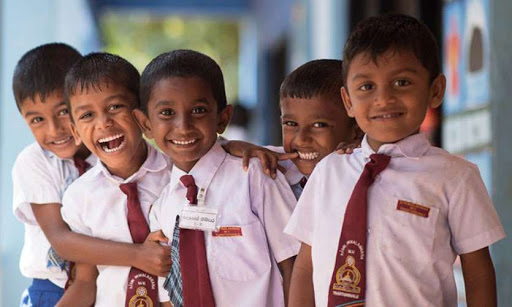
by getting Sinhalese to learn Tamil, Tamils to learn
Sinhalese, abandoning the idea of separate Sinhala and Tamil
schools, and creating exchange programmes for Tamils
children in the North to study in the South and Sinhala
children to study in the East. Otherwise, the Sinhalese and
the Tamils will grow up suspecting and hating their Sri
Lankan brothers and sisters and continue to see the world in
black and white. Building bridges between ethnic and
religious communities should be spearheaded by the military
and led by the war heroes who have the credibility to embark
on an unprecedented program at an unprecedented scale to
unite Sri Lanka. Permanent unity will come through
engagement, friendship, and economic prosperity.
Q: The United States State Department report detailing
possible violations of the laws of war in Sri Lanka during
the first half of 2009, is adding to pressure for an
independent, international investigation into alleged
atrocities committed by government forces and Liberation
Tigers of Tamil Eelam (LTTE) separatists. The government
rejected the report as unsubstantiated. But wouldn’t this be
another blow to Sri Lanka’s image?
A: The US has been a reliable friend of Sri Lanka and an
invaluable partner. The US assisted Sri Lanka to build its
special forces, provided crucial intelligence and helped
with counter terrorism investigations globally. In recent
times, due to sustained LTTE lobbying and the failure of the
Sri Lankan foreign ministry to do their best, the US State
Department got carried away and made some inaccurate
statements even at the UN which it had to retract. As such,
the Sri Lankan Government should take a sympathetic position
to the US State Department and should take its assessments
in that light.
The LTTE has always seen the US State Department as an
easy target. The LTTE was so bold that it attempted to bribe
a US Department official with 1 million dollars!
Fortunately, the FBI detected and disrupted the operation.
Masquerading as human rights activists, LTTE activists in
delegations repeatedly fed susceptible and vulnerable State
Department officials with misinformation. As such, the US
reports should be carefully examined if they contain LTTE’s
propaganda. If so, the Sri Lankan government should request
the US to initiate an investigation as LTTE misinformation
may have gone into the US government system as credible
information.
Like the US invaded Iraq based on flawed information, Sri
Lanka must continue to engage the US and not allow LTTE
misinformation to influence US policy. As one of Asia’s
oldest democracies, the Sri Lankan government should engage
the US rather than take the easy route to embrace Russia,
China, or Iran, new found friends with which we have very
little in common. Sri Lanka has a great opportunity to
re-engage the US State Department after Ambassador Patricia
Butenis, a competent diplomat who has already won the
admiration of many Sri Lankans, was appointed to Colombo.
The US-Sri Lanka historical relationship has already started
to improve!
Q: And last week Philip Alston, UN special rapporteur
on extrajudicial, summary or arbitrary executions told media
that the Sri Lankan government has a credibility problem,
when asked about the Sri Lankan government’s domestic probe
to investigate the US State Department’s allegations?
A: When it comes to allegations of human rights
violations, Sri Lanka does not suffer from a credibility
problem anymore than the U.S. Having visited Iraq,
Afghanistan and northeast Sri Lanka, I can assure you that
neither the US nor Sri Lankan forces deliberately targeted
civilians. However, in all those conflict zones, there were
civilian deaths and injuries. The US, a country fighting two
tough insurgencies in Iraq and Afghanistan, must be careful
of accusing Sri Lanka or any other country. When an accuser
points one finger at an accused, there are nine fingers
pointing at the accuser. As terrorists use human shields
(Mumbai, Pakistan, Iraq, Afghanistan, and the no fire zone
in Sri Lanka), there will always be civilian fatalities and
injuries.
When passing judgment, it must never be the letter of the
law but the spirit of the law. As a government, Sri Lanka is
not guilty of war crimes although there could be individuals
that engaged in violations the same way US personnel
committed atrocities in Abu Ghraib, Guantanamo Bay, and a
dozen other Black Sites. Although terrorists are the
biggest human rights violators, terrorist front, cover and
sympathetic organisations always campaign on human rights
issues. Certain individuals in the UN and State Department
both communicated with LTTE activists, received LTTE
delegations, and quoted LTTE statistics without verifying.
The most serious charge is that LTTE contributed funds to
the campaign of Mrs. Clinton and LTTE hired lobbyists
participated at events organised by the UN. As personal and
institutional interests may be at play, the allegations by
the US and UN will need to be investigated before a
judgement is reached.
Q: Getting back to the US State Department’s report,
it was submitted in accordance with the 2009 Supplemental
Appropriations Act, and the Act also instructed the US
Government to cut off financial support to Sri Lanka, except
for basic humanitarian aid, until the island’s government
respected the rights of IDPs. Do you also feel that the
handling of the IDP issue will be a great disadvantage to
us?
A: The IDP challenge is a very complex issue. It must
not be forgotten that it was the LTTE that uprooted 300,000
civilians from their villagers and forcibly held them as a
human shield to protect the LTTE leadership. When the IDPs
were freed from the LTTE grips by the Sri Lankan forces, the
IDPs loved them. The IDPs anger against the LTTE was so
deep, that when some IDPs recognised LTTE leaders and
cadres, they surrounded them and beat them. The Sri Lankan
soldiers had to rescue the LTTE members and leaders and
transport them to separate rehabilitation centres.
As LTTE leaders and members had infiltrated the fleeing
civilians, the Sri Lankan Government did the right thing by
confining and screening the people escaping from the
no-fire-zone. The government could not risk another LTTE
re-infiltration back to society. Almost all the LTTE leaders
and members have been identified by the Tamils in the IDP
centres and relocated to rehabilitation centres. Today,
government is releasing 2000 IDPs each day. It is a
remarkable feat that must be admired and supported not
criticised and condemned. The management of IDPs has been
handled admirably with tremendous compassion. On some days,
Sri Lankan soldiers shared the funds they have for their
rations with the IDPs.
I have discussed the issue with the highest level of
government including with the Competent Authority of IDPs,
Major General Kamal Gunaratna. A wise officer, General
Gunaratna has the interests of the IDPs in his heart.
Government has started to resettle the IDPs in areas where
the LTTE arms, ammunition and explosives caches have been
uncovered and in areas that have been cleared of LTTE mines.
The international community is now realizing this after its
representatives visited the IDP centres . Those genuinely
concerned about IDPs should have faith in the judgment of
the Sri Lankan government. In the same spirit that the LTTE
was dismantled, government will ensure that IDPs
appropriately screened are resettled. Both are essential for
the long term security of Sri Lanka.
The LTTE leaders and members detained in rehabilitation
centres have been exceptionally well treated. The Justice
Minister Milinda Moragoda and Commissioner General of
Rehabilitation Daya Ratnayake have developed an outstanding
multifaceted programme to bring them back from leading a
life of extreme violence to mainstream society. The
rehabilitation programme involves spiritual rehabilitation,
psychological rehabilitation, educational, vocational and
occupational rehabilitation, social and family
rehabilitation. The children (under 18) are already studying
for their exams. The adults will be trained and given a
job. Both the Sri Lankan private sector and international
donors have contributed to this unique programme.
Q: It has been revealed that Raj Rajaratnam has given
at least US$5-million to the Tamil Rehabilitation
Organisation (TRO.) Do you think that this is a major blow
for the remaining elements of the pro- LTTE movement?
A: As we are living in a globalised world, the
government of Sri Lanka working in cooperation and
collaboration with foreign Governments should persist in
dismantling the LTTE offices and cells irrespective of
location. Although the LTTE threat in Sri Lanka has ended,
the LTTE still maintains an infrastructure overseas. By
working with foreign governments, the LTTE propaganda and
fundraising infrastructure must be dismantled. The intention
of LTTE International is to continue to harm the Sri Lanka’s
image. By disseminating propaganda and raising funds, these
LTTE activists in the diaspora seek to revive terror by
politicising, radicalising and militarising the Sri Lankan
Tamils and preventing their return to normalcy.
Sri Lanka must take the following four steps to dismantle
the LTTE overseas:
First, Sri Lanka must pass a law that makes it an offence
to advocate, support or participate in the LTTE activity
overseas. Recent resesarch indicates that a dozen LTTE
activists operating in the US, Canada, Europe and Australia
travelled to Sri Lanka on holiday. After waving terrorist
flags in world capitals and extorting funds from hardworking
Tamils overseas without any guilt or shame, some are
planning even to visit Sri Lanka this December too. Those
who engage in terrorist propaganda and fundraising should be
charged, tried, prosecuted, fined and imprisoned. This law
must act as a future deterrent and a model to be emulated by
other countries with diaspora supported terrorist campaigns.
Second, as the LTTE is a proscribed terrorist group that
has killed, maimed, and injured civilians, Sri Lanka should
request for the extradition of LTTE activists, both leaders
and supporters operating overseas seeking to disrupt the
peace and the road to prosperity. Unless this is done in the
coming months, the opportunity may be lost as some countries
are being lobbied by the LTTE to remove the proscription. A
few British, US and Canadian politicians with Tamil
constituencies are being lobbied by LTTE activists operating
through community organisations to do so. Current LTTE
international strategy led by V. Rudrakumaran is to get the
LTTE internationally accepted and legalised, create a
government in exile, and spark the violence in Sri
Lanka. Norwegian Government has unfortunately allowed its
soil to be used by the LTTE to create this new LTTE
structure.
Third, the centre of gravity of the LTTE threat has now
shifted from Sri Lanka to overseas. Good national security
practice is to without delay, build the organisations to
observe, interlock and dismantle all LTTE front, cover and
sympathetic groups. Unfortunately the Counter Terrorism
Division of the Sri Lankan Foreign Ministry has only one
staff officer. To support overseas operations, this
crucial Division of the Ministry should be staffed by
lawyers, financial specialists, military, law enforcement,
intelligence and information officers. The purpose of Sri
Lanka’s foreign policy is to advance Sri Lanka’s national
security interests. Although Sri Lanka won the fight against
the world’s most ruthless terrorist group at home, the
Ministry of Foreign Affairs failed miserably to counter and
neutralise the vicious LTTE propaganda. It is not too late
to rebuild this much needed ministry’s capability to fight
in the next battlefield- the international arena or suffer
LTTE-initiated sanctions including economic losses. The Sri
Lankan foreign ministry through its missions overseas should
work closely with foreign governments to ensure that the
LTTE does not survive and its activities under the guise of
human rights and humanitarian concerns come to an end.
Fourth, Sri Lanka should create opportunities for Tamils
living overseas, especially those misguided in the past by
the LTTE, to invest in projects in the Northeast. Government
should provide them immunity from prosecution for past
support for terrorism and welcome them with respect. Those
LTTE activists that crafted and repeated messages of hate
and donated funds to kill, maim and injure and make a
million living Tamils and others suffer, should be given a
chance to abandon their extremist ideologies of separatism
and violence and work to rebuild their country.
Many have already done this, while some suffer from deep
shame and guilt, and others will become repentant and
remorseful, over time. The dynamic and hardworking Senior
Presidential Advisor Basil Rajapaksa, who is spearheading
the efforts to develop the North and the East with
international assistance has welcomed Sri Lanka diaspora
especially participation and investment. Other visionary
leaders such as Milinda Moragoda, the Justice Minister, had
even agreed to a donation by Raj Rajaratnam, the US
billionaire, when the FBI arrested him for insider
trading. Even if V. Rudrakumaran, the de facto head of the
LTTE, wants to work with the government to improve the lives
of the Tamils in the northeast, he should be invited and
treated with respect. As diplomacy is the art of winning
over opponents and those on the fence, working with the
Presidential Secretariat, the Defence Ministry, the Justice
Ministry and the development ministries, the foreign
ministry should spearhead this bold initiative.
Q: There have been many reports of a conflict between
General Fonseka and the government. What are your views on
this matter and how would that impact the government’s
conduct in the near future?
A: Human relationships are very complex. In
relationships between people, there are always
misunderstandings. Unfortunately politicians both in
government and the opposition have exploited this
misunderstanding for their personal and party political
advantages. Some have over-reacted. Even the media reporting
has not helped!
If the dispute persists between General Sarath Fonseka
and the government, neither party will be the winners. Both
will be losers and the country and its people will suffer.
The only way to resolve this misunderstanding is through
dialogue. Both Secretary of Defence Gotabhaya Rajapaksa and
General Sarath Fonseka are committed to the security and
stability of Sri Lanka. Having watched the suffering of
thousands of troops injured and killed defending Sri Lanka,
they will not do anything to harm Sri Lanka. They have to
resolve this dispute as there are both internal and external
forces waiting to see Sri Lanka fail. United we stand,
divided we fail! |