






















|
|
Nation World
|
| Pakistan suicide
attack hits Shiites, kills 12
(AFP)
A suicide bomber rammed a car full of explosives into a
convoy of Shiites in a Peshawar market on Friday, killing 12
people including women and children in Pakistan’s latest
sectarian attack.
The bomb sparked a large fire in the town of Tul, part of
the northwestern district of Hangu, which is known for
sectarian violence and lies near the lawless tribal belt,
dubbed a “headquarters” for Al-Qaeda by Washington.
Over two dozen other people were wounded in the blast, which
occurred near a petrol station in the market, the senior
administrator in the wider area of Kohat told AFP.
The convoy was under security escort as the Pakistani army
has started protecting Shiite vehicles following sectarian
tensions.
Kohat commissioner Khalid Khan told AFP the 12 dead
included four women and two children. Police said 31 people
were wounded.
“The target was a Shiite convoy. This is sectarian
violence,” he said. Police said a curfew had been slapped on
the market area.
“The dead include seven Shiite community members who were
travelling in the convoy,” said police officer Abdul Rashid
Khan.
Local lawmaker Mufti Janan Ahmed said the bomber ploughed
his vehicle into the centre of the 20-vehicle convoy, which
was carrying Shiite travellers coming from the northwestern
towns of Parachinar to Kohat.
Police official Islamuddin Khattak said the blast destroyed
five vehicles and police were battling to extinguish the
resulting blaze.
Sectarian violence between Sunni and Shiite Muslims has
killed more than 4,000 people in Pakistan since the late
1980s. Shiites account for about 20 percent of the country’s
167 million people.
More than 3,000 people have been killed in suicide and bomb
attacks across Pakistan since July 2007, a campaign blamed
on Islamist militants opposed to the government’s alliance
with the United States.
But after a significant rise in bloodshed in late 2009,
there has been a marked decline in attacks so far this year.
Pakistani officials have linked the reduction to the
suspected death -- still not confirmed -- of Pakistani
Taliban leader Hakimullah Mehsud and military offensives
that have disrupted militant networks.
There have been no mass civilian losses or bombings in major
cities since a bombing at a volleyball match killed 101
people on New Year’s Day. That was around two weeks before
the US drone attack that may have killed Mehsud.
Attacks targeting Shiite Muslims killed 76 people in
Karachi, Pakistan’s largest city, in late December and early
February.
Pakistan is under huge US pressure to eliminate Taliban and
Al-Qaeda-linked militants who pose a domestic threat and who
infiltrate Afghanistan to attack Western forces.
Pakistan’s military claims to have made big gains against
Taliban and Al-Qaeda strongholds over the past year,
launching major offensives in the northwestern district of
Swat and the tribal region of South Waziristan. Washington
says militants use Pakistan’s semi-autonomous tribal belt to
plot and stage attacks in Afghanistan, where more than
120,000 NATO and US troops are helping Afghan forces battle
the Taliban militia. |
| Iraqis go for
crucial polls
By Thanapathi
Iraqis today vote at a historical election to elect its next
government making it the third time since they go to polls
since the American lead invasion in 2003. With US President
Barack Obama announcing his expected date of withdrawal of
combat troops from Iraq as July 2011 much is riding on this
election not only for the Iraqis but the coalition lead by
the US that is currently occupying the country. Many
European nations have shown reluctance to extend their
operations beyond 2010 making it crucial for the United
States to ensure that a stable government that is capable of
handling its own security is in place by the time western
forces leave next year. Internal strife and sectarian
struggles between the majority Shia and minority Sunni
communities have marred a peaceful transition since the
disposal of its former dictator Saddam Hussein. The Kurdish
areas in the north have also been asserting its new found
freedoms since the disposal of Hussein which has lead to
tensions in the distribution of resources. A greater
autonomy for the Kurds in Iraq is also looked upon with
suspicion by its neighbours, Turkey Syria and to a certain
degree Iran which themselves have sizable Kurdish
populations which for years have been clamouring for greater
self determination.
An early round of voting last Thursday was marred by
three explosions that killed more than a dozen people, even
as Iraqi security forces were out in full force trying to
protect polling stations. Though the levels of violence that
hampered the last general election in 2005 has receded it is
by no measure a peaceful country.
While political alliances continue to shift, several
coalitions are vying for support from the 19 million
registered voters. Among them the leading contender is the
current ruling coalition which is dominated by Prime
Minister Nouri al-Maliki’s State of Law party. This is
mainly a Shiite fraction lead coalition, with some Sunni and
Christian groups. This coalition won many provincial
elections in 2009 but is now considered weaker since it has
failed in delivery on many promises.
The main rival to the ruling party is the Iraqi National
Alliance, a largely Shia group with deep theological roots.
Its links with Iran has disturbed the US in the past. This
coalition which is gaining momentum in this year’s general
election also consist of the Supreme Islamic Iraqi Council (ISCI),
as well as Sadrists, a group that has actively engaged the
US troops during the 2005-2007 period. One of America’s
former allies, who is now considered a pariah by Washington,
Ahmed Chalabi is also part of this group. In a majority Shia
country the INA has been gaining ground against Prime
Minister Nouri al-Maliki’s coalition. .
The third formidable force in today’s elections is a
coalition called Iraqiya, a secular group headed by former
prime minister and British ally Iyad Allawi and serving
Vice-President Tareq al-Hashimi. This group is hoping to
garner more support from the populace that is fed up with
sectarian violence that has been ripping the country apart
for years.
Of the Kurdish parties the Kurdish Democratic Party led
by the President of the Kurdish autonomous region, Massoud
Barzani and the Patriotic Union of Kurdistan led by Iraqi
President Jalal Talabani, a key rival of Barzani for decades
dominate the race. The Kurds may end up becoming the king
makers in a new Iraqi parliament which is most likely not to
have a clear majority for either coalition. Greater powers
for the Kurds at the centre is no doubt going to give them a
bigger role in deciding on the oil resources which are
concentrated in the Kurdish regions in the north of the
country. A recent issue that tested Iraq’s fragile democracy
was January’s decision of the Justice and Accountability
Commission to ban about 500 candidates with past
associations with former President Saddam Hussein’s Baath
Party. An appeals panel reinstated 36 of them.
The Commission is chaired by Ahmad Chalabi who has close
ties with Iran which prompted the U.S. ambassador to Iraq,
Christopher Hill, and the commander of coalition forces
there, Gen. Raymond T. Odierno, to criticize the de-Baathification
decision as having been made at the behest of Tehran. In
recent years the Shia dominated government of Iraq along
with its main rival the Iraqi National Alliance have been
increasing ties with their Iranian neighbours. The Shia
which make-up a majority in Iraq have greater cultural and
religious affinity to Iran rather than the Sunni Arabic
nations. The Bath party of Saddam Hussein which was a Sunni
dominated regime was a foe to Iran. The increasing influence
of the Iranians in Iraqi internal affairs has irritated the
Americans for many years. However, they have not yet been
successful in convincing the Shia parties to sever ties with
their neighbour.
Observers of Iraqi politics say they have no idea who
will win the elections and what kind of government will
emerge from the results. The only certainty, they say, is
that the voting will be highly contested, with about 6,200
candidates running for 325 seats in parliament. This is no
doubt a crucial election for Iraq and its numerous partners.
Whatever government emerges from the poll will determine
Iraq’s future beyond the scheduled final departure of U.S.
troops in 2011 -- and should the election not go well, there
is a chance the U.S. military will seek to delay the
withdrawal of combat troops A rise of a coalition that is
not as accommodating as the Maliki government to the US will
also compound the process of withdrawal. The last thing the
US would wish to see is a government that is more aligned to
Iran by the time coalition troops move out by mid 2011.
Though the US has for many years have stopped using the word
‘victory’ when defining its objectives in Iraq they have
maintained that an acceptable exit strategy would entail
leaving behind a functional government that is not
antagonistic towards the US with a reasonable degree of
democracy for the people of Iraq. All this might be at stake
at today’s elections.
Aftershocks shake
Chilean city
(Al-jazeera) Powerful aftershocks have rattled buildings
and sent terrified residents fleeing into the streets in the
Chilean city of Concepcion.
Fears of of additional damage in the tremors before dawn on
Friday led officials to evacuate some patients from the
regional hospital.
Patricia Correa, who was overseeing the hospital’s emergency
ward, said her part of the five-story building was “on the
point of collapsing. The walls cracked”.
The strongest of the aftershocks was a magnitude 6.6.
“Some chunks of buildings that were already in bad condition
fell, but nothing significant,” a senior government official
in quake-hit Bio Bio region told local radio.
Ban Ki-moon, the UN secretary general, arrived in the
capital, Santiago, on Friday, promising support for Chile.
“The Chilean government is asking for international aid
and we will give it,” he said.
Meanwhile, Michelle Bachelet, the outgoing Chilean
president, met with Sebastian Pinera, her successor, and
they promised to try to avoid letting the March 11 hand-over
of power interrupt aid efforts.
“The new government will have an immense challenge,”
Bachelet said.
Pinera has even before his inauguration named new governors
for the six hardest-hit regions and told them to get to
work.
Officials were still struggling to determine the death
toll of the magnitude-8.8 quake, as well as the damage to
roads, ports and hospitals.
Disaster officials announced they had double-counted at
least 271 missing as dead in the hardest-hit part of the
country - an error that would drop the official death toll
to about 540 if there were no other mistakes.
But interior department officials said that from now on,
they would release only the number of dead who had been
identified: 279 as of Friday.
Doubts over the death toll are likely to persist, partly
because an undetermined number of victims were washed out to
sea in the ensuing tsunamis and some bodies may never be
recovered. |
| Iraq set for
parliamentary election
(Al-jazeera) Iraqi politicians have made their final
appeal to voters as their country heads into parliamentary
election.
Polls on Sunday will determine the shape of the Iraqi
government over the next four years and will play an
important role in Washington’s policy in the country.
Hundreds of thousands of soldiers and police have been
deployed across the country to protect voters on election
day.
Religious leaders used Friday prayers to encourage Iraqis
to vote. Mike Hanna, Al Jazeera’s correspondent in Baghdad,
said: “At Friday prayers, although no campaigning, there
were some sermons that could probably be classified as
political.”
He said the situation in the capital was calm and that a
high turnout was expected for the vote, but added,”Events
over the past few days have have indicated that despite the
heightened security arrangements, the potential for violence
remains.”
A string of deadly blasts shattered an early round of voting
on Thursday, killing 14 people and injuring 57 others.
“Terrorists wanted to hamper the elections, thus they
started to blow themselves up in the streets,” Ayden Khalid
Qader, the deputy interior minister responsible for
election-related security, said.
Strict security measures are coming into force - beginning
with a curfew on Friday evening in the Iraqi city of Ramadi
and other restrictions lasting three days around Sunday’s
election.
These include the banning of civilian vehicles on election
day.
Sunday’s vote will be supervised by as many as 120
international monitors, with a number of foreign embassies
providing staff to act as monitors too.
However, officials expect to see more violence in the
run-up to Sunday’s poll, and on election day.
Iraqis living abroad are voting in their country’s general
election, two days before the poll in Iraq itself.
Hundreds lined up at polling stations in Syria, home to the
largest Iraqi expatriate community, most driven from their
homeland by the violence and instability.
In addition to Syria, Iraqi nationals are also voting in
Jordan, the United Arab Emirates, Iran, Turkey, Egypt,
Lebanon, the United States, Britain, Canada, Denmark,
Austria, Australia, Germany, the Netherlands and Sweden.
The expatriate vote is running from Friday to Sunday. |
|
NEWS IN BRIEF
Egypt president to undergo surgery
(Al-jazeera) Hosni Mubarak, the Egyptian president, will
undergo a gall bladder operation in Germany on Saturday,
Egyptian state television has announced.
It reported on Thursday that the ageing president had
complained of gall bladder pain while in Germany for talks
with Angela Merkel, the German chancellor.
“Mubarak is undergoing surgery on his gall bladder because
he has been suffering severe inflammation of his gall
bladder,” state television reported.
The operation would take place in Heidelberg, where he had
gall bladder tests, it said, adding that his wife and two
sons including Gamal, as well as Hatem el-Gabali, the health
minister, were with him.
Mubarak temporarily delegated presidential power to Ahmed
Nazif, the country’s prime minister, the television said.
“He has issued a presidential decree delegating Ahmed Nazif
presidential powers until he returns,” it said.
The health of Mubarak, who turns 82 this year, is usually a
taboo subject in the country he has ruled since 1981,
fuelling regular rumours on the subject.
Opposition claims Togo poll victory
(Al-jazeera) The main opposition candidate in Togo’s
presidential election has claimed an early victory in the
poll a day after the vote.
Jean-Pierre Fabre, a 57-year-old deputy in Togo’s parliament
and the candidate of the largest opposition party, said on
Friday that early results indicate his party has a
“comfortable lead”.
“On the basis of the counts from certain prefectures, the
UFC [Union of Forces of Change] candidate has won an average
of 75 to 80 per cent of the votes,” he said in an address to
party supporters.
“We conclude that we have won the presidential election of
March 4, 2010.”
But Gnassingbe’s People’s Rally (RPT), Togo’s ruling party,
dismissed the claim as “unacceptable”, the AFP news agency
reported.
“We demand that this candidate exercise control to preserve
the serenity that has been prevailing till now,” Solitoki
Esso, the secretary general of the ruling party, said.
Clashes erupt in debt-ridden Greece
(Al-jazeera) Greek police and protesters have clashed in
Athens as anger over government spending cuts in the
debt-ridden nation continues to fester.
Officers fired tear gas after a group of several hundred
demonstrators rallying against the austerity measures threw
stones at riot police.
However, police said the majority of the estimated 12,000
protesters marching on parliament in the capital were
behaving peacefully.
Their action came after unions called impromptu strikes on
Friday in protest at the $6.5bn package, which will see tax
rises, public salaries frozen and the retirement age raised,
in an effort to curb the nation’s debt crisis.
Barnaby Phillips, Al Jazeera’s correspondent in Athens, said
a number of high profile injuries in the protests sparked
“mayhem” in the capital.
Honouring opportunity, acknowledging
reality
International
Women’s Day (IWD) is an annual celebration around the world.
It began in the early 1900s with a focus on ending
discrimination against women: defending their right to enter
the paid work force, vote, be educated, own property and run
for public office. Now IWD has become a global day to mark
the economic, social and political achievements of women.
While almost everyone celebrates the numerous achievements
in women’s well-being and progress, we must acknowledge the
reality: Those achievements had an unexpected and very
costly price tag.
Women in the 20th century have enjoyed rapidly increasing
opportunities and improved conditions from across the span
of social indicators, including health, family, education,
economics, attitudes and religion.
At the beginning of the 20th century, the median age of
women was slightly higher than 22; now it is almost 37 - the
highest level in history as deaths in childbirth have
plummeted. Women have dramatically increased their high
school graduation rates from a low of 26 percent in 1940 to
nearly 87 percent in 2008. By 2007, women were earning 50
percent of doctoral degrees, nearly 57 percent of bachelor’s
degrees and nearly 61 percent of master’s degrees. In 1973,
women who worked year-round full time earned 57 percent of
what men working year-round and full time earned. By 2007,
the ratio was up to 77 percent.
With these advances, however, have come some major setbacks.
In the United States, two major areas that present
roadblocks to women’s advancement are single motherhood and
sexual promiscuity - cultural trends devastating to
children’s well-being that hit women hard, too. While
women in general have made economic progress, single mothers
live in poverty at a far higher rate than married couples -
five times higher. In 2007, the poverty rate for female
householders with children under 18 and no husband present
was 37 percent. Taking a closer look at the rates reveals
that single mothers with children under the age of six have
a poverty rate of 49.9 percent, and the rate for single
mothers with two or more children under the age of 6 is an
astounding 63.8 percent. The deterioration of marriages and
families has produced significant disparities in how well
women fare. Amazingly, the promotion of sexual promiscuity
often goes hand in hand with messages about empowering
women. Some feminists argue that women “have a right” to be
sexual “just like men” and, even, that being a “slut” is
positive proof of women’s power. However, the evidence shows
that so-called sexual freedom has hidden costs; along with a
loss of “power,” women have paid other hefty prices. Women
still bear the responsibilities and consequences of casual
sex, with the difference between now and 50 to 100 years ago
being that men are not pressured to marry their “baby
mamas.” Too often, the woman is left with only regrettable
“choices” - too many choose abortion, many living with guilt
and regret, while others choose single motherhood with its
substantial risk factors for children and unrelenting
stresses on the mother. Too few choose adoption. Casual
sex also leads to sexually transmitted diseases. Though
modern medicine has made these less disastrous, most are
incurable and highly contagious; they can leave women with a
lifelong disease, many of which can make them sterile.
Sadly, STDs are rampant among young adults and increasingly
so among teens. So, while many celebrity feminists and the
entertainment industry promote recreational sex as
empowering for women, nothing could be further from the
truth. Today’s young women are encouraged to go to school
and have a career. They are often told that they don’t need
marriage to be fulfilled. As a result, marriage rates are
less than half what they were before the sexual revolution
in the 1960s. Young women, who still want to “have it all”
and dream about settling down with “Mr. Right,” postpone
marriage and childbearing until later in life. The National
Marriage Project reports that women married at about age 20
in 1960, but now the average age is 26. In the meantime, far
too many of those young women, according to the Census
Bureau, have casual sex with a median of 3.3 partners, or
they cohabit, a practice that has dramatically increased
over the past 30 years, significantly impairing their
ability to bond.
So, while the 20th century provided many new opportunities
for women, especially in the United States, those benefits
had negative impacts on women’s chances for marriage and a
family. There is much to celebrate on International Women’s
Day - it has indeed been a century of progress - but that
progress came at a very high price. Most of today’s
promiscuous young women have no idea that they are running
up a bill that eventually will have to be paid, with
exorbitant interest fees attached. - (Washington Times) |
|
Iraqi media faces serious hurdles
Iraqi media has in recent days been airing back-to-back
political advertisements, breaking news and all the latest
updates and interviews from the campaign trail as nearly 19
million Iraqis prepare to vote on March 7.
It is a flood of information that would have likely remained
suppressed just seven years ago under Saddam Hussein’s
government, when harsh rules and fear of official reprimand
determined what went to print or on air.
Now, that they have been guaranteed the rights to freedom of
expression and press by the constitution, the Iraqi media
market has arguably become unrivalled elsewhere in the
region.
“The past ten years in Iraq have been marked by drastic
changes in the press,” Rawnaq Qassim, a reporter for the
Arabic-language Free Iraq radio station, says on the
sidelines of a major media event.
“We have witnessed radical, distinct changes and
developments,” she says. “Now we are running electronic
newspapers, huge satellite TV channels, and news agencies
which have an enormous influence on Iraqi public opinion.”
Before the US-led invasion of Iraq in 2003, local media
coverage was “directed toward one party and for one leader,”
Ahmed Rushdi, another Iraqi journalist, says.
Dozens of TV and radio stations now grace the Iraqi
airwaves, and many more print publications pepper Iraqi news
stands.
Some are commercially-backed, like al-Sharqiyah -
launched in 2004 as “Iraq’s first privately-owned satellite
channel” - and al-Sumaria TV.
Others, like Al-Baghdadiya, Forat and Afaq, are backed by
major political blocs. And then there’s Al-Iraqiya, and its
sister newspaper Al-Sabah, which are said to be state-run
media.
“We expected so many things to be more open after 2003, and
[it] has happened,” Rushdi, who is also head of the Iraqi
Experts House, a media consultancy group, says.
“But now we have a serious problem - that the Iraqi media
doesn’t engage, really, at the humanitarian, popular
levels.”
“It is always [only] concerned with the political
process,” he says.
As a result of the prominent political and government
funding lavished on Iraqi media outlets, the industry here
has produced mixed standards of journalism at best, and
sometimes, even flagrant bias.
“If we are talking about bias, definitely you have a biased
media,” Rushdi says, “because you already have a media
directed, financed by [political] parties and maybe by the
government.
“You know Iraqiya [for example,] is financed by the
government, so it always [sides] with [Prime Minister Nouri]
al-Maliki and so on.”
Rawnaq agrees, saying mainstream Iraqi voters have not seen
their concerns highlighted in day-to-day coverage.
But she does not fault journalists for their reluctance
to cover a certain type of story; she says Iraqi media tend
to come under intimidation from all sides.
“Journalists, voters and most entities are facing huge
pressure ... we have politically powerful and influential
parties, we have parties which oppose the political process,
the rival political entities and even the election
candidates,” she says.
In the run-up to the March 7 parliamentary vote, the Iraqi
Communications and Media Commission (CMC) attempted to
impose new restrictions on media outlets to minimise what it
considered calls to sectarianism by some broadcasters.
Included in the new rules, announced last February, were
requirements that all media members register with the CMC,
and pledge not to incite violence or sectarianism.
However, the CMC’s stipulations backfired as many prominent
journalists accused the official body of seeking to control
- and suppress - free speech. What actions the CMC takes
against broadcasters for their coverage on the eve of
elections is difficult to determine at this point.
Nevertheless, Iraqis remain hopeful for the future of
their media, Rushdi says.
“The Iraqis have a characteristic feature – they are always
looking for success, success ... [through] competition,” he
says. And that competition, he hopes, will help the average
citizen approach “a good media – a good, accessible media
for normal Iraqis”. - (BBC News)
Husain: Pride and
prejudice
(Al-Jazeera) India is a country of more than one billion
people, but surprisingly it is losing sleep over the loss of
just one citizen.
Ever since it became known last week that M. F. Husain, one
of the country’s most celebrated painters, had renounced his
Indian citizenship and become a Qatari national, Indians
have both been shocked and dismayed.
The story has dominated the news headlines and the country’s
‘chattering classes’ have not stopped debating why Husain
chose that course of action, and how badly India’s image as
a liberal democracy had been dented.
Though Indians are used to a steady exodus of its most
accomplished citizens for a livelihood abroad – many leave
never to return – the loss of Husain has left a void.
Husain after all was India’s best known contemporary painter
commanding unparallelled acclaim and the highest price at
the marketplace.
But what is hurting more is the circumstances that led to
the 95-year-old painter to dump India and seek ‘greener
pastures’ in the Middle Eastern deserts in the twilight
years of his life.
Husain evidently had grown tired of being targetted by some
hard-line Hindu groups who found some of his paintings
objectionable.
The paintings – thought to be of nude Hindu gods and
goddesses – date back to the 1970s. But they spelt no
trouble for him until 1996, when inexplicably a Hindi
newspaper chose to write an article condemning the
paintings. Soon, criminal complaints were filed and the
painter’s house was attacked.
Husain’s protestations of innocence – that hurting religious
sentiments were not his intention - cut no ice. His
exhibitions were cancelled and the painter suddenly found
himself a pariah in his own country.
His ‘fall from grace’ took place in full public glare – the
media reported his plight and the artistic community voiced
outrage – but little changed. Husain’s patience ran out and
he slipped out of the country into exile, finally to settle
down in Qatar.
His troubles mirror those confronting Indian society.
Indians have not grown less tolerant, but its leaders have.
Competitive politics are driving them to orchestrate
campaigns, however divisive, and grab eyeballs.
Husain has not been alone in falling prey to scheming
politicians out to whip up support on religious lines.
Others too have found themselves in the line of fire in
recent times.
Bollywood star Shah Rukh Khan faced the ire of some
groups after he spoke out in favour of Pakistani cricketers
left out of the lucrative IPL cricket tournament. His
posters were set alight and his ‘Indianness’ questioned.
They even tried changing the title of his latest release ‘My
Name is Khan’ to ‘My Name is Terrorist’.
These groups do not necessarily have the social sanction,
but they obviously have enough muscle to terrorise the
majority into silence.
So you have young couples being chased and beaten by
thuggish activists on Valentine’s Day. Public display of
love, they say, is a Western import.
Also unwelcome is Taslima Nasreen, the Bangladeshi writer,
already on the run from her country following her so-called
controversial writings. She is seeking exile in India but
several Muslim groups are opposed to her.
When a newspaper in south India allegedly republished one of
her articles earlier this week, it triggered a riot in a
provincial town.
Priding itself as the world’s biggest democracy, freedom of
expression is suddenly under siege in India.
In newspaper editorial columns and TV talk-shows, there is
indignation and outrage. But the authorities seem incapable
of stopping the hot-heads from running amok. Perhaps, the
ruling coalition is not willing to intervene and risk a
religious backlash.
That India has been taken hostage by self-seeking
politicians is the lesson to be learned from Husain’s
departure.
|
|
HEALTH
WATCH
Years of exposure to traffic pollution
raises blood pressure
(HealthDay News) -- Long-term exposure to the air
pollution particles caused by traffic has been linked to an
increase in blood pressure, U.S. researchers say.
In the new report, researchers analysed data from 939
participants in the Normative Aging Study, who were assessed
every four years between 1995 and 2006. A computer model was
used to estimate each participant’s exposure to traffic air
pollution particles during the entire study period and for
the year preceding each four-year assessment.
Increased exposure to traffic pollution particles was
associated with higher blood pressure, especially when the
exposure occurred in the year preceding a four-year
assessment (3.02 mm Hg increase in systolic blood pressure,
1.96 mm Hg increase in diastolic pressure, and 2.30 mm Hg
increase in mean arterial pressure), the study authors
reported in a news release from the American Heart
Association.
This link between long-term exposure to traffic air
pollution particles and higher blood pressure readings may
help explain the association between traffic pollution
and heart attacks and cardiovascular deaths reported in
previous studies, study author Joel Schwartz, of Harvard
School of Public Health in Boston, and colleagues noted in
the news release.
The findings were to be presented Thursday at
the American Heart Association’s Cardiovascular Disease
Epidemiology and Prevention annual conference in San
Francisco.
Grinding teeth at night may be a sign
of daytime stress
(HealthDay News) -- People who grind their teeth at night
appear to be more likely to suffer from stress and also
likely to use escapism to cope when things become difficult,
new research out of Germany suggests.
Researchers led by Maria Giraki, of Heinrich-Heine-University
in Dusseldorf, studied 48 people who were known to grind
their teeth at night, a condition called ‘sleep bruxism,’
and reported their findings online March 5 in the
journal Head & Face Medicine.
Teeth grinding “can lead to abrasive tooth wear,
looseness and sensitivity of teeth, and growth and pain in
the muscles responsible for chewing,” Giraki said in a news
release from the journal’s publisher. “Its causes are still
relatively unknown, but stress has been implicated. We aimed
to investigate whether different stress-factors, and
different coping strategies, were more or less associated
with these bruxism symptoms.”
The researchers measured the overnight grinding by placing
thin plates in the mouths of the study participants. No
particular age range, gender or education levels appeared to
be at higher risk of teeth grinding, but those who did it
reported more daily stress and stress at work.
“Our data support the assumption that people with the
most problematic grinding do not seem to be able to deal
with stress in an adequate way. They seem to prefer negative
coping strategies like ‘escape,’ “ Giraki said. “This, in
general, increases the feeling of stress, instead of looking
at the stressor in a positive way.”
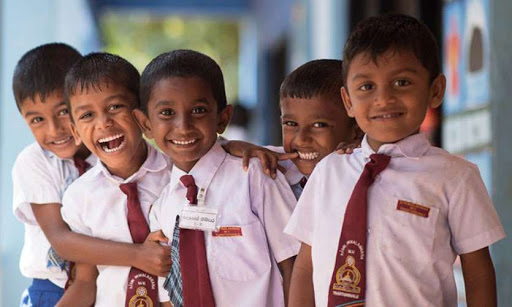
85 mn African children to be immunised
against polio
(AFP) – A campaign to immunise over 85 million children
under five against polio will kick off Saturday in west
and central Africain a bid to halt a year-long epidemic,
health bodies said in a joint communique.
According to a statement issued Thursday by the Joint Global
Polio Eradication Initiative and International Federation of
the Red Cross, nine countries in the region had active
outbreaks of polio, a virus eliminated in most of the world.
“With better coverage that leaves no child unvaccinated,
these campaigns can succeed in making west and central
Africa polio-free,” said the United Nations Children’s
Fund’s regional director, Gianfranco Rotigliano.
Over 400,000 volunteers and health workers will participate
in the immunisation campaign in 19 countries, a30 million
dollar (21 million euro) operation funded by Rotary
International.
UNICEF regional spokeswoman Gaelle Bausson told AFP there
had been 1,469 cases in the 19 countries since February
2008.
Nigeria, one of only four polio-endemic hotspots left in
the world, was the origin of the outbreak in 2008 which
spread to neighbouring countries that had been declared
polio-free and lacked the necessary skills to respond.
“A dedicated army of volunteers and health workers will work
up to 12 hours per day, travelling on foot or bicycles, in
cars and boats and on motorcycles, in often trying
conditions,” read the statement.
Children will receive two drops of oral polio vaccine (OPV)
to immunise them against the highly infectious virus which
has no cure and can result in total paralysis. |
|
|
|
|
|
|
|