





















| The opposition
has already conceded defeat - GL
They only talk about
preventing two thirds majority
By
Tharindu Prematillake
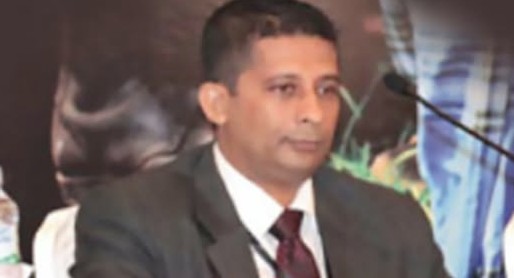
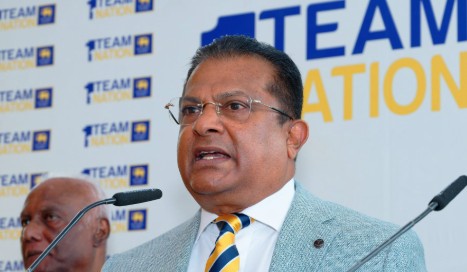
The Minister of Export Development and
International Trade, Professor G. L. Peiris has been
a seasoned politician for several decades. In
addition, he is an authority on constitutional
affairs, the legal system, and international
relations.
The Nation sought Professor Peiris’ views on several
hot button topics ranging from, regaining GSP+,
actions of UN Secretary General Ban Ki moon, General
Fonseka’s court martial and the general election.
Here are the excerpts of the interview:
Q: What are the main features of the upcoming
election?
A: A principal feature of it seems to be that
there really is no contest at all. The outcome is
taken for granted. The clearest indication of it is
that during the last two weeks or so the main
speakers of the opposition have consistently been
saying that their aim is to prevent the government
from getting a two thirds majority. Many speakers
from the opposition have expressed their thoughts in
the clearest of ways that the purpose of them
running the campaign is to ensure that the
government does not secure a two thirds majority.
That means they have already conceded defeat, they
are not campaigning to win the election, they are
not campaigning in order to form a government. They
only want to reduce the governments majority. In
other words, they accept that the present government
is going to come to power. So, that is a great
confession on the part of the opposition. That
explicit indication is that they know they don’t
have any chance of winning and they don’t entertain
any thoughts of winning, and that is why the outcome
is not in any doubt at all.
Then, there really is manifest indication of
strong support and people wanting to give the
Government the authority to deliver. There is
massive appreciation for the fact that the country
was rescued from the thralldom of terror. Many of
the election rallies are attended by women. Women,
more than anyone else, appreciate this stable peace
which has come. When the child went to school in the
morning the mother was in a very disturbed state of
mind and many people stood outside the gates of the
school until school finished. But now, mothers can
go about their work without stress or worry. They
appreciate that. It was something that had been once
written off as impossible.
What the President has consistently said is that
this gives us an opportunity to address in earnest
the economic development. For the last 15 years
whatever we tried to do, there has been inseparable
obstacles. How can you bring investment or tourists
into the country when bombs are going off and there
is violence? Now see the number of tourists coming
into the country. Hotels are full. We expect by next
year around 600 million dollars to come in through
tourism. There is that spirit of resurgence and
optimism with regard to the future. The people feel
that they have to give the government sufficient
authority to deliver. Just as much as it has
successfully confronted the challenge of terrorism,
give the government the clout that is necessary to
deal with the economy. That is very much the mood of
the country.
Another reason why the people are very eager to
give the government a strong majority in parliament
is the feeling that the overwhelming mandate which
was given to the President on the 26th of January is
incomplete and that one further step has to be taken
to enable that mandate to be implemented in full on
the ground. That is the President must have a strong
Government backing him in parliament. The executive
Presidency of Sri Lanka is a very powerful
institution with wide powers, responsibilities and
functions attributed to it. However, the President
governs the country through parliament. He requires
parliament for two purposes. One is to pass
legislation reflecting the policies of his
Government. The second is to find the financial
resources which are necessary to carry on the
administration. Now the election will take place on
the 8th of April, and the new Parliament has been
summoned to meet on the 22nd of April. One of the
first tasks of the new parliament would be to pass
the budget. Parliament is necessary to put at the
disposal of the government the money that is
required to run the administration. Sir Ivor
Jennings, in his monumental work on parliament, says
that the control of public finance is the essential
function of parliament. So a strong parliament is
necessary.
Q: The government is asking for a two thirds
majority to change the present electoral system. Is
this a good enough reason for the people to vote for
the government? What are the main objections you
have towards the present system?
A: The people certainly want to give the
government a two thirds majority. Having travelled
all over the country I know that; that is definitely
the feeling of the country. There are many reasons
for that. One is the deep desire to change the
present electoral system. I’m sure that if you hold
a referendum in this country 90 percent of the
people would say that the present electoral system
should be abolished. That it is a total liability
and that from every conceivable point of view it
does immense harm to the country and the political
culture. I mean just look at the roads of Colombo,
the posters.
The system is entirely obnoxious for several
reasons. One is that it promotes intra party rivalry
instead of inter party rivalry. That is people, who
work together in a spirit of brotherhood, friendship
as members of the same political party or as members
of the government, find themselves pitted against
each other for ‘manapa’ or preference votes. And it
becomes a ferocious campaign that brings out the
worst in human nature. No quarter given no quarter
asked. There are indications of that in different
parts of the country. That is inherent in the
system. So, it is detrimental to solidarity, unity
and a spirit of fraternity in promoting the public
good.
The second objection is that it is the root of
corruption. Under the first past the post system you
can contest the territorial constituency, let’s say
Dehiwala or Ratmalana. If an up and coming person
wants to run for election he will be able to contest
from the electorate and manage his campaign with a
reasonable amount of finances. Today what is
happening? You can’t contest Dehiwala or Ratmalana
you have to contest the entire District of Colombo.
The District of Colombo consists of around 1.6
million voters, and you’ll have to run an
organisation that is for each of the electorates.
Whatever campaign that you do has to be for the
entire area. Now that kind of money nobody has, and
even if you do you won’t want to use it. Then you
collect large sums of money and when the time comes
the financiers will come asking for it. That is why
I say this is the root of corruption.
Thirdly, it destroys the essential link between
the Member of Parliament and the constituency. That
is an essential characteristic of any vibrant system
of representative democracy. In this system, there
is no such person as a member for the electorate of
Avissawela, Kaduwela or Maharagama. So, a
constituent in any of those areas, who has a
problem, does not know who to go to. There is nobody
who holds special responsibility. What is wrong is
there are no by-elections. A by-election is a way to
test the government’s popularity. From time to time
you hold by-elections. By-elections are caused by
death, resignation and so on. Then you can test the
pulse of the people. Today, there is no by-election:
if there is a death or a resignation then the next
person on the list comes in. That’s also not good
because for six years for the entire life span of
the government there is no way of ascertaining what
the public mood is.
There is another consideration which is coming to
the surface in the current election campaign. Now
the law prohibits you from putting up posters
indicating your number. A candidate would want to
give publicity to his number because there must be
an identification of a name with a number, in order
to prevent confusion in the mind of the voter. So,
every candidate is keen to impress on the mind of
his voters the number that has been allotted to him.
One of the ways of doing this is by a poster which
is probably the cheapest way. But posters are
considered illegal and are taken down by the police.
But those who have enormous resources can advertise.
They can take out paid advertisements in the print
media and also slots on the electronic media. Those
are enormously expensive. Advertising charges are
especially high during the election period. So, you
have to pay much more for advertising during the
election period than during other times. That is
legal. But posters are illegal. That means the
wealthier you are the better capability you have to
comply with the law. If you’re short on resources
you find yourself compelled to break the law. So, to
ensure that you don’t break the law you have to be
in possession of very large financial resources.
That is why I say that the most basic criticism of
the electoral system is that it operates entirely in
favour of the wealthy. And it does not offer any
scope at all for people of modest means. It is an
elitist system. That is why there is such strong
feeling in the country that this system must go.
Now, the tragedy of the situation is that for a
long time there has been this robust feeling that
the present system is bad and that it must be
abolished. Everybody agrees that it is bad but it
has never happened because of the difficulty that
has been encountered in formulating a system that
commands the support of two thirds of the Members of
Parliament. But indications today are unmistakable
that there is strong support for the reform of the
electoral system, and that is one of the reasons why
the people of this country would like to give the
Government a two thirds majority to enable the
changes in the electoral system.
Q: High ranked British Government representatives
attended the Global Tamil Forum. The Secretary
General of the United Nations has expressed his
interest in appointing a committee to advise him on
how to deal with Sri Lanka with regard to Human
Rights issues. What are your thoughts on these
latest international developments? Will these
developments play a role in how people vote at the
election?
A: People are conscious of the fact that there is
great danger to the country at the international
level. The LTTE has been destroyed militarily. That
itself is a singular achievement. No foreign
government thought that the LTTE could be vanquished
by military means. Foreign governments with very
considerable expertise in the field, embassies and
high commissions which have military attaches never
believed that the LTTE could be destroyed
militarily. But that happened. It didn’t happen
coincidentally. It was a combination of factors,
political determination, willingness, effective
leadership, and courage in dealing with foreign born
pressure. Of course, the LTTE has been defeated
militarily and it cannot raise its head. There will
not be a war in this country. That is the truth. But
the danger continues in another respect. The money
that was collected by the LTTE during the last 20
years is still in their hands. The financial empire
they have built over the years through narcotics,
gun running and money laundering all of that. They
also have an exceedingly sophisticated
communications network.
Some of the events that have taken place in the
recent past show that groups that are supportive of
the LTTE are trying to achieve the LTTE’s objective
by different means. The purpose is the same. The
LTTE used guns, bombs, and suicide squadrons. That
era is over, but the forces that are active against
Sri Lanka at the international level are still
continuing to implement the agenda of the LTTE
resorting to other methods. What they have basically
resorted to is an economic war against Sri Lanka.
Take for example the You tube campaign in the United
States. Those are LTTE groups running a very
persistent campaign in the United States calling
upon consumers not to buy Sri Lankan apparel
products. A lot of money, finesse in advertising and
very sophisticated media methodologies are used in
that campaign.
Take the meeting of the global Tamil forum. It
was addressed by the British Foreign Secretary David
Miliband. The question is not what Miliband said or
did not say, his very presence dignifies that
gathering. What is that gathering advocating? It
advocates provisional transnational government
outside the shores of Sri Lanka. This discussion is
taking place in a country that has proscribed the
LTTE and banned it as a criminal, illegal
organisation. What were the outcomes of the
deliberations at the Tamil forum? That the military
leaders and other leaders of the country should be
brought before an international military tribunal;
secondly, that there should be a boycott of goods
from Sri Lanka, thirdly the principle of self
determination. All of which are contrary to their
professed position with regard to the LTTE. So, it
is very clear that there is an economic onslaught on
Sri Lanka taking place today. There are efforts to
destroy our economy, to prevent investment in to the
country, to deny access to our goods to the markets
of the West, to dissuade tourists from coming here
and to raise issues concerned with human rights. All
of this is to isolate Sri Lanka in the world. The
methods are different, but the objective is the
same.
The forces that rally against Sri Lanka are very
powerful. The Sri Lankan electorate is conscious of
that. And therefore, they feel that the mandate
which they gave the President can be fully
implemented only if they take this further step of
giving him a strong Government in parliament. That
connection has been strengthened by other
circumstances and developments. This includes the
action which the Secretary General of the United
Nations announced. He indicated his intention of
appointing a committee of three experts to probe
allegations in respect of human rights in Sri Lanka.
The President of Sri Lanka received the letter from
the Secretary General, Bank Ki moon. In response to
that letter, the President spoke to Ban Ki moon over
the phone. Within that telephone conversation,
President Rajapaksa indicated very strongly his view
that this action was totally indefensible: that it
is discriminatory and that no such action has been
taken against other countries where problems in this
field are much more acute than in Sri Lanka. He also
explained that there has not been an objective
appraisal of the Sri Lankan situation and that the
Secretary General’s office was succumbing to
pressure exerted by countries which were motivated
by domestic political considerations, the need to
please the Tamil diasporas and that these actions
where not in any way motivated by genuine concerns
of Sri Lanka and her wellbeing.
What gives us deep satisfaction is the strong
support that we received from the Non Aligned
Movement which consists of no fewer than 118
countries. The communication of Ambassador Abdul
Aziz, he spoke to the representative of the UN
indicating the strong opposition of the Non Aligned
Movement to the action that the Secretary General
was going to take. Something that is worth pointing
out is that the Secretary General’s office
deliberately avoided the Security Council. Had this
been taken up in the Security Council then there
would have been voices raised in favour of Sri
Lanka. It is not unlikely that the veto power would
have been used by some countries. So, the Secretary
General’s office is not giving an opportunity for
those countries to express their views.
Also what is unforgivable is that the leadership
of the UN does not appear to take into account
decisions taken by UN bodies when they are
supportive of Sri Lanka. What is detrimental to Sri
Lanka is blown up, and the maximum use is made of
it. But the alleged violations of human rights was
discussed in Geneva at the Human Rights Commission
and a decision was reached overwhelmingly in favour
of Sri Lanka. I think the vote was 29 in support of
Sri Lanka, eleven against with six abstentions. The
African bloc, the Asian bloc, Russia, China, the
Arabians they all supported the Sri Lankan position.
Now, that is ignored and the attack on Sri Lanka
continues regardless of any decision supportive of
Sri Lanka that is made by organs within the United
Nations system. They will not stop until they feel
that they have destroyed Sri Lanka internationally.
It is not in any way a balanced strategy. It’s an
acrimonious destructive attitude.
Our principal contention is that the
international community needs to recognise that we
are a country emerging from a painful conflict. And
it is now dealing with the challenges relating to
economic development. What we expect from the
international community is support, goodwill and
understanding, not destructive criticism and not
obstruction at every point. I think one of the
useful documents which have been produced with
regard to these matters is the ‘Report of the
Committee on Foreign Relations of the United States
Senate’ that was a document published on the
December 7, 2009.
The title of the document is ‘Sri Lanka:
researching US strategy after the war’. The chairman
of the committee is Senator John Kerry and the
ranking member of the committee was Richard Lugar.
This report indicates clearly that the situation in
Sri Lanka has to be understood and that many of
these harsh criticisms are lacking in balance or
objectivity and that they are very biased and
prejudiced views. The report says that the
criticisms serve other purposes which have to do
with domestic politics of other countries, and the
self serving concerns of some groups. Sri Lanka is
becoming a political football. There is a great deal
of material on this report by the committee on
foreign relations of the United States senate which
sets out dispassionately the reality of the current
Sri Lankan situation. These realities should be
taken into account by the international community
when judging Sri Lanka or when evaluating or
assessing the present condition in Sri Lanka. Those
realities have largely gone by default.
So, the people of Sri Lanka realise that there is
this danger, this degree of vulnerability and that
there really is an urgent need for them to support
the Government and to ensure that the gaining which
we have achieved by the eradication of terrorism is
consolidated. Today, those gains are threatened and
are in peril and there is a duty on the part of the
electorate to protect the Government to ensure that
those victories are preserved and that the lives
that were lost and the effort that was put in to the
war has not been in vain.
(Continued on page 10) |