








| “A man who loves his
country”
In
August 2008, after spending a week in Colombo, I stuck my
neck out to suggest in a long article for the Straits Times
that Sri Lanka’s long drawn civil war may finally be heading
for a close.
At the time some thought I was too optimistic. The Tigers
were considered invincible.
But the Tamil Tiger “headquarters” of Killinochchi fell
in late December and suddenly the world sat up and took
notice of an entirely new scenario developing on the island.
In May last year, I was in Colombo again when Sri Lankan
troops fished out Tiger supremo Velupillai Prabhakaran’s
body from a lagoon.
Alongside, the army had managed to wipe out the entire
leadership of the Tigers, who had, surprisingly for a
guerilla force, apparently congregated at one location.
The exact circumstances of the end of the war will never be
known for years. Some say the Tigers were eliminated even as
they sought a surrender.
The end of the war was followed by a surge of
majority-Sinhala triumphalism with huge cutouts of President
Rajapaksa, Defence Secretary Gotabhaya and Army Chief Sarath
Fonseka appearing all over the populous central and south of
the island.
Those posters have now disappeared. The Rajapaksas fell
out with their former army chief, who then unsuccessfully
mounted a political challenge for the presidency.
Fonseka was subsequently bounced out of his party office and
is currently undergoing court martial.
Lastweek, President Rajapaksa received me in his Temple
Trees residence on Colombo’s Galle Road for what his
advisers called a “nice, long chat.”
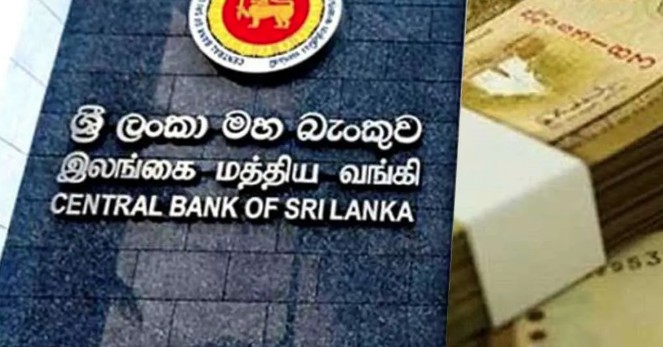
Sitting with Central Bank Governor Cabraal, Secretary to
President Lalith Weeratunge and Information Director Lucien
Rajakarunanayake, President Rajapaksa spoke for two hours in
a formal interview during which he pulled no punches. He
then took me indoors for an hour long informal conversation
over lunch
By Ravi Velloor
South Asia Bureau Chief
Here is the transcript of the formal interview:
Q. You started your campaign on the 19th. How would you
rate the UPFA’s prospects for the parliamentary poll. Do you
think a two-thirds majority is possible?
A. I am very relaxed. Two-thirds or one-third is
immaterial for me because when I became president I didn’t
have a majority. The Speaker was appointed by the
Opposition. After four years when I dissolved the parliament
I had 47 new people, including the Speaker, in my party and
I had a majority. So, I am not interested in numbers but
this will be a very comfortable victory. Of course,
two-thirds will help to change the Constitution because the
Opposition has never supported us on this matter.
Agenda after the poll
Q. What would be topmost on your agenda after the
poll? With the presidential and parliamentary polls out of
the way you have an open road for five years.
A. Of course, the peace settlement is a must. Then there
is the economic challenge. In the four years I was president
I have doubled per capita income to US$2,014 (S$2,806). My
target is to double this to US$4,000 by the end of my tenure
in office. Remember this took place when the war was on.
With infrastructure, development, we can do it.
We had noticed that all the development was taking place in
Colombo and its neighbourhood. I think this was because all
the leaders were from Colombo (guffawing). They gave roads,
electricity, good schools... were only in Colombo. My
intention is to build the rural economy through
infrastructure. Which is why Hambantota.
Q. You are consciously shifting some of the economic
weight to the South?
A. Yes, well to the whole country, including the North
and South.
Q. So, there might be an international airport in
Jaffna some day?
A. Yes, we might be able to do it. In the old days we
used to fly from Jaffna to Trichy in India. At the moment I
am developing the airport in the South. We will see after we
finish that. Palaly airfield in Jaffna is now an air force
base. If these mad fellows give up their Eelam dream - which
will never happen as long as I am here - we can think about
it. They must give that up.
Q. Are these pro-LTTE people still active?
A. It is more outside Sri Lanka than within the country.
There are (expatriate Tamil) people living on this Eelam
thing. They have their own agenda. They live on this. And
the people who are collecting money abroad for the LTTE have
lost their living because Tamils are not willing to
contribute funds anymore. So, they want something to happen
here to impress and activate them.
Many Tamils want to come back. The second generation and
third generation Tamils aren’t Sri Lankans really. They
can’t speak a word of Tamil or Sinhala. It’s true for
Sinhalese outside as well. But a lot of the educated people
who went abroad, they have come here. From Canada I had a
lawyer... leads a very comfortable life there, but he wants
to come and invest and work here.
Right-thinking people know they can come and do business
here. In Colombo, business is largely controlled by Tamils.
We had 90 percent Sinhalese some 30 years ago, but now the
Sinhalese are 27 percent. The approach to my house is lined
by Muslim and Tamil homes on both sides. The other day I
called all of them into my home for a meal.
Q.What about the executive presidency. Will you dilute
its powers as you promise?
A. It is up to Parliament. Parliament has passed these
things, so let Parliament decide.
Q. But Parliament will do what you tell them to do.
A. I know… or I hope so (laughing). But I think some
things will need to change. I would prefer a president
answerable to Parliament or give up all this and have a
prime minister answerable to Parliament. And may be retire,
and give advice to the government like Lee Kuan Yew - as a
Mentor. But look, if I did not have this executive
presidential system could I have ended this war?
Q. In your WSJ article you promised to build a “nation
for all”.
A. The opportunity is there for all, including
politically? Do you know my Cabinet? It is inclusive of all
main communities.
Q. Well I do know that you have some 108 ministers out
of a parliament of just 225 MPs.
A. No, no... (laughing). This is wrong. Cabinet is 51
members, the rest are junior and other ministers although
they call themselves ministers. All ministers get the
salaries of an MP. The only thing is they get personal staff
and red lights on vehicles. We did an assessment and the
additional costs of all these people are about Rs. 49
million every month.
For one four-star general in the army (a reference to
Fonseka), with 600 people looking after him, and his two
houses and all the other houses no one knows where or how
many he had, it cost 20 million rupees a month.
Q. You say you want to see Sri Lanka as the Singapore
for South Asia. What do you mean by that?
A. No, that is not what I said. I always say Sri Lanka
is for Sri Lankans. It is not a Singapore model, although I
am impressed by its growth. Some people want to make this
into a Singapore or New York or Dubai but I always said Sri
Lanka should become a model for by itself. In the 1960s, Lee
Kuan Yew said he wanted to build Singapore up like Sri
Lanka.
Q. What is this model Sri Lanka you have in mind?
A. To be a hub for education, for aviation, shipping,
communications and tourism. We are building five ports
around the country. We are expanding Colombo Port, we are
building Hambantota. There is Kankesanthurai in the North.
And we aren’t mentioning Trincomalee because it is a naval
base at the moment. We are building a new international
airport after 60 years.
When I went to Kandy they said you are building ports and
airports in Hambantota but you aren’t giving us anything. I
said if you can bring the sea through the Mahaveli
irrigation project I can consider a port for you. One can
think of a seaplane facility at the Victioria Reservoir. I
am surprised at some of the things that even educated people
can say.
Reconciliation and a political settlement with Tamils
Q. You wrote about a “full reconciliation programme”.
What does this mean?
A. This is what I believe. That without peace, there is
no development. And without development, there is no peace.
You go to a village or a farm and go to a student or a man
who is in a relief camp and ask him. Do you want
constitutional amendments? Their answer invariably is: ‘We
want a house’, or ‘we want to educate my child. We want
electricity.’ This is what they will ask.
If you develop these areas there will be a new generation
that will emerge and new politicians. This is why I went for
elections knowing that people in the north of Sri Lanka will
not support me. Actually I was surprised that I got a
quarter of the votes polled there. I went there, spoke to
them in Tamil. They knew development was coming. It shows
development has value.
Q. What would be the political contours of this
programme? What pieces do you need to put in place in order
to get there?
A. This is what I want to discuss with the new MPs after
the election.
I visited a refugee camp once for a function. A Colombo
lawyer who was supporting us said if the North and Eastern
provinces could be merged that would help us. I was
listening. At that point a young man got up and said: Sir,
please don’t divide the country again. We were traitors to
our country. Better keep us under one umbrella. So, in my
speech, I said he gave the answer. I will not merge North
and East, I shall merge the whole country. If we concede to
the merger call, the Muslims will ask for a province. After
that, the Burghers could come, and there other communities,
too.
Q. You don’t know this boy?
A. No! He was completely unknown to me. He was from
Mullaitivu (where the Tigers once held sway). I touched his
muscles and they were firm and strong. I said: Good, good!
Q. Even so, isn’t there some merit in the federalist
principle as a solution? It has worked in India, in
Switzerland.
A. Federalism is a dirty word in Sri Lanka. It is linked
so much with separation. If I want to leave politics and go
home, the best way is to talk of federalism. They won’t
accept me after that. I am a politician, no? The actual
situation is, see this country. This is not an India, a huge
country. You cannot forget the history of Sri Lanka.
Right now, just because all the Chief Ministers are from my
party, I have some control over them. But they do have
enormous powers. They even have Security Council meetings.
If you give them the powers they will do whatever they want.
They might say Indian Tamils cannot come here… to their
areas.
Q. What about implementing the 13th Amendment?
Especially, handing over police powers and control over land
to Provincial Council governments?
A. We must discuss with them. The 13th Amendment is
there. Other than the police powers we have given them all
the powers to the provincial councils. We have nothing to do
with land. What can I do when there has been no Provincial
Council in the North? But there must be some (central)
control. I have seen people even giving away irrigation
reservoirs to friends and business partners to be filled up.
As for police powers, knowing my people, I would say, please
do not devolve that power. See what happened when Sonia
Gandhi went to Uttar Pradesh (and Chief Minister Mayawati,
who is opposed to the Congress party, denied her permission
to enter her constituency). They are fighting for control of
the police. You know, chief ministers are chief ministers.
I have learnt from India. You think I would make the same
mistake? See what happened in Mumbai. It took eight hours to
fly in the National Security Guard commandos because they
needed the requisite permissions.
Q. Would you say the LTTE is gone for good?
A. No. There are sleeping cadres and there are
interested parties, especially outside Sri Lanka. That will
take time. It has been just nine months since the war ended.
Just because the leaders were eliminated, it is not over.
The movement will take some more time.
There are sleeping cadres, trained suicide bombers. They
were a factory of suicide bombers. They were in Colombo,
they are outside in various countries. Interested parties
can try and make use of them, although I don’t think it will
happen. The suicide killer jacket they designed and made was
marketed abroad. That is why we need the international
community to help us on this. They are not operating from
here.
Q. Does this impede your free movement?
A. I cannot sit here and say because of this I cannot
move around. I have been a grassroots politician and I was
with the people. Isolation from the people is something I
cannot dream about.
When I heard about the killings of 64 people in a bus bomb
attack, three months after I was sworn in, we were at a
meeting. I said let’s just go there. But security needed two
hours to prepare. Finally, the helicopters were called.
People were shocked that I had reached there within a matter
of two hours.
You have to take a risk. You just cannot hide away
although security would like to do that - they like to
isolate us. Now, the JVP and Fonseka factor is there so we
have to be a little more careful. The threat is not from the
LTTE alone. As for the LTTE, in the villages, once an
outsider comes they immediately know. But the Fonseka factor
is another thing today.
Tamil question
Q. How are your Tamil lessons shaping up? Where have you
reached?
A. Progressing. I even try to make speeches in Tamil
these days.
Q. You said you would call the Tamil parties after the
polls. But who would you talk to? Would you have problems
finding an interlocutor, seeing very few credible Tamil
names around. Who do you deal with if the UPFA sweeps the
polls?
A. This is the problem with them. The Tamils are
divided. I will call them for talks but of course, they
can’t ask for what the LTTE asked. There will be a new
generation of Tamils.
Yesterday, I saw a lot of Indian workers in the South. They
come on three-month holiday visas. I saw them working on
threshing and harvesting machines. So I was saying that you
can’t go anywhere in the country without seeing Indian
workers everywhere. Even in my village. They are willing to
work for half the pay and work longer hours, day and night.
Q. Do you have specific programmes targeted at
bringing Tamils into the mainstream, such as into army and
police?
A. We have already started that. In the East we have
already hired nearly 500 to the Police. In the North, for
police we have selected about 450 from Jaffna. I told them,
these boys are trained. Just teach them some law. If the
army is disciplined - and this is why I am keen to
discipline the army - they will have the national feeling.
The Fonseka issue
Q. What are your feelings toward Fonseka? Cannot
Fonseka be accommodated under this national reconciliation
you are planning?
A. He is a fool. On November 16, he was sitting right
here and I asked him if he was interested in contesting (the
presidential election) and he said, No, sir... I haven’t
made up my mind. Even on the day of his last visit he didn’t
tell me.
So I advised him. I told him that politics is not the army.
In the army, when you have an order they follow. In politics
you give order and they react in a different way. I told him
you are going to people whom you have criticised. So he said
that also is politics, no? I said, be careful. One day they
will drop you. I told him, whatever he might think, I know
this game and I am going to win this election. Whoever is my
opponent doesn’t matter to me. Of course, after my victory,
you can come and see me whenever you want.
But his whole campaign was one of mud-slinging. I could
have stopped him contesting, because he couldn’t retire
until I permitted him to. I could have just sat on his
retirement request until after the nomination papers were
filed and that would prevent him from contesting. But I let
him contest. I didn’t want people to say I was frightened. I
told the army they could do whatever they wanted to on any
evidence they had, after the elections. He was on holiday in
China when the war was in its last days.
Do you know that when I was in remand - I was in remand
for three months back in 1985 - I didn’t get the comfort he
is getting. My mother was gravely ill and they wouldn’t
allow me to see her. When I went to the hospital she was
already gone. But if I pardon him, what about army
discipline? What about the court martial of other officers?
What can I do! This is the British law. They gave it to
India and us. Fonseka himself put thousands of soldiers
under court martial. At one time the figure was 8,500. I
shouted at him and I had to release them.
Do you know he wanted to increase the size of the army to
450,000? I asked him how much do you have now? He said
200,000. And I said, now that the war is over, you want
450,000? He said ‘Every village you have to guard. You have
to be careful. Cannot release these fellows (IDPs) for three
years.’ He said there are external threats. So I asked, who
he was talking about? ‘And he said, India’. India’s standing
army is 1.5 million, its paramilitary forces are about 1
million. So what can 450,000 do against 2.5 million? I told
him, let me worry about external forces.
This fellow had placed cash of 700,000 dollars
(S$975,534) in a bank after the elections. This man put it
in lockers not regular deposits. And that was only half the
money and only because the locker wasn’t big enough to take
more.
Q. How convinced are you about the charges against
him? He was accused of plotting a coup, but those charges
don’t appear to have been formally laid.
A. There was something going on. I cannot discuss all
details as inquiries and legal proceedings are on. He was
moving special forces to Colombo and forces that he
considered were loyal to him - he comes from the Sinha
Regiment. This was told to me earlier but I never took it
seriously. And he was harbouring deserters. It is up to the
police and security forces to frame the charges. It is not
for me to get involved. Let them handle it. Whether he is
found guilty or not guilty is not my concern. But the
procedure must go on. The law must be enforced irrespective
of persons.
Foreign policy
Q. What options are opening up now there is peace?
A. We are a non-aligned country. That is our approach. I
do not have to shape policy as such. Anybody who helped me I
was ready to accept. But unfortunately, the countries
decided on themselves not to help us in development work or
in the fight against terrorism. I treat everybody equal. But
you must understand India, of course. India is our
neighbour. We must have good relations whether in war or in
peace.
Q. Will the Comprehensive Economic Partnership
Agreement go through with India soon?
A. This is what I just told you. Without the CEPA, the
Indians are already working here. If you try to introduce it
the way that people mind it... (that would be
counterproductive). we can’t enforce it by force. Let the
businessmen decide, and when they realise that this will
benefit them. Then automatically they will push for it. I
think that urge is taking shape now. PM Manmohan Singh
understands this, too.
Q. Stepped up military ties with India now that the
Tamil factor is no longer relevant? Would you start buying
arms from India?
A. We don’t need such arms now. When a shipload of arms
arrived from China after the war - this was arms ordered by
our friend Fonseka - I had to turn it back. We don’t need
that much of arms and ammunition anymore.
Q. How do you view the rise of China and what
opportunities does it offer Sri Lanka?
A. My view is now India has taken up development in the
whole North. A lot of railway line restoration there is done
by the Indians. That doesn’t mean Sri Lanka has been
captured by India.
Now, take Hambantota port. It was offered to India first. I
was desperate for development work. But ultimately the
Chinese agreed to build it. Take Treasury bonds. Who
controls it? The bulk is invested by Americans. Now take
sovereign bonds. Who controls it? The British. China is only
doing development work. We have to pay back their loans.
Q. Every analyst talks of Hambantota. Will there be a
Chinese naval base there one day?
A. I was interested in that harbour and port in
Hambantota for the last 30 years. As I said my economic
policy was not to develop only Colombo. I know that China is
not interested in putting a naval base here. I will not
allow this country to be used against any other country.
Whether it is China, India, Pakistan... we are a non-aligned
country.
Personal
Q. One complaint heard widely in the island is that
there are too many Rajapaksas. What do you say to that?
A. Oh, that is true. But for that matter how many
Kennedys were there in administration. Or Bushes. Or the
Gandhis. I have only two brothers in administration.
Q. But you also have a nephew now running Uva
Province.
A. But he was elected. He got the highest votes. He went
for an election. The Rajapaksas have a 76 year history of
electoral politics. We don’t know any other business.
(Guffaws). Our business is elections, both winning and
losing… although you will hear we own appam shops and thosai
shops. I must admit I am the only one who didn’t sell my
property to contest elections. My father did it. Every
election he would sell his land.
Q. What are your hopes for your son Namal who is
contesting the parliamentary poll next month? The official
government website carries this line: ‘If Sri Lanka is to
develop at a rapid pace, Namal Rajapaksa should have the
controlling authority.’ Do you agree?
A. He has new ideas. But he has to be a back bencher.
But knowing Namal he isn’t using my name as such. He never
accompanies me on my campaigns. He has his youth
organisation for the last four or five years. When he was a
student he wanted to join the party. I said, No, go study
first. He quietly started this organisation and started
working around the country. He has addressed 260 meetings
alone and without party support. He didn’t go to government
television. He has gone on private television - a programme
called 360 degrees - when asked to say how he wished to be
known as, he said, my father was known in the 1970s as G. A.
Rajapaksa’s son. Now they call him Mahinda Rajapaksa’s
father. I want one day for the President to be called
Namal’s father.
Q. You are poised on the brink of unprecedented power,
it would appear. Shouldn’t there be some check on you?
A. There is always the people and Parliament. One day I
will have to answer the people if I do something wrong. Not
to NGOs who get their money from abroad.
Q. How would you like history to remember you?
A. As a man who loved his country and his people, and
did my best to serve them.
-(Courtesy: The
Strait Times) |