


































| Desperate attempts to restart
Middle East Peace talks
By
Thanapathi
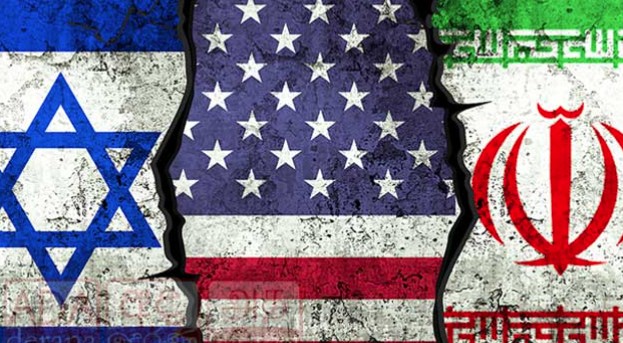
US Vice President, Joe Biden undertook a crucial
tour to the Middle East last week in the hope of
reviving the stalled peace process. His trip however
demonstrated how incredibly complicated and
sensitive the task is going to be. In what is
considered a snub to the VP, Israel announced that
it would be expanding Jewish settlements into the
West Bank, a move that has been discouraged by the
US. The current US administration has been insisting
to its ally to halt the expansion of its territory
into the regions of the West Bank which it occupied
after the 1967 Arab Israeli War. The ceasing of the
expansions has been cited by the Palestinians as a
prerequisite to commence negotiations on a final
agreement.
The message to Biden couldn’t have been clearer.
Israel was not willing to simply obey its most
important ally. Domestic politics in the US make it
impossible for it to take sterner action against
Israel. The influential Jewish lobby and the sizable
Christian conservative voter block back in the US
consider their country’s unquestioned support of
Israel as the corner of the nation’s foreign policy.
Any president or administration willing to risk irk
of this constituency is running the risk of
electoral debacle.
Just over a year since coming into office,
President Barack Obama has almost nothing to show as
far as Middle East peace is concerned. After eight
long years of conservative administration of
President George Bush who gave a blank cheque to
Israel to “do what it wants”, the Obama presidency
was expected regain the position of America as the
peace broker in the region. His reach out to the
Muslim world in a policy speech made in Cairo, Egypt
last year he reiterated the vision of his
administration to see a two state solution to the
Palestinian problem. Yet for all its rhetoric Obama
has little to show as results.
Vice President Joe Biden’s visit was meant to be
a catalyst for the restart of negotiations and an
effort to repair relations frayed by Israeli fears
that President Obama tilts too much toward the
Palestinians. Joe Biden is considered in Washington
as a staunch and uncompromising supporter on Israel.
Yet the Israeli announcement of expansion cannot be
taken as anything but a diplomatic snub to Biden and
to the Obama administration.
Wrapping up his four-day visit to Israel and the
West Bank, Biden said he’s counting on U.S. envoy
George Mitchell to get Israeli-Palestinian talks
started for the first time in 15 months, even if
they are conducted indirectly. The aim of the
indirect talks is to start direct negotiations
between Israel and the Palestinians to draw out a
permanent border between the two nations and create
a Palestinian state. Even the United States does not
recognise Israeli sovereignty over the West Bank.
With the settlements that have already taken place
in the West Bank Palestinians are now offered only
20 percent of the land that was originally
demarcated by the UN in 1948 for the Palestinian
State. The Obama administration favours a broad
Israeli withdrawal from the West Bank as part of a
statehood deal and implies U.S. support for east
Jerusalem as the Palestinian capital. But there are
deep doubts in Israel that a treaty sharply reducing
its territory would enhance the country’s security.
The peace process between the Israeli’s and the
Palestinians has been under way for nearly two
decades, but there have been no direct negotiations
between the two sides since Israel’s war in Gaza a
year ago. Days before President Obama took office
the Israeli’s attacked the Gaza Strip, a narrow
stretch of Palestinian territory separated from the
West Bank, to purge what it called terrorists who
were firing rockets into to Israel.
Israeli Prime Minister Benjamin Netanyahu has
agreed to the concept of a Palestinian state but is
unlikely to heed the call for withdrawal from the
West Bank or halt the expansion of Jewish
settlements. The current proposal to build 1600
homes is considered as the tip of the iceberg with
some reports suggesting that 50,000 more units are
being planned.
Palestinian Authority President Mahmoud Abbas in
his meeting with Vice President Biden sought
guarantees from Washington that it would pressure
Israel to cancel its plan for new housing units in
East Jerusalem. Biden in turn told the Palestinian
leader that the United States opposes settlement
construction but is determined to resume talks.
The US for its clout over Israel has been
considered as the only viable powerbroker in the
region. Under U.S. pressure at Camp David in 1977,
Israeli Prime Minister Menachem Begin yielded to
Egyptian President Anwar Sadat’s demands for
recovery of every inch of territory Egypt lost in
the 1967 Six-Day War to secure a peace treaty. In
1993 President Bill Clinton succeeded in brining
Yasser Arafat’s Palestinian Liberation Organisation
and the Israeli government to the negotiation table.
The Oslo deal as it was dubbed was the last best
chance for the two sides to resolve the long
standing dispute. Yet due to numerous factors that
process failed dragging the whole region into a
period of turmoil for the past two decades.
The US’s continued unconditional support for
Israel is the single greatest liability for America
in the Arab world. It’s also why any action that
makes a peace bargain more remote, such as this
latest settlement announcement, is a threat to both
American and Israeli interests. When President Obama
was elected into office much was expected from him,
not only in the US but across the world. He was
considered another Kennedy, a rock star among
presidents. While no one assumed Middle East peace
would be easy there was an almost religious faith,
at least in the liberal world, that Obama is the man
for the job. His Cairo speech which intended to
amend ties with the Muslim nations gave renewed hope
that this administration would be significantly
different to the one it succeeded. Yet after a year
of inaction now hope for a permanent Middle East
peace deal seems remote as ever. The US
administration’s latest efforts to jump start the
peace process by sending Vice President Joe Biden to
the region has shown how much ground it has lost
during the year of absence. Israel even with its
overwhelming dependence on the United States is
showing signs of anxiety to charter its own course
even against the dictates of its most important
ally. The Palestinians have also been frustrated
over the lack of any progress in the promised two
state solution. A recipe for a larger disaster is
now brewing in the region. What promised to be the
greatest foreign policy achievement for President
Obama might quite possibly be his biggest
disappointment to the world. |