



















@


HOME
NEWS  
NEWS FEATURES  
INTERVIEWS  
POLITICAL COLUMN  
THIS IS MY NATION  
MILITARY MATTERS  
EDITORIAL  
SPORTS  
CARTOON  
BUSINESS  
EYE - FEATURES  
LETTERS  
EVENTS  
SOUL - YOUTH MAG  
KIDS - NATION  
ENTERTAINMENT  
NATION WORLD  


Business  


Economists downplay opinions on SBA cessation

By Indika Sakalasooriya
Setting aside the ongoing debate among economic circles whether the country should continue the IMF standby arrangement (SBA) in light of an absence of a Balance of Payment (BoP) crisis, four of the country’s top economists aver that discontinuation of the facility would definitely be a folly.
A debate seems to be taking place among the economic circles in Sri Lanka whether the country needs to continue with the IMF facility, as the foreign reserves have topped US $ 5 billion, according to Central Bank data.

“I don’t subscribe to this viewpoint. If we face some kind of foreign exchange erosion in the future the IMF stand by facility would again be a great comfort as when the reserves levels depleted to support one month of imports in the early part of the last year”, Executive Director of local think tank Institute of Policy Studies, Dr. Saman Kelegama said.

He also said that since the oil and food prices are on the increase, the import bill can expand and this will further widen budget deficit and it could again put pressure on the foreign reserves.
Former Central Bank Deputy Governor Dr. W.A Wijewardena, sharing his views with The Nation Economist, said that though the foreign reserves are up Sri Lanka, the country is not still out of woods.
“Reserve levels are up not because of any improvement in the external sector, but due to the short term borrowings by the government through the sale of Treasury bills to foreigners (about $ 2 billion) and other short term borrowing from the market. About 2/3 of the reserves represent such short term flows which are reversible at any time,” he remarked.

“When international interest rates go up and there is economic recovery in other parts of the world, investors are likely to take their money back. So, the much talked about improvement is only a short term phenomenon, like a diabetic being exhilarated about the low sugar level in the blood because he has taken an ultra large dose of insulin. The IMF programme is not only for reserves, but for a complete macroeconomic reform and readjustment specially the adjustment of exchange rate and pruning the budget which are necessary for the country to create wealth and prosperity”, Wijewardena added.
When we contacted the Colombo University’s Professor of Economics, Dr. Sirimal Abeyratne, he downplayed the school of thought of discontinuity of SBA as ‘stupidity’.
“If either party sought to withdraw it, it can again be a crisis. We lost foreign reserves last year because we lost foreign investor confidence. Then the IMF came in and that triggered a lot of portfolio investments averting a major BoP crisis.
“Besides the conditions attached to the SBA is very positive and it could improve fiscal discipline” Abeyratne said.

In the conditions attached to the SBA the IMF has mainly asked Sri Lanka to bring down budget deficit, improve fiscal prudence and revive two key loss making state owned enterprises.
Dr. Ranjith Bandara of Strategic Enterprise and Management Agency commenting on the issues said, a decision regarding SBA should be taken on facts rather than emotions.
“This is a matter that should be taken to healthy argument. There is no argument that Sri Lanka is moving forward with massive developments and the country needs to maintain its reserves. So I reiterate that this is a matter of which the conclusion should not be based on political arguments but economic sense”, Bandara said.


FREE TO PLY THEIR TRADE

The smiles are back on their faces as these vendors seemingly enjoy plying their trade at a fair in Paranthan in the North in post-war life that the people of that region have embraced feeling free to go about their day to day chores

(Pic by Ravindra Dharmatilleke)


Top economist hails setting up of two new ministries

The setting up of two new ministries in the cabinet of which the main focus is economic development is hailed by a top economist in the country.
Executive Director at local think tank, Institute of Policy Studies, Dr. Saman Kelegama at the launch of UN Economic and Social Commission for Asia report in Sri Lanka said that the establishing of the Ministry of Economic Development and Public Resource and Enterprise Development are two good moves by the government in taking the country on to an economic growth path.

“I think this shows that the government has recognised its priorities” he added.
Through the Ministry of Economic Development, according to Dr.Kelegama, the government seems to be creating a ‘one stop shop’ for investors and businessmen, fast tracking the red tape.
Along with all the institutions relating to the tourism industry, the BoI and all other regional development programmes come under the Ministry of Economic Development.

Dr. Kelegama also remarked that the establishment of a Public Resource and Enterprise Development ministry is very timely as, if the country is to be put on a growth path, loss making state institutions should be made profitable entitities.

“This ministry should be somewhat like the Ministry of International Trade and Industry (MITI) which was instrumental in Japan’s post-war economic recovery”, Dr. Kelegama said.
According to the government gazette, 29 state institutions which are currently incurring losses, are lined up to be revived under this ministry. Sri Lanka Cement Corporation, Sri Lanka State Plantation Ltd. Kantale Sugar Company and Lanka Phosphate are some of the institutions that are included under the purview of this ministry.
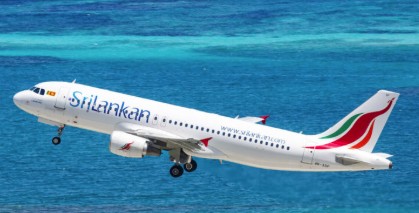
According to Central Bank data, the main five State Owned Enterprises (SLTB, CPC, CEB, CGR and Postal Services) along with national carrier SriLankan Airlines and state controlled budget airline Mihin Lanka have incurred Rs.48 billion, which is nearly a one percent of the country’s Gross Domestic Product.(IS)


Lanka Salt records historic turnover of Rs.1b.

By Santhush Fernando
Sri Lanka’s market leader in edible salt- Lanka Salt Limited (LSL) has reported an impressive sales revenue of Rs. 1,026 million for the year 2009 as against Rs.632 mn turnover the year before.
This rise in turnover took place without any price increases and as a result the board of directors at Lanka Salt declared the company’s highest ever dividend of 40 percent a share. Employees’ Trust Fund (ETF) owns a stake of 90 percent of the shareholding of LSL.

Profits (after tax) for the year increased from Rs.156mn in 2009 from Rs.96mn the previous year while profit before tax too surged from Rs.149mn in 2008 to Rs. 333mn last year. Its Return on Capital increased to 72.95 percent last year from 68.57 percent in the previous year. Non Current Assets (excluding Investments) more than doubled to Rs.436mn in 2009 from Rs.216mn in 2008 while capital employed surged from Rs.217mn the previous year to Rs.457mn. last year.

Lanka Salt Ltd., the main manufacturer of edible iodised salt and industrial salt, accounts for an annual volume of around 95,000 metric tons. It embarked on a comprehensive three-year development programme, which virtually transformed the industry to keep pace with modern times under the leadership of its Chairman Mahinda Gunawardene.

Gunawardene is also the National Coordinator for the International Council for the Control of Iodine Deficiency Disorders (ICCIDD).

“Lanka Salt Ltd. has the confidence and capability to harness its resource base to undertake development, new ventures and venture as a formidable industrial player in the Sri Lankan market,” Chairman Mahinda Gunawardene said in his message in the company’s annual report.

The tenure of the Board of Lanka Salt Ltd, under the chairmanship of Mahinda Gunawardena since 2005 has witnessed the most significant era of development since its inception as the Salt Department, thereafter National Salt Corporation. Production is totally mechanized in the Mahalewaya’s fully automated Iodisation Factory where the salt is mechanically crushed, washed, purified, dried, iodised and packed in one continuous operation working at a speed of 15 Tons per Hour (TPH) capacity conforming to ISO 9001:2000, ISO 22000 and ICCIDD Standards and compliances.

In addition all Salterns at Bundala and Palatupana have also undergone major production enhancements, infrastructure upgrades. The profitability has also facilitated employee benefits, and welfare.
The 3 Year Development Programme which has seen the completion of the above enhancements will also deliver in its final stages of implementation now, a modern administrative complex, public viewing gallery, laboratories, a museum and recreational facilities transforming this traditional industry in the South of Sri Lanka, to a Salt City within the Mahalewaya.

The company, being the largest employer in the Hambantota District and also Sri Lanka’s largest producer of iodised salt, has two distribution channels – one the distribution of iodised salt under Laklanu which had enjoyed a customer loyalty and trusted brand image of over 40 years and secondly via the cottage industry community of Hambantota to whom LSL had provided a stable socio economic background. LSL was able to record its highest ever revenue from this unique marketing mix of commercial marketing of LAKLUNU along with its facilitatory role of social responsibility in sustaining the rural cottage industry sector, without imposing price hikes for the year under review.

Other Directors of the Board are K.M.A. Godawatte, Mohottige Upali, Jinasena Hewajuliyage, J.A. Amarasiri, M.H.M. Niyas, P.D. Wijesiriwardene, C.W. Rathnayake, Siri Hewagama and H.A. Amarasena.


MNP to heighten risk to Lanka’s telecom industry: Fitch

The implementation of Mobile Number Portability (MNP) in Sri Lanka - as proposed by the local Telecommunications Regulatory Commission of Sri Lanka (TRCSL) could further pressure industry profitability, Fitch Ratings said in a special report on Friday.

Severe price competition in the Sri Lankan mobile space since mid-2005 has significantly eroded the telecom operators’ profitability. However, price-based competition has eased since 2009 given the operators’ weakened financial profiles, and an unofficial tariff floor implemented by the TRCSL.
“While the present unofficial tariff floor should help curb the continued deterioration in the mobile operators’ financial profiles, the implementation of MNP could increase subscriber acquisition and retention costs within the industry. This would exert further pressure on the operators’ balance sheet quality,” notes Hasira de Silva, Associate Director with Fitch’s Asia-Pacific Corporates team.

MNP would allow subscribers to switch mobile service providers while keeping the same mobile Number, and is seen as a tool to encourage competition and operator efficiency. Over 80% of Sri Lanka’s 12.7 million mobile subscribers (60% headline penetration) at end-December 2009 were prepaid users, and Fitch notes that a sizable share of these pre-paid customers uses multiple SIM cards and arguably have little or no loyalty to any one operator. “With MNP, there will be more competition for post-paid and premium pre-paid users who are arguably more profitable for the operators”, adds De Silva.
While MNP could force the operators to improve service standards, its implementation could also provoke greater expenses pertaining to loyalty-based rewards, brand-building and product differentiation. Furthermore, those operators, who currently maintain a premium above-the-floor tariff on account of greater investments in network capacity and coverage and prior brand name investments, could be forced to match competitors’ lower tariffs, in order to retain market share.

Fitch believes the threat from MNP to larger and more established operators is higher, including Sri Lanka Telecom PLC (Foreign Currency Issuer Default Rating: ‘B+’/Stable; National Long-term Rating: ‘AAA(lka)’/Stable Outlook) and Dialog Telekom PLC (National Long-term Rating: ‘AA-(lka)’/Negative Outlook).
Falling industry profitability was neglected by TRCSL for several years, in favour of higher competition. In a special report published in December 2009, entitled ‘Telecom Regulatory Risk - South and South-East Asia’, Fitch identified Sri Lanka as having the highest regulatory risks in the region due to weak and uncertain regulations.
Fitch however considers TRCSL’s recent actions, such as the introduction of floor tariffs for voice services, as positive for operators’ credit profiles. However, to limit further damage to the industry, the agency believes formal price floors and strict laws that enforce healthy competition should precede the implementation of MNP.


Ole likely to sell Pepsi bottling rights: Report

Speculation is rife that Ole Springs Bottlers, the distributor and marketer of Pepsi range of carbonated soft drinks in Sri Lanka, is contemplating in selling its bottling rights to an Indian bottling giant.
According to an Indian media report published in the early part of this year, it was reported that the Indian bottling giant “RJ Corp is in advanced talks to buy the franchisee bottling rights of PepsiCo from Ole Springs Bottlers, the only bottler, distributor and marketer of the beverage and foods maker in the Lankan market, where Coca-Cola and local brand Elephant are also present”.
The deal will reportedly give RJ Corp access to the lucrative soft drink market in Sri Lanka estimated at about Rs.1,200 crore and growing at over 30% annually.

“We expect to close the deal shortly,” said Jaipuria who however, declined to comment on the valuation of the deal and other financial details,according to the report quoting the RJ Corp chief executive.
RJ Corp, which owns PepsiCo India’s biggest franchisee bottling business and franchisee rights for Yum Restaurant International’s KFC and Pizza Hut restaurants, has been targeting a global spread for some time. Plans are afoot to set up dairy businesses in Rwanda by the year end and in Tanzania by mid-2010 through buyouts or greenfield ventures.

However, Ole Springs Bottlers Administration Manager, when contacted by The Nation Economist,
in the absence of the chief executive, said that the company has not been considering a deal and ‘nothing like that’ is taking place.

PepsiCo, whose Sri Lanka operations fall under the Indian offshoot, had entered Sri Lanka in 1986 by roping in state owned Ceylon Cold Stores Co (CCS) as franchisee.
The deal lasted only till 1988-89 after PepsiCo ended the deal blaming weak bottling operations. PepsiCo soon signed an exclusive bottling agreement with Ole, owned by Capital Maharaja Organisation, a private sector conglomerate with interests in pharmaceuticals, shipping, chemicals, etc. (IS)


Interconnection begs President’s attention

Telecom operators and senior TRC officials are to meet President Mahinda Rajapaksa probably during this week to determine the interconnection fee following a crucial meeting that was held last Thursday with Treasury Secretary Dr. P.B Jayasundara.
“The meeting with Dr.Jayasundara was really important as part of the discussion themed on the implementation of an interconnection regime. And also some of the longstanding customs issues faced by operators were discussed and provided with solutions”, TRC Director General Anusha Palpita said.
“There is no doubt that an interconnection regime is going to be set up in the near future once the interconnection fee is determined by the President since TRC is directly under his purview” Palpita added.