
A growing postural epidemic meets a practical, science-based solution
In an age dominated by smartphones, laptops, and prolonged desk work, forward head posture—often casually referred to as “forehead posture”—has quietly become one of the most common musculoskeletal problems of modern life. It is visible in offices, classrooms, clinics, and even family photographs, yet it is frequently misunderstood and poorly treated.
Many people have already tried the standard advice: chin tucks. And many have quietly given up when those chin tucks failed to deliver lasting change.
The truth is simple but uncomfortable: chin tucks alone do not correct forward head posture. Not because they are useless, but because posture is not a single-muscle problem. It is a system failure involving the neck, shoulders, chest, and upper spine.
This article explains how to identify forward head posture, why isolated exercises fail, and how a four-minute daily routine can correct the problem at its root.
Do You Actually Have Forward Head Posture?
Before attempting to fix posture, it must first be identified correctly.
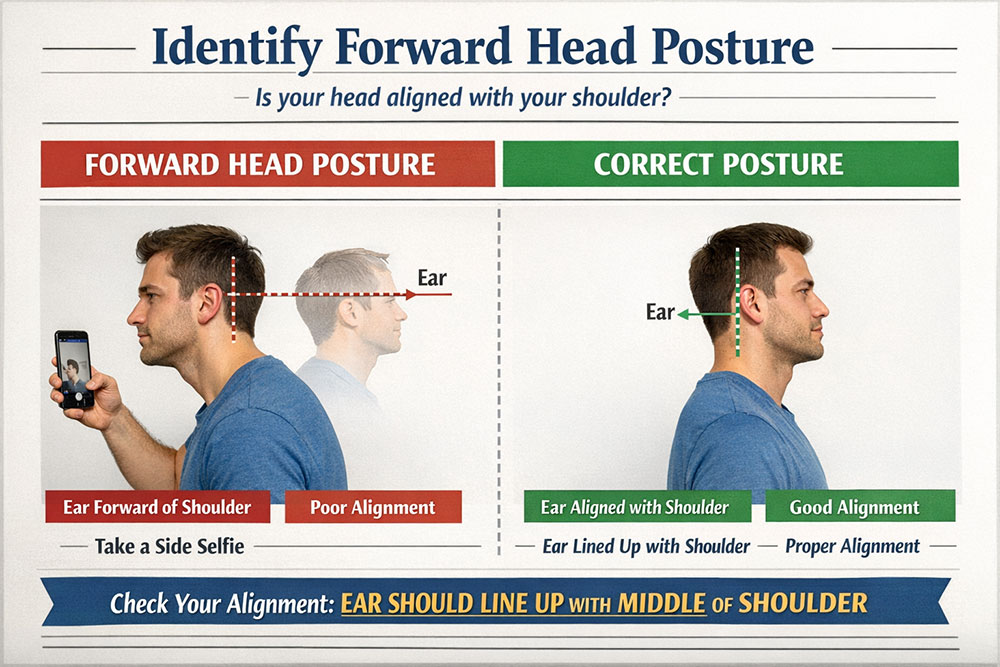
A simple self-assessment can be done at home:
Take a side-profile selfie
Look at the alignment between your ear and the middle of your shoulder
If your ear naturally aligns over the shoulder, your head posture is likely normal.
If the ear sits forward of the shoulder, forward head posture is present—even if pain is not yet obvious.
This forward shift places continuous strain on the cervical spine, overloads the posterior neck muscles, shortens the chest muscles, and encourages a rounded upper back.
Why Chin Tucks Alone Don’t Work
Chin tucks activate the deep neck flexors, which are important—but they do not address the full mechanical problem.
Forward head posture develops due to:
Weak posterior chain muscles (mid-back, upper back, neck extensors)
Tight anterior structures (chest, anterior shoulders)
Excessive thoracic kyphosis (rounded upper back)
Poor scapular positioning
Correcting posture requires mobility, strength, and spinal positioning, not a single isolated movement.
Step One: Prepare the Neck with Targeted Mobility
Before strengthening begins, tissues must be warmed and mobilized.
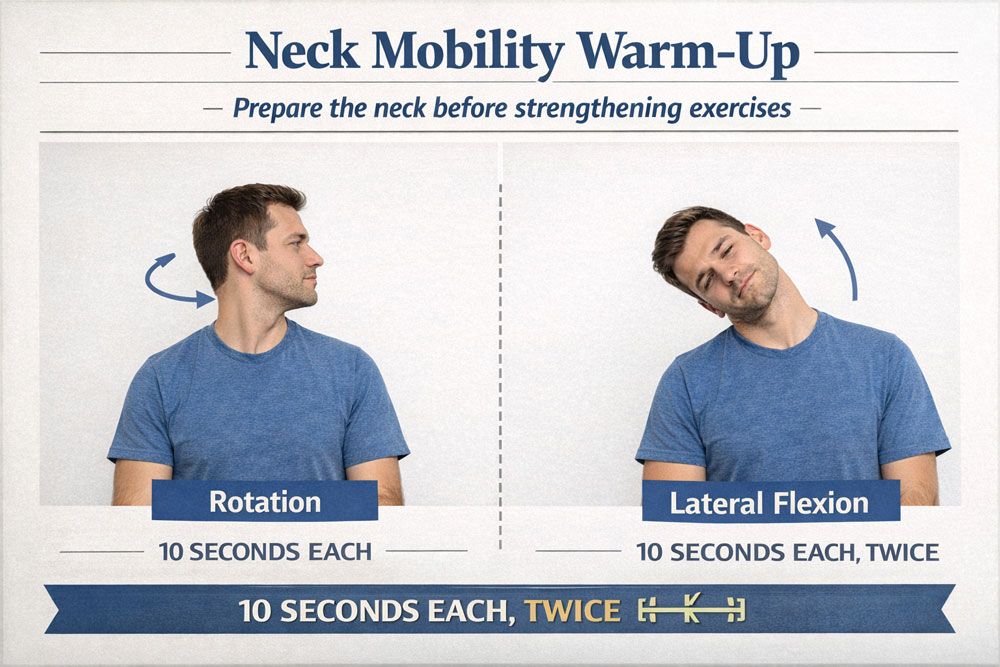
This warm-up takes 30–40 seconds and includes:
Neck rotation
Flexion and extension
Protraction and retraction
Lateral flexion, visualizing the ear lifting toward the ceiling rather than twisting the torso
Each movement is performed smoothly for about 10 seconds.
This sequence is repeated twice to ensure the neck tissues are prepared.
Step Two: The Triple-Action Chin Tuck (The Missing Link)
This is not a standard chin tuck.
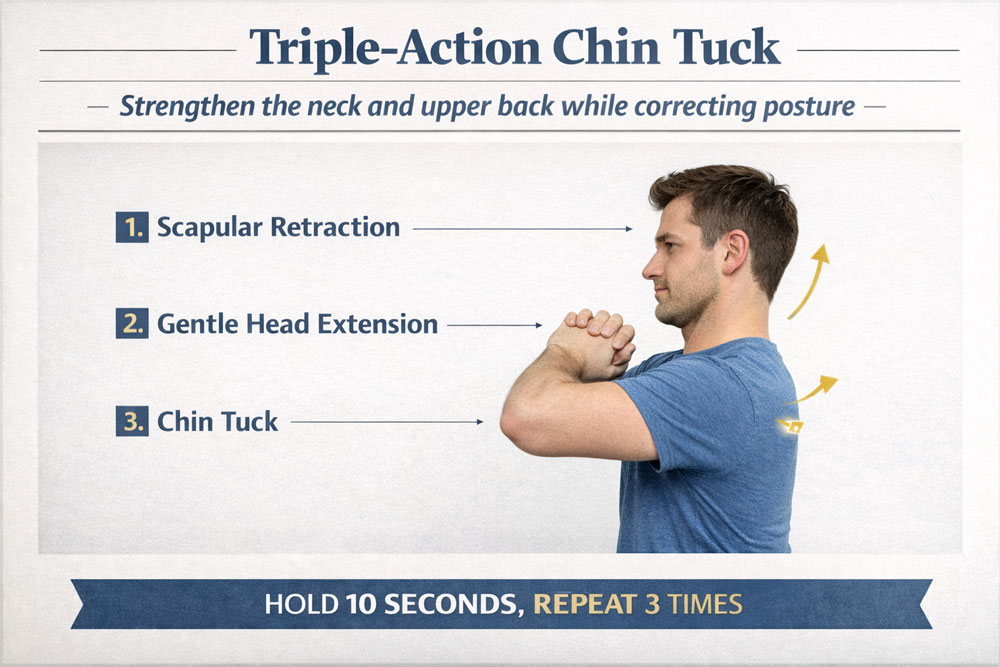
The movement combines:
Scapular retraction – pulling shoulder blades together
Gentle head extension
Controlled chin retraction
Hands are clasped, shoulders externally rotated, and posture is held for 10 seconds, then relaxed.
This exercise activates the mid-scapular muscles, posterior neck, and upper thoracic extensors simultaneously.
Performed for 3 sets, it takes about one minute and often produces an immediate sense of postural lift.
Step Three: Posterior Chain Loading with a Towel
In clinical settings, head weights are often used. At home, a simple towel achieves a similar effect.
Placed at the back of the upper head and held with the arms, gravity naturally pulls the head forward. The goal is to resist this pull by:
Extending the thoracic spine
Actively pushing the arms forward
Maintaining upright alignment
This exercise strongly engages the posterior neck muscles and upper thoracic spine.
Each hold lasts 10–15 seconds, repeated three times.
Many people report an immediate sensation of standing taller once the towel is removed.
Step Four: Fix the Real Culprit—Thoracic Kyphosis
Where most posture programs fail is ignoring the upper thoracic spine.
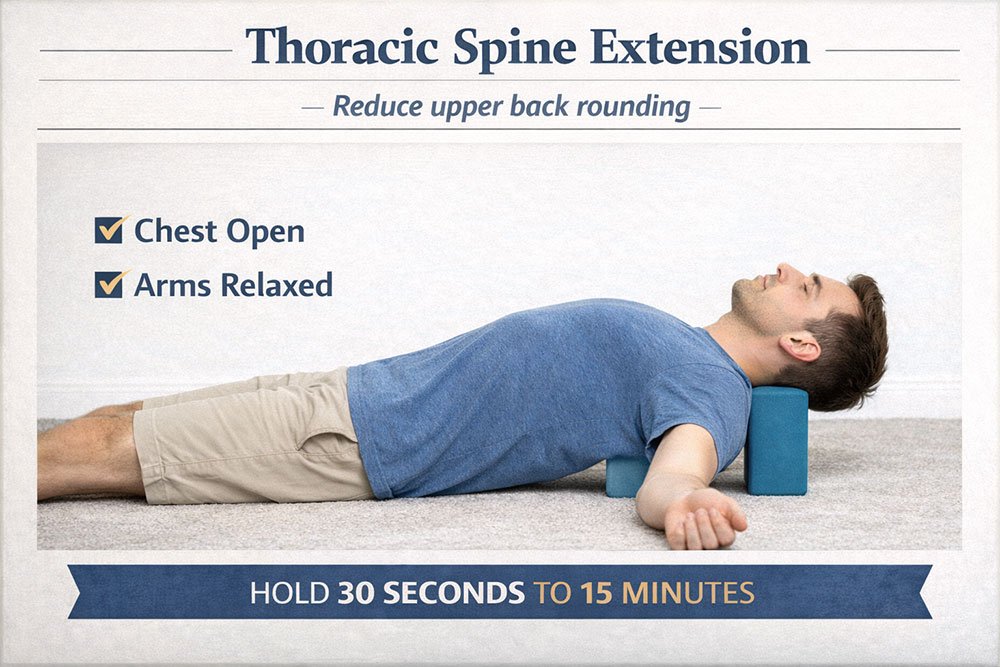
Using a yoga block, foam roller, or rolled towel placed under the mid-back, the individual lies back and allows the chest to open passively. This creates gentle traction and extension through the thoracic spine.
This stretch:
Reduces kyphosis
Allows the neck to sit naturally over the shoulders
Removes the structural driver of forward head posture
It can be held for 30 seconds to 15 minutes, depending on comfort and time.
Consistency Is the Cure
The entire routine takes less than four minutes when performed efficiently. It can be repeated twice per session and done up to two times per day.
Posture correction is not about intensity—it is about daily reinforcement of correct alignment.
When performed consistently, this routine addresses:
Muscle imbalance
Spinal positioning
Neuromuscular control
And unlike isolated chin tucks, it produces lasting structural change.
Forward head posture is not a cosmetic issue—it is a biomechanical one. Left untreated, it contributes to neck pain, headaches, shoulder dysfunction, and long-term spinal degeneration.
The solution is not complicated—but it must be complete.
Correct the system, not just the symptom.















 English (United States) ·